Carnegie Hill Real Estate Guide: Living, Buying & Investing in Carnegie Hill, NY
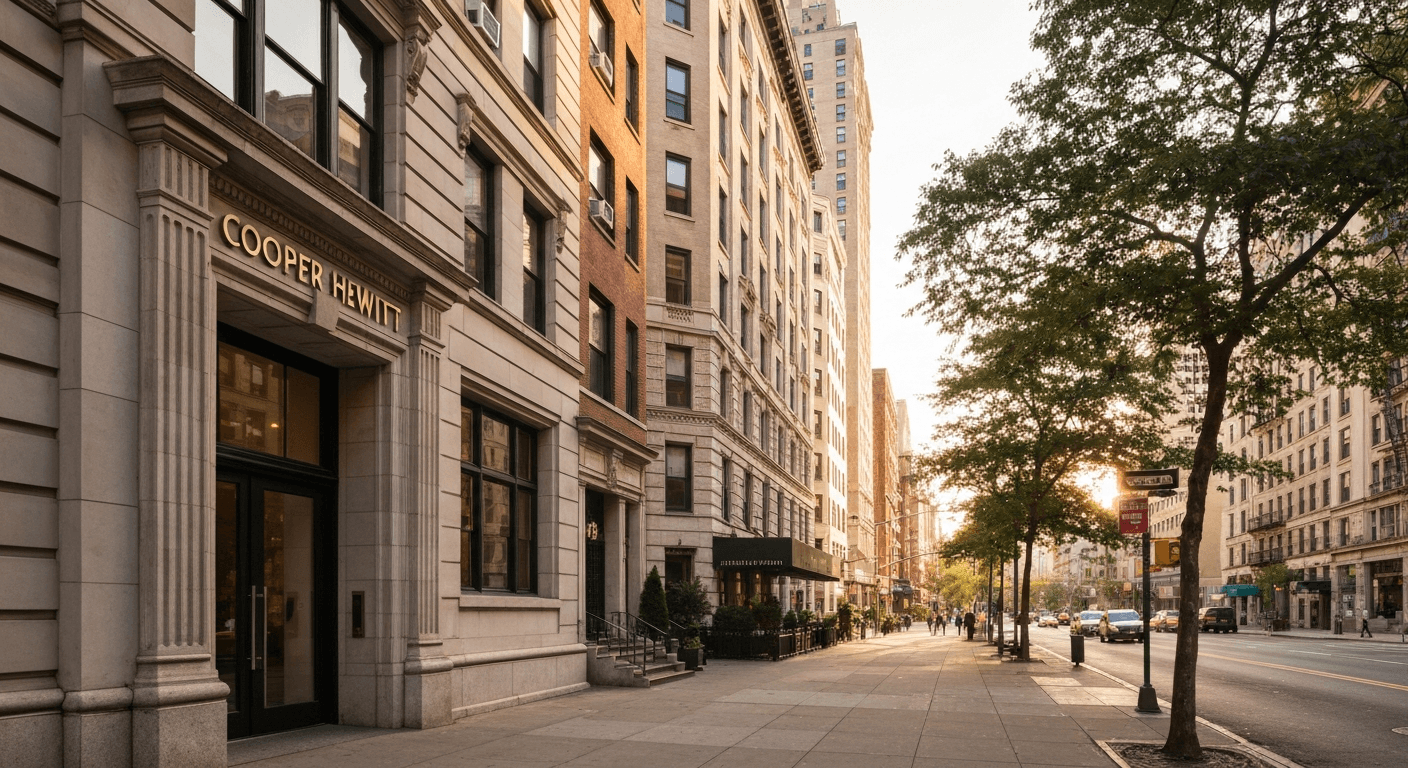
Carnegie Hill is the Upper East Side at its most quietly distinguished—a residential enclave that wears its cultural prestige lightly and rewards those who take the time to discover it. Roughly spanning 86th Street to 98th Street between Fifth Avenue and Third Avenue, Carnegie Hill sits at the northern end of Manhattan's Museum Mile and carries a sense of scholarly elegance that distinguishes it even among the high-achieving neighborhoods of the Upper East Side. People love Carnegie Hill for its combination of grandeur and intimacy: the streets are leafy and residential, the pre-war architecture is impeccably maintained, and the presence of world-famous museums just steps from apartment buildings gives residents an almost startling access to great art. Named for industrialist Andrew Carnegie, whose mansion at 91st Street and Fifth Avenue—now the Cooper Hewitt Smithsonian Design Museum—anchored the neighborhood's identity for over a century, Carnegie Hill has historically attracted the intellectually inclined and the culturally sophisticated. Young families gravitate here for the exceptional schools, both public and private, that are among the finest in the nation. Professionals appreciate the quick subway commute to Midtown while savoring a neighborhood pace that feels more like a European arrondissement than a New York City grid. Real estate investors value the market's stability—Carnegie Hill properties hold their value through market cycles in a way few other city markets can match. If you want to live in one of New York City's most genuinely civilized neighborhoods, Carnegie Hill is the place to start looking.
Carnegie Hill's story begins with steel money and civic ambition. Andrew Carnegie built his Georgian Revival mansion at the corner of 91st Street and Fifth Avenue in 1902, choosing a location that was then considered far uptown and slightly eccentric for a man of his social standing. Carnegie's decision triggered a cascade of development, as wealthy New Yorkers followed his lead and constructed their own grand homes and apartment buildings along Fifth, Park, and Madison Avenues. By the 1920s, the neighborhood had solidified into the architecturally coherent, prosperous community it remains today.
The Carnegie mansion itself became the Cooper Hewitt Smithsonian Design Museum, which reopened in 2014 after an extensive renovation. The museum's collection—focused on decorative arts, design history, and contemporary innovation—and its programs have made the institution a creative hub for designers, architects, and students from around the world. Its presence on Fifth Avenue at 91st Street anchors the northern end of Museum Mile, alongside the Guggenheim Museum at 89th Street and Fifth, designed by Frank Lloyd Wright and housing one of the world's most important collections of modern and contemporary art; the Jewish Museum at 92nd Street, with its extraordinary collection of Jewish cultural artifacts and contemporary art programming; and El Museo del Barrio at 104th Street, celebrating Latin American and Caribbean art and culture. This concentration of cultural institutions within a residential neighborhood is one of Carnegie Hill's most remarkable and enduring assets.
Architecturally, Carnegie Hill is dominated by pre-war cooperative apartment buildings along Park Avenue and Fifth Avenue that date from the late 1920s through the early 1940s. These buildings—designed by architects including Rosario Candela and J.E.R. Carpenter—are characterized by spacious layouts, high ceilings, hardwood floors, formal entry galleries, and thoughtfully planned service entrances that speak to an era when domestic life was organized differently. Buildings like 1185 Park Avenue, 1088 Park Avenue, and 1060 Park Avenue are names that resonate deeply in the world of Manhattan real estate. The side streets between Park and Lexington Avenues, particularly 88th through 95th Streets, are lined with townhouses, carriage houses, and smaller apartment buildings that give the neighborhood a human scale unusual for Manhattan.
The 92nd Street Y at Lexington Avenue and 92nd Street is one of Carnegie Hill's defining institutions. Founded in 1874, the Y has evolved from a community center into one of New York City's premier cultural organizations, offering lectures, concerts, literary readings, film screenings, and fitness programming that attract participants from across the city and beyond. Its renowned Poetry Center has hosted virtually every major American poet of the 20th and 21st centuries, and its annual literary series regularly features Nobel laureates, Pulitzer Prize winners, and heads of state. The Y's presence contributes significantly to Carnegie Hill's reputation as a neighborhood where intellectual life is taken seriously.
Carnegie Hill's real estate market is a textbook example of what real estate professionals call a supply-constrained, demand-robust market. The neighborhood's housing stock is primarily composed of pre-war co-op apartments in large limestone and brick buildings along Park and Fifth Avenues, smaller walk-ups and brownstones on the cross streets, and a very limited number of condominiums. This limited inventory, combined with persistently strong demand from well-heeled buyers who prioritize school quality, cultural access, and neighborhood character, creates a market where prices are high and appreciating.
Park Avenue co-ops in Carnegie Hill represent some of the most coveted addresses in Manhattan. Full-floor apartments in the landmark buildings along Park Avenue command $5 million to $20 million or more depending on size and condition. These are buildings with strict financial requirements: buyers are expected to present a comprehensive board package that includes three years of tax returns, letters of reference from both business associates and personal friends, and financial statements demonstrating significant post-closing liquidity—typically two to three times the purchase price in liquid assets. The board interview is standard procedure, and being rejected does happen, particularly for buyers whose financial profile or lifestyle doesn't align with the building's culture. Working with a broker who knows the buildings and their boards is essential.
Fifth Avenue apartments with Central Park views are in a category of their own. A classic eight- or nine-room apartment on Fifth Avenue between 88th and 96th Streets with direct park views can achieve $10 million to $25 million, while penthouses and duplexes with terraces overlooking the reservoir or the Jacqueline Kennedy Onassis Reservoir have sold for considerably more. These properties trade infrequently—many have been in the same families for decades—and when they do come to market, they generate significant interest from both domestic high-net-worth buyers and international purchasers seeking a premier New York address.
The cross streets offer somewhat more accessible price points for buyers who want Carnegie Hill quality without the most intensive board scrutiny. A two-bedroom co-op or condo on a brownstone block between Lexington and Third Avenues might range from $1.2 million to $2.8 million, and studio and one-bedroom units start around $600,000 to $900,000. These smaller buildings often have more permissive board policies, including more liberal subletting allowances and lower post-closing liquidity requirements, which makes them attractive to buyers who want Upper East Side quality without the most restrictive co-op environment.
Townhouses in Carnegie Hill are among the most coveted in the entire city. A four- to five-story single-family home on a block like East 94th Street or East 91st Street can range from $10 million to $35 million for fully renovated properties. Unrenovated townhouses occasionally come to market at slightly lower prices, offering buyers the opportunity to create a custom home in a prime location, though renovation costs in Carnegie Hill—given landmark preservation considerations and the premium contractors command in the area—can easily exceed $500 to $700 per square foot for a thorough renovation.
Investment demand in Carnegie Hill is steady and reliable. The neighborhood's strong rental market—driven by medical professionals at the adjacent Mount Sinai Hospital complex on Fifth Avenue at 98th Street, corporate executives on short-term assignments, and a consistent flow of international renters—supports rental rates of $5,000 to $12,000 per month for two- and three-bedroom apartments. Long-term appreciation has been reliable, and the neighborhood's cultural prestige shows no sign of diminishing.
Carnegie Hill's daily life is anchored by a set of institutions and establishments that give it a distinct neighborhood identity. The neighborhood functions more like a self-contained village than a Manhattan district: residents know their dry cleaner by name, have a regular table at a neighborhood restaurant, and run into acquaintances at the Guggenheim or the 92nd Street Y on a regular basis.
For dining, Carnegie Hill offers a compact but high-quality selection. Neue Galerie Café, inside the Neue Galerie art museum at 86th Street and Fifth Avenue, serves Viennese coffee house food—schnitzel, goulash, apfelstrudel—in a museum setting that feels like stepping into prewar Vienna and is one of the most distinctive dining experiences in New York City. Café d'Alsace on Second Avenue has been a neighborhood institution for French-inspired brasserie cooking and an extraordinary beer selection curated by one of the city's leading beer sommeliers. Sarabeth's on Madison Avenue remains beloved for its indulgent weekend brunch, and Caffe Grazie on East 84th Street just off Madison is a charming neighborhood Italian restaurant perfectly suited to a quiet weeknight dinner. For a quick coffee, Pain d'Avignon's Upper East Side locations and the coffee counter at Eli's Manhattan provide the kind of morning ritual that anchors daily life.
Madison Avenue between 86th and 96th Streets is a shopping corridor that balances everyday needs with aspirational retail. Specialty food shops, florists, children's clothing boutiques, stationery stores, and art galleries create a pleasant retail environment. Laduree's macaron boutique adds a touch of Parisian confection; Bonpoint and Jacadi dress Carnegie Hill children in the kind of French fashion that would be at home in the 8th arrondissement. The 92nd Street Y's gift shop is itself a destination for books, art objects, and design items that make thoughtful gifts.
Parks and outdoor recreation are dominated by Central Park, accessible from multiple entrances at 86th, 90th, and 96th Streets. The Jacqueline Kennedy Onassis Reservoir—a 106-acre man-made lake with a 1.58-mile jogging path around it—is one of the park's most beloved features and a Carnegie Hill institution. The Great Lawn is nearby for weekend concerts and casual sports. East River Esplanade access is also available from the neighborhood's eastern edge, offering a quieter waterfront alternative.
Fitness options include Equinox's multiple Upper East Side locations, Barry's Bootcamp, and the 92nd Street Y's own extensive fitness center, which offers swimming pools, group fitness classes, and racquet sports programming. The neighborhood's flat terrain and well-maintained sidewalks make walking the primary mode of local transportation, with residents regularly covering miles daily simply going about their routines.
Carnegie Hill is arguably the strongest school market in all of New York City, and school quality is consistently the primary reason families cite for choosing this neighborhood over alternatives. Community School District 2 governs Carnegie Hill, and the local schools rank among the highest in the city year after year.
PS 6 William Tecumseh Sherman School at 45 East 81st Street is considered one of the finest public elementary schools in New York City, with rigorous academics, arts integration, a deeply invested parent community, and test scores that rival many private schools. PS 290 the Manhattan New School on East 82nd Street is another highly regarded public school known for progressive pedagogy and strong literacy outcomes. For middle school, the Anderson School at 100th Street is a citywide gifted program that draws academically advanced students through a competitive application process. Specialized high schools including Stuyvesant, Bronx Science, and LaGuardia Arts are accessible by subway and regularly enroll Carnegie Hill students.
The private school landscape in Carnegie Hill is extraordinary and essentially unmatched anywhere in the United States. Dalton at 108 East 89th Street is one of the most selective and academically distinguished independent schools in the country, with a progressive Dalton Plan philosophy and college placement that consistently sends graduates to Harvard, Yale, Princeton, and the other most competitive universities. The Nightingale-Bamford School on East 92nd Street is a top-tier all-girls school with a formidable academic record. The Spence School on East 91st Street, Chapin on East 84th Street, and Brearley at 610 East 83rd Street complete a concentration of single-sex schools that is remarkable even by Manhattan standards. Horace Mann, in Riverdale, draws heavily from Carnegie Hill. The proximity of Mount Sinai Hospital and its affiliated medical school adds a significant medical and academic workforce to the neighborhood, reinforcing its professional character.
Carnegie Hill benefits from the same excellent Lexington Avenue subway service that defines commuting on the Upper East Side. The 4, 5, and 6 trains stop at 86th Street/Lexington Avenue—with express 4 and 5 service in addition to the 6 local—and at 96th Street, providing fast service to Grand Central in approximately 8 minutes, Midtown in 10 minutes, and the Financial District in under 30 minutes. The 86th Street station is one of the most spacious and comfortable in the subway system, with ample platforms and good ventilation.
The Q train's Second Avenue Subway serves Carnegie Hill with stations at 86th and 96th Streets. Since opening in 2017, the Q has dramatically improved transit options for Upper East Side residents, providing a direct, comfortable ride to 57th Street in Midtown in approximately 8 minutes and connecting easily to the N, R, W, and other lines. The combination of the Q and the 4/5/6 makes Carnegie Hill one of the best-connected residential neighborhoods in Manhattan.
Crosstown bus service on 86th Street (M86-SBS) and 96th Street (M96) connects Carnegie Hill to the Upper West Side across Central Park, with the M86-SBS providing Select Bus Service that makes the crosstown trip meaningfully faster. The M1, M2, M3, and M4 run along Fifth and Madison Avenues. For Carnegie Hill residents employed at Mount Sinai on Fifth Avenue at 100th Street, commuting on foot is entirely viable—a pleasant 10-to-15-minute walk that serves as daily exercise.
Carnegie Hill strongly favors buying over renting for anyone with a long-term horizon in the neighborhood. The math has historically worked in buyers' favor: rental prices are so high—routinely $4,000 to $8,000 per month for a two-bedroom—that monthly mortgage payments on a purchased apartment can be comparable once you factor in standard mortgage interest deductions and the long-term equity accumulation. The catch is the entry cost: down payments on Carnegie Hill co-ops often need to be 20% to 25% of the purchase price, and the post-closing liquidity requirements effectively push the financial bar even higher. But for buyers who meet the financial threshold, purchasing in Carnegie Hill makes strong long-term sense.
The neighborhood has seen consistent value appreciation over multiple decades, and the supply of desirable inventory is so limited that demand pressure keeps prices supported even in softer market environments. A pre-war two-bedroom co-op purchased for $1.5 million in 2012 might be worth $2.2 million to $2.8 million today—a meaningful appreciation in addition to the rental savings accumulated over the hold period. Renters should view their time in Carnegie Hill as a savings and planning period—accumulating the down payment and establishing the financial profile needed for a successful co-op board application, rather than accepting rental status as permanent.
Carnegie Hill is an exceptionally family-friendly neighborhood, and families with school-age children make up a large share of the resident population. The combination of world-class public schools, incomparable private school options, Central Park access, and neighborhood safety creates a child-rearing environment genuinely hard to match anywhere in the United States. Children here develop independence at younger ages than in most American cities—the walkability and safety of Carnegie Hill streets makes it reasonable for school-age children to navigate their neighborhood on their own, a developmental advantage that parents value enormously.
Medical professionals affiliated with Mount Sinai Hospital, NewYork-Presbyterian, and Memorial Sloan Kettering form another major buyer constituency. Academics and intellectuals drawn to the neighborhood's cultural programming, the 92nd Street Y, and the proximity to Columbia University are prominently represented. Retirees and empty nesters who have raised families here and want to stay are a significant presence—many residents have lived in Carnegie Hill for decades and have no intention of leaving, which contributes to the limited inventory and the stability of the community.
International buyers, particularly from Europe and Latin America, appreciate Carnegie Hill's cultural sophistication and architectural quality. For these buyers, Carnegie Hill represents a world-class residential neighborhood that delivers on its promises consistently and provides the kind of security—in both physical safety and long-term investment value—that global buyers prioritize.
The most important thing to understand about buying in Carnegie Hill is that the co-op process is a full-time project requiring serious advance preparation. Prepare your financial documents months before you intend to buy: tax returns for three years, brokerage statements, bank statements for three to six months, letters of reference from business associates and personal friends, employment verification, and a thoughtful cover letter introducing yourself to the board. Some buildings require employer letters on company letterhead; others want letters from community leaders or neighbors who can speak to your character and lifestyle. The board is evaluating you as a future neighbor, not just as a financial profile.
Research specific buildings carefully before making an offer. Some Carnegie Hill co-ops prohibit subletting; others allow it after a mandatory owner-occupancy period of two to three years. Some have high flip taxes—fees paid to the building upon resale—that can be 1% to 3% of the sale price and eat into your profits if you sell within a few years. Maintenance fees in pre-war buildings can be substantial, and it's worth understanding exactly what the maintenance covers before committing.
For buyers interested in townhouses, hire an architect for a pre-offer consultation before finalizing a purchase—renovation potential is significant, but constraints imposed by the Landmarks Preservation Commission govern the exterior aesthetic of many Carnegie Hill blocks. For new condos, negotiate closing cost contributions—developers in a slower market will often cover transfer taxes or offer mortgage rate buydowns. Finally, be patient. Carnegie Hill inventory moves slowly, but the right apartment does eventually become available, and the wait is worth it.
Carnegie Hill is New York City residential living at its absolute finest—a neighborhood that has successfully preserved the best of the Upper East Side's architectural heritage while remaining a living, breathing community of engaged residents, world-class institutions, and quietly extraordinary streets. The combination of school quality, cultural access, transportation, and real estate stability makes it one of the most defensible buying decisions in Manhattan, with a track record that stretches across generations and economic cycles.
If Carnegie Hill feels like the right neighborhood for your family or your investment portfolio, Farva Scott would be delighted to help you navigate it. As an Associate Broker with The Real Brokerage, Farva brings expertise, patience, and a thorough understanding of the Upper East Side co-op market to every transaction. Reach out at farvascott.com or call (914) 417-9215 to schedule a consultation and take the first step toward owning in one of Manhattan's most enduring neighborhoods.