Financial District Real Estate Guide: Living, Buying & Investing in the Financial District, NY
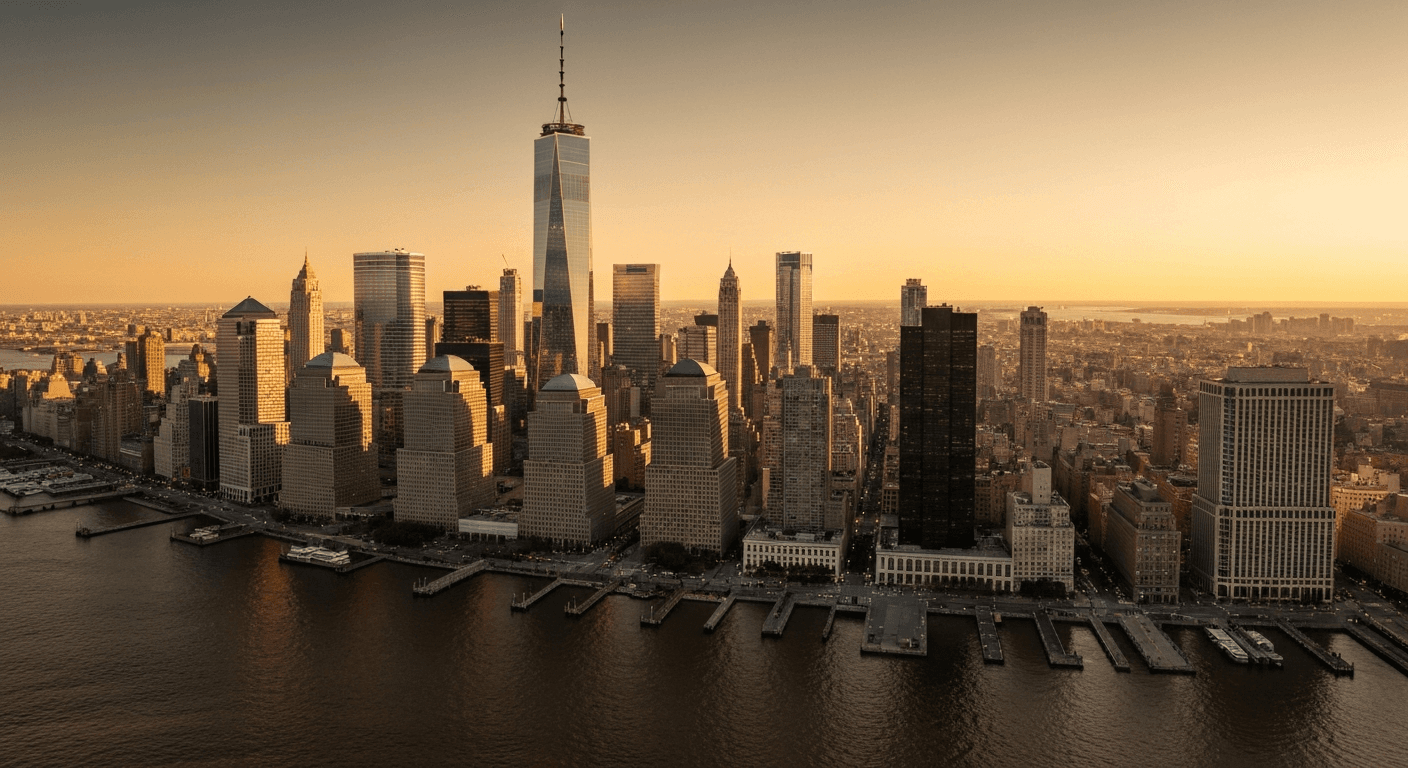
The Financial District — known to New Yorkers simply as FiDi — has undergone one of the most dramatic residential transformations in the city's history. Once a neighborhood that emptied out at 6 PM when traders and bankers rushed to the subway, FiDi has reinvented itself as a vibrant, around-the-clock community where world-class architecture, harbor views, and surprising culinary energy converge. Today, young professionals, growing families, and savvy investors are discovering what a handful of early adopters knew years ago: living at the tip of Manhattan is not just convenient — it's genuinely exciting. The neighborhood's blend of pre-war grandeur, sleek glass towers, and cobblestone streets creates a visual richness you simply cannot replicate anywhere else in the five boroughs. Whether you're drawn by the idea of watching tugboats navigate the Hudson from your living room window, walking to work without setting foot in a subway car, or owning a piece of one of the most historically significant square miles in America, the Financial District deserves a serious look from every New York City home buyer and investor.
For buyers seeking value in a prime location, FiDi continues to offer price-per-square-foot figures that would be unthinkable in comparable neighborhoods like Tribeca just blocks away. For renters exploring ownership, the math increasingly tilts toward buying, particularly as inventory has grown and new development has introduced a wider range of unit types and price points. And for investors, FiDi's fundamental position — at the convergence of the subway system, ferry terminals, and major employment centers — provides a durable demand floor that protects long-term value.
This guide covers everything you need to know about buying, living, and investing in the Financial District, from the storied history of Wall Street to the best coffee shop to catch up on emails before the opening bell.
The Financial District sits at the very southern tip of Manhattan, roughly bounded by Chambers Street to the north, the East River to the east, the Hudson River to the west, and Battery Park to the south. Its history is inseparable from the history of New York itself — and indeed from the history of American commerce. The Dutch established New Amsterdam here in 1626, constructing a wall (along what is now Wall Street) to protect their settlement from potential British and Native American attacks. When the British took control and renamed the city New York in 1664, they kept much of the existing street grid, which is why FiDi still bears the irregular, organic layout of a 17th-century colonial town rather than the orderly blocks that characterize most of Manhattan above 14th Street.
The neighborhood's financial identity was cemented in 1792 when a group of brokers signed the Buttonwood Agreement under a sycamore tree at 68 Wall Street, founding what would eventually become the New York Stock Exchange. By the 19th century, the concentration of banking, insurance, and mercantile firms along Broadway and lower Manhattan made FiDi the financial capital not just of the United States, but arguably of the world. Iconic landmarks were built to reflect this power: the Woolworth Building (233 Broadway), completed in 1913, was once the tallest skyscraper in the world. The neoclassical Cunard Building at 25 Broadway and the Federal Hall National Memorial at 26 Wall Street, where George Washington took the first presidential oath of office, stand as testaments to the neighborhood's role in shaping American democracy and capitalism simultaneously.
The September 11, 2001 attacks left deep scars on the neighborhood, both physical and psychological. For several years afterward, FiDi struggled to attract residential and retail tenants willing to commit to lower Manhattan. But the rebuilding of the World Trade Center site — which now includes One World Trade Center (the tallest building in the Western Hemisphere at 1,776 feet), the solemn 9/11 Memorial & Museum, the magnificent Oculus transportation hub designed by Santiago Calatrava, and the new Fulton Center — transformed what could have been a void into one of the most architecturally significant sites in the world. The area's population has more than tripled since 2001, and today FiDi is a genuine mixed-use neighborhood with a permanent residential community numbering over 62,000 people.
The Financial District real estate market is one of the most distinctive in all of New York City, characterized by a mix of converted office buildings, purpose-built luxury towers, and historic landmarked structures that have been adapted for residential use. Understanding the different property types available is essential for any serious buyer.
Condominiums dominate the new development pipeline and represent the majority of available inventory for purchase. Buildings like 70 Pine Street — a stunning Art Deco skyscraper originally built in 1932 for Cities Service Company and now converted into luxury condos and rental apartments — and 100 Maiden Lane offer floor plans ranging from studios to three-bedrooms, many with sweeping views of the harbor, the East River, or the Lower Manhattan skyline. 20 Exchange Place, another converted tower, offers remarkably large apartments for Manhattan standards, with some units exceeding 2,000 square feet. New ground-up developments along Water Street and Fulton Street have brought modern glass towers with amenity packages that include rooftop pools, fitness centers, co-working spaces, and concierge services.
Co-operatives are less prevalent in FiDi than in older residential neighborhoods like the Upper West Side or Park Slope, but several do exist, particularly in the blocks north of Fulton Street. Co-ops tend to offer lower per-square-foot prices than comparable condos, though the board approval process and financing restrictions require buyers to meet stricter financial qualifications.
For buyers wondering about pricing, as of mid-2026, the median sales price in the Financial District hovers around $1.1 million, with studios typically ranging from $550,000 to $800,000, one-bedrooms from $850,000 to $1.4 million, two-bedrooms from $1.3 million to $2.5 million, and larger units with premium views reaching $3 million and above. The price-per-square-foot average runs approximately $1,350 to $1,600, which is notably lower than Tribeca ($2,500+), SoHo ($2,200+), or the West Village ($2,000+), making FiDi an attractive entry point into prime downtown Manhattan real estate.
Investment potential in FiDi is compelling on multiple fronts. The neighborhood's proximity to major employers — including JPMorgan Chase, Goldman Sachs, Deloitte, and dozens of other financial services firms — creates sustained rental demand from finance professionals. The ongoing transformation of older office towers into residential units continues to add supply, but also continues to attract young professional renters who can then become buyers. Rental rates for one-bedroom apartments range from $3,800 to $5,500 per month, providing reasonable cap rates for investors purchasing in the lower price tiers. The neighborhood also benefits from direct ferry service to New Jersey and Brooklyn, which has expanded its draw beyond Manhattan-centric buyers.
Buyer competition in FiDi has moderated compared to the frenzied market of 2021-2022. While well-priced units in premium buildings with harbor views or renovation-ready layouts still attract multiple offers, the overall market has shifted toward buyers, with average days on market running 60 to 90 days and most transactions closing at or slightly below asking price. Sellers are increasingly willing to negotiate, making this an opportune moment for buyers to enter the market with leverage.
The Financial District's lifestyle story has changed radically in recent years, and for the better. The transformation of Stone Street into one of the most beloved outdoor dining destinations in Manhattan — a cobblestone alley lined wall-to-wall with restaurant tables in warmer months — is emblematic of the neighborhood's evolution. Restaurants like Adrienne's Pizzabar (54 Stone Street), with its coal-oven pies and convivial energy, and SHO Shaun Hergatt (40 Broad Street) represent the range of dining options now available, from casual to fine dining.
The arrival of the New York City Whole Foods at 4 Washington Place and a Fulton Center food hall has addressed one of the neighborhood's historic weaknesses — grocery access — and the growing cluster of shops along John Street, Fulton Street, and the Oculus shopping concourse means residents no longer need to travel uptown for everyday errands. Independent coffee shops like Gregory's Coffee and Bluestone Lane have colonized the neighborhood, creating the kinds of third spaces that make urban living feel organic rather than transactional.
Outdoor recreation centers on the stunning Hudson River Greenway, which runs along the western edge of the neighborhood and provides uninterrupted waterfront access. The Esplanade at Battery Park, where locals jog with views of the Statue of Liberty and the Verrazano-Narrows Bridge in the distance, is one of the great understated pleasures of New York City living. The Battery itself — the historic park at the tip of Manhattan — has been beautifully restored and serves as both a recreational green space and a gateway to ferry service for Governors Island (summer only), the Statue of Liberty, and Ellis Island.
FiDi's nightlife is less raucous than neighborhoods like the East Village or Williamsburg, but it punches above its weight for a business district. Brandy Library (25 North Moore Street, technically Tribeca but close enough to be a local favorite), Cowgirl SeaHorse (259 Front Street), and Ward III (111 Reade Street) draw evening crowds. The South Street Seaport, following major renovations that added dining destinations like The Fulton by Jean-Georges and the beloved Pier 17 rooftop concert venue, has become a genuine evening and weekend destination.
Public education options in the Financial District have expanded considerably over the past decade, reflecting the growth of the permanent residential population. PS 276 — Battery Park City School serves the immediate area and is consistently rated one of the better elementary schools in Manhattan Community School District 2, with strong academics and an engaged parent community. PS 234 Independence School in nearby Tribeca (292 Greenwich Street) is also accessible to FiDi families and is among the most sought-after elementary schools in downtown Manhattan, with a progressive curriculum and outstanding test scores.
For middle schoolers, MS 297 serves the district, and high-school-age students have access to a range of specialized and screened schools. Stuyvesant High School — widely considered one of the best public high schools in the United States — is located at 345 Chambers Street, a ten-minute walk from the center of FiDi, making it uniquely accessible for neighborhood residents who qualify through the competitive Specialized High Schools Admissions Test. Additionally, Pace University's main campus is located at 1 Pace Plaza in the heart of the Financial District, and New York University's Downtown Campus at 40 Worth Street provides educational access for adult learners and continuing education students.
Private school options within commuting distance include Trinity School (uptown), Riverdale Country School (Bronx), and various Catholic schools including Aquinas High School and Fordham Prep, though families living in FiDi more commonly prioritize the strong public school options given the neighborhood's demographics.
The Financial District has arguably the best public transit access of any neighborhood in New York City. The Fulton Center at Broadway and Fulton Street is a major transit hub serving the A/C, 2/3, 4/5, and J/Z subway lines, meaning residents can reach virtually any part of the five boroughs with minimal transfers. The R and W trains stop at Cortlandt Street, providing direct service along the N/R/W corridor to Midtown. The 1 train on Broadway serves Rector Street and Wall Street stations, connecting to the Upper West Side, the Bronx, and the No. 2/3 express lines.
For commuters heading to Midtown, the 4/5 express train reaches Grand Central Terminal in approximately 10 minutes — one of the shortest commute times in the outer boroughs and unmatched by most of Manhattan itself. The PATH train at Fulton Street/World Trade Center provides direct service to Newark, Jersey City, Hoboken, and lower Manhattan, making FiDi highly accessible for New Jersey-based workers as well.
The Staten Island Ferry terminal at Whitehall Street provides free ferry service to Staten Island and doubles as a tourist attraction with spectacular views of the harbor. NYC Ferry service from the Pier 11/Wall Street terminal connects FiDi to Brooklyn (DUMBO, Red Hook, Sunset Park, Bay Ridge), Queens (Astoria, Long Island City), and the Rockaways, providing a scenic and increasingly popular commuting alternative to the subway.
For cyclists, the Hudson River Greenway provides protected bike infrastructure running the length of Manhattan's west side, and Citi Bike docking stations are positioned throughout the neighborhood. The area's compact, walkable geography means that many residents navigate their daily lives on foot, with a Walk Score typically above 95.
The buy-versus-rent calculation in the Financial District currently favors buying for residents planning to stay three years or more. With one-bedroom rentals averaging $4,200 to $4,800 per month and mortgage payments on a comparable unit priced at $975,000 running approximately $4,700 to $5,200 per month (at 20% down and prevailing interest rates), the monthly cost gap is narrower than in many other Manhattan neighborhoods. Factor in equity accumulation, the potential for value appreciation as FiDi continues to mature, and the tax benefits of homeownership, and the math increasingly supports buying.
For buyers who are not yet ready to commit long-term, renting in FiDi does provide a sensible option to test the lifestyle before purchasing. The neighborhood's rental inventory is deep, with many buildings offering well-managed rental units with strong amenity packages at prices below comparable buildings in Tribeca or the West Village. The key is to use a rental period strategically — learning the neighborhood intimately, building relationships with local brokers, and tracking market conditions so you are prepared to act decisively when the right unit comes available.
The Financial District's ideal buyer profile is diverse but clusters around a few distinct archetypes. Finance and professional services workers in their late 20s and 30s who want to walk to work and access the city's cultural offerings without paying the premiums of Tribeca or the West Village represent the largest buyer cohort. Empty nesters who have downsized from suburban homes and want low-maintenance city living with walkability, harbor views, and cultural proximity are increasingly active buyers. International buyers and investors, attracted by FiDi's global recognition and strong rental demand, make up a meaningful share of condominium purchases in the luxury tier.
Families with young children are a growing presence, drawn by the improving school options and the relative affordability compared to neighborhoods like the Upper West Side or Park Slope. The arrival of family-friendly amenities — playgrounds in Teardrop Park (across the West Side Highway in Battery Park City), the Imagination Playground at Burling Slip, and the open-space of The Battery — has made FiDi more hospitable to families than at any point in its history.
Before making an offer in the Financial District, buyers should understand a few critical dynamics. First, the building type matters enormously: converted office buildings from the early 20th century may have unusual floor plans, limited natural light on lower floors, and older mechanical systems that can affect monthly maintenance costs. Due diligence on board financials (for co-ops) or building reserves (for condos) is essential, as several older conversions carry deferred maintenance that can translate into surprise assessments down the road.
Second, views and orientation command significant premiums. Units above the 20th floor with harbor or Hudson River views will sell for 20 to 40% more than similar units facing building interiors. If waterfront views are a priority, budget accordingly — or be prepared to negotiate aggressively on view-challenged units and capture value that way.
Third, flood zone designation matters in lower Manhattan. Parts of FiDi are in FEMA flood zones following the 2012 Hurricane Sandy experience. Flood insurance costs and resilience investments (many buildings have since completed flood-proofing upgrades) should be factored into total cost of ownership calculations. Ask specifically about each building's flood mitigation measures and current flood insurance requirements.
Fourth, beware of artificially low maintenance fees or common charges in newer buildings. Developer incentive periods, during which common charges are suppressed to attract buyers, eventually expire — and charges can increase substantially. Review the offering plan carefully with a real estate attorney before signing.
Finally, work with a broker who specializes in lower Manhattan. The FiDi market has its own rhythms, building-specific quirks, and community dynamics that generalist agents may miss. An experienced FiDi specialist will know which buildings have strong financials, which are facing assessments, and which are poised for value appreciation.
The Financial District is one of New York City's great real estate opportunities — a neighborhood that combines historic gravitas, architectural grandeur, unmatched transit access, and surprising livability at price points that remain genuinely competitive with the rest of lower Manhattan. Whether you are a first-time buyer taking the plunge into Manhattan ownership, an investor seeking durable rental demand, or a seasoned buyer looking for more space at a better value, FiDi deserves serious consideration.
Farva Scott, Associate Broker at The Real Brokerage, has extensive experience helping buyers navigate the Financial District market. From identifying the right building for your lifestyle and budget to negotiating effectively in a market that rewards preparation, Farva brings the expertise and dedication that FiDi transactions demand. Ready to explore your options? Visit farvascott.com or call (914) 417-9215 to start the conversation today.