Flatbush Real Estate Guide: Living, Buying & Investing in Flatbush, NY
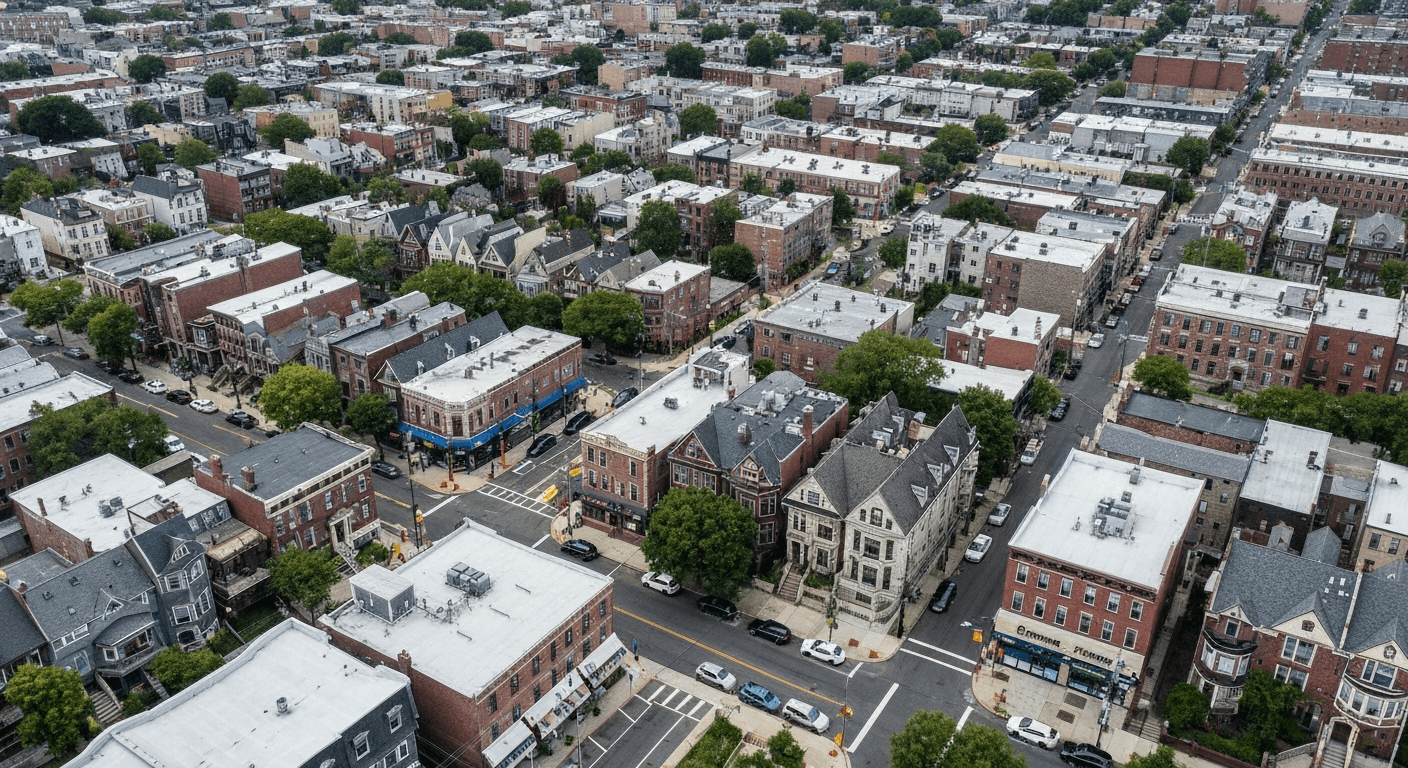
Flatbush is Brooklyn's most historically rich and culturally dynamic large neighborhood — a sprawling district that encompasses some of the borough's finest Victorian and Edwardian architecture, some of its most vibrant Caribbean and West African commercial corridors, and real estate values that continue to make it one of the most attractive destinations for buyers priced out of Brooklyn's premium zip codes. Stretching from the southern edge of Prospect Park down to Kings Highway and from Coney Island Avenue to Flatbush Avenue, Flatbush is not one neighborhood but a collection of distinct sub-communities — Prospect Lefferts Gardens, Ditmas Park, Beverly Square, Beverley Flatbush, Fiske Terrace, Midwood — each with its own personality and market dynamics, but united by the name, the history, and the extraordinary quality of the residential architecture that sets Flatbush apart from nearly any other neighborhood in New York City.
For home buyers approaching Flatbush for the first time, the experience can be revelatory. Driving down Marlborough Road or Rugby Road in Ditmas Park, past block after block of grand Victorian wood-frame houses with wraparound porches, stained glass windows, and manicured gardens, it is nearly impossible to believe you are less than 40 minutes by subway from Midtown Manhattan. These are the kinds of homes that exist in a handful of historic suburbs across America, but finding them at Brooklyn prices — and with Brooklyn transit access — is the kind of discovery that turns cautious browsers into committed buyers. If you have not explored Flatbush seriously, your Brooklyn home search is incomplete.
Neighborhood Overview & History
Flatbush is among the oldest continuously settled European communities in the New York metropolitan area. The Dutch colony of Breuckelen established Vlacke Bos — "wooded plain" in Dutch, corrupted over centuries to Flatbush — as one of six original Dutch towns in Kings County in 1651. The town's Dutch Reformed Church, the Reformed Protestant Dutch Church of Flatbush, has roots dating to 1654 and its current building on Flatbush Avenue, known as the Flatbush Dutch Reformed Church, was constructed in 1796 and still stands as one of Brooklyn's most remarkable historic landmarks. The Old Stone House in nearby Windsor Terrace is another relic of the colonial period, though Flatbush Avenue itself follows the path of a colonial-era road through what was then entirely agricultural land.
The neighborhood's residential development as we know it today began in earnest in the 1890s and accelerated through the 1920s, driven by the arrival of the Brooklyn-Manhattan Transit elevated and subway lines. Developers rushed to build on the farmland, and the result was an extraordinary variety of residential styles: Romanesque Revival and Queen Anne rowhouses in Prospect Lefferts Gardens, grand wood-frame Victorians and Dutch Colonial Revival houses in Ditmas Park, and smaller brick row buildings in the southern sections toward Cortelyou Road and Kings Highway. The Ditmas Park Historic District, designated by the New York City Landmarks Preservation Commission, encompasses dozens of these exceptional properties and provides significant legal protection against demolition or unsympathetic alteration.
The mid-20th century brought demographic shifts that transformed Flatbush from a predominantly white middle-class neighborhood to one of the most diverse communities in the United States. Caribbean immigration — particularly from Jamaica, Trinidad and Tobago, Barbados, and Haiti — reshaped the commercial corridors and community institutions of central Flatbush, while East African and West African communities have grown significantly in more recent decades. Today, Flatbush is home to one of the largest Caribbean-American populations in the United States outside of Miami, a cultural fact that is vibrantly expressed in the neighborhood's restaurants, markets, music, religious institutions, and street life.
The Real Estate Market
Flatbush's real estate market is one of Brooklyn's most complex, reflecting the enormous geographic and architectural diversity of the neighborhood itself. At the premium end, the Ditmas Park Historic District commands the highest prices in the neighborhood. Single-family Victorian houses on Marlborough Road, Rugby Road, Stratford Road, and Westminster Road — these are typically large, wood-frame properties with four to six bedrooms, full basements, and generous yards — sell in the range of $1.5 million to $3.5 million depending on size, condition, and renovation level. These properties are genuinely rare in Brooklyn and attract buyers who have searched across the entire borough and the near suburbs before discovering that the most architecturally remarkable homes at a reasonable price are right here in Ditmas Park.
Outside the historic district, pricing varies considerably. Two-family brick attached rowhouses in central Flatbush, particularly in the Beverleys or Fiske Terrace sections, are priced from $800,000 to $1.4 million. Three-family properties offering rental income from multiple units run $1.1 million to $1.8 million. Prospect Lefferts Gardens — the sub-neighborhood immediately south of Prospect Park bounded by Flatbush Avenue, Ocean Avenue, Parkside Avenue, and Clarkson Avenue — has seen some of the most dramatic appreciation in Flatbush over the past decade, driven by its proximity to the park and the Prospect Park B/Q/S subway station. Two-bedroom condominiums in converted rowhouses in PLG (as locals call it) sell from $750,000 to $1.2 million, while two-family townhouses command $1.1 million to $1.7 million.
New condominium development has arrived selectively in Flatbush, primarily along Cortelyou Road and Church Avenue, as well as on infill lots in various sub-sections. Prices for new construction condos in Flatbush range from $550,000 for a studio or one-bedroom to $1.2 million for a three-bedroom unit. The rental market remains strong throughout Flatbush, with one-bedroom apartments renting for $2,200 to $3,000 per month and two-bedrooms for $2,800 to $4,000, creating solid yield opportunities for investors who purchase at Flatbush's below-Brooklyn-average price points.
Investors who have held properties in Flatbush for a decade have seen substantial appreciation across all sub-neighborhoods, and the ongoing investment in transit improvements, Cortelyou Road's continued commercial development, and Prospect Park's enduring magnetism suggest continued upward pressure on prices. The neighborhood's scale — it is enormous by Brooklyn standards — means there is sufficient supply to absorb demand without the extreme competitive pressure found in smaller, already-saturated neighborhoods.
Lifestyle & Amenities
Flatbush's commercial life is anchored by two primary corridors: Cortelyou Road and Church Avenue. Cortelyou Road, particularly the stretch between Stratford Road and East 17th Street, has emerged over the past decade as one of Brooklyn's most celebrated neighborhood commercial strips, full of beloved independent restaurants, coffee shops, bars, and specialty retailers. Mimi's Hummus on Cortelyou Road is an institution, serving exceptional Middle Eastern food in a warm and casual atmosphere. The Farm on Adderley, a farm-to-table restaurant that helped put Ditmas Park on the culinary map, continues to serve creative American seasonal cuisine. Lea Restaurant is a neighborhood standby for date nights. For coffee, Qathra and the beloved Little Zelda (actually just over the border in Prospect Heights) draw neighborhood regulars, while Flatbush Farm, a wine bar and restaurant on Saint Marks Avenue, is a perennial neighborhood favorite.
Church Avenue tells a different story — one of extraordinary cultural diversity and commercial vitality. Caribbean groceries, halal butchers, West African braiding salons, Bangladeshi restaurants, and Latin American tiendas create a sensory experience that is authentically Brooklyn in its multicultural fullness. The Flatbush Food Co-op on Marlborough Road is a cherished community institution providing organic and locally sourced groceries. For everyday supermarket shopping, C-Town on Flatbush Avenue and Key Food on Cortelyou Road serve the neighborhood well.
Proximity to Prospect Park is one of Flatbush's most significant lifestyle advantages. The park's southern entrances at Parkside Avenue and Ocean Avenue provide Prospect Lefferts Gardens residents with direct access to the park's trails, athletic fields, the Wollman Rink, and the Lefferts Historic House. The park's vast meadows and forested paths are particularly accessible to Flatbush residents who can walk, bike, or jog in from the south without the crowds that sometimes concentrate at the Grand Army Plaza entrance.
The Kings Theatre on Flatbush Avenue — a magnificently restored 1929 movie palace that reopened in 2015 as a live concert and performance venue — is one of Flatbush's cultural crown jewels. With its soaring Baroque interior and 3,000-seat capacity, the Kings Theatre hosts major touring artists, Broadway-style productions, and community events that draw audiences from across Brooklyn and beyond.
Schools & Education
Flatbush encompasses portions of several Community School Districts — primarily District 17 in the northern sections and District 22 in the southern sections — and school quality varies considerably across the neighborhood. P.S. 92 (The Adrian Hegeman School) at 601 Parkside Avenue in Prospect Lefferts Gardens is among the more sought-after elementary schools in the area. P.S. 217 (the Colonel David Marcus School) on Beverly Road serves the Ditmas Park/Beverly Square area and is considered one of the stronger public elementary schools in the neighborhood. P.S. 139 (the Alexine A. Fenty School) at 330 Marlborough Road is a beloved Ditmas Park institution with an active parent association.
For middle and high school, Flatbush students navigate the citywide school choice process. Midwood High School, located on Bedford Avenue at Campus Road, is one of New York City's stronger large public high schools, offering specialized programs in science, mathematics, and the arts. Brooklyn College Academy, a transfer school, also operates within the Midwood High School campus. Private school options accessible from Flatbush include Poly Prep Country Day School in nearby Dyker Heights, the Yeshivah of Flatbush on Ocean Avenue (one of New York's finest Modern Orthodox schools), and various parochial schools serving the neighborhood's Catholic and evangelical Christian communities.
Brooklyn College, a distinguished campus of the City University of New York (CUNY) located on Bedford Avenue and Avenue H, anchors the southern end of Flatbush's educational ecosystem. The college's Performing Arts Center, library, and public events programming make it a community resource well beyond its enrolled student population, and proximity to a CUNY campus is a genuine quality-of-life advantage for many residents.
Transportation & Commute
Flatbush is served by one of the most robust transit networks in outer Brooklyn. The B and Q trains run along Flatbush Avenue and Ocean Avenue, stopping at Prospect Park (at Parkside Avenue), Church Avenue, Beverley Road, Cortelyou Road, and Newkirk Avenue — giving residents multiple points of convenient subway access along the length of the neighborhood. These trains connect to the Manhattan subway network via DeKalb Avenue and Atlantic Avenue-Barclays Center, putting Midtown Manhattan approximately 35 to 45 minutes away from mid-Flatbush stations under typical conditions.
The 2 and 5 trains serve the eastern edges of Flatbush via the Church Avenue and Beverley Road stations on New Utrecht Avenue (just east of the B/Q corridor), providing express service to Eastern Parkway–Brooklyn Museum and ultimately to Midtown. The B41 bus runs along Flatbush Avenue from the Flatbush-Brooklyn College terminal (at the southern end of the neighborhood) all the way to Downtown Brooklyn, providing additional north-south coverage. The B35 and B44 crosstown buses provide east-west coverage along Church Avenue and Nostrand Avenue respectively.
For drivers, proximity to the Belt Parkway via Kings Highway and the Brooklyn-Queens Expressway via Flatbush Avenue gives Flatbush residents reasonable access to the highway network for trips to Long Island, the airports, or New Jersey. The LIRR's Flatbush Avenue terminus at Atlantic Terminal is accessible via the 2/3/4/5 subway transfer, providing commuter rail service to Penn Station and to Long Island. Overall, Flatbush's transit connectivity is excellent for a neighborhood of its size and southern Brooklyn location.
Buying vs. Renting
Flatbush's below-Brooklyn-median pricing creates one of the most favorable buy-versus-rent scenarios in the borough. For buyers in the market for a multi-family brownstone or two-family rowhouse, the math is particularly compelling: a $1.1 million two-family property with a rental unit generating $2,800 to $3,200 per month in rent can significantly offset a buyer's monthly carrying costs, making the effective housing expense competitive with — or even lower than — equivalent rental apartments for a single-family household.
For individual unit buyers — purchasing a condo or co-op in Flatbush — the comparison with renting is more nuanced. Given current interest rates, monthly mortgage payments on a typical two-bedroom condo will likely exceed current market rents. However, buyers are building equity rather than paying rent, and Flatbush's appreciation history strongly suggests that five-to-seven-year holding periods have consistently yielded significant gains. In Prospect Lefferts Gardens in particular, where proximity to the park and relatively limited housing supply create structural appreciation pressure, long-term ownership has proven to be an excellent financial decision for buyers who committed even five years ago.
Who Should Live Here
Flatbush is a neighborhood with something to offer almost every buyer profile. First-time buyers who want to enter the Brooklyn market without stretching their budget to the breaking point find in Flatbush a genuine opportunity to own quality real estate in a culturally vibrant community. Families who need space — and want the kind of garden-level duplex or full townhouse that Park Slope prices have made inaccessible — find Flatbush offers exactly that at prices that remain achievable on professional salaries.
Architecture enthusiasts and history lovers are drawn to Ditmas Park's extraordinary Victorian and Edwardian housing stock, a collection that truly has no equal at Brooklyn prices. Investors seeking multi-family cash flow with long-term appreciation upside find the numbers work considerably better in Flatbush than in many higher-profile Brooklyn neighborhoods. Caribbean-American buyers and families with roots in the community find in Flatbush a place where cultural identity is embedded in the built environment — in the food, the music, the businesses, the churches, and the street life — in a way that no newer neighborhood can replicate.
Tips for Buying in Flatbush
Flatbush's size and sub-neighborhood diversity require buyers to do careful geographic targeting before beginning their search. The experience of buying in Ditmas Park is very different from buying in Prospect Lefferts Gardens or in the more central sections of Flatbush around Church Avenue and Flatbush Avenue. Spend time in the neighborhood at different hours and on different days before committing to a specific block or sub-section. Cortelyou Road on a Saturday morning and Church Avenue on a weekday afternoon will give you very different but equally essential impressions of this community.
For Victorian houses in the Ditmas Park Historic District, hire an inspector with specific experience in wood-frame historic housing. Issues unique to these properties — porch structural integrity, wood siding condition, old electrical panels (often original knob-and-tube that must be replaced), boiler and steam heat systems, and basement moisture — require specialized expertise to assess accurately. Budget for a thorough renovation assessment if purchasing a property that has not been recently updated: Victorian homes in this district can require $150,000 to $400,000 in work depending on scope and condition.
For multi-family properties in central Flatbush, understand New York City's rent stabilization laws in detail before making an offer. Many Flatbush multi-family buildings have rent-stabilized tenants, and the economics of the investment depend heavily on the gap between current stabilized rents and market rents, the likelihood of vacancy over your projected hold period, and the legal pathways for eventual deregulation. This is complex territory that requires an experienced real estate attorney and ideally a broker who has closed multiple multi-family deals in the neighborhood.
Conclusion & CTA
Flatbush is a neighborhood that rewards buyers who take the time to truly understand it. The combination of extraordinary architectural heritage, vibrant cultural life, excellent transit, and pricing that still reflects genuine value relative to northern Brooklyn makes Flatbush one of the most interesting real estate markets in New York City today. Whether you are buying your family's forever home on a Victorian block in Ditmas Park or your first investment property in Prospect Lefferts Gardens, the opportunity is real and the timing is right.
I am Farva Scott, Associate Broker at The Real Brokerage, and I specialize in helping buyers and investors navigate Brooklyn's diverse and fast-moving real estate markets. I would love to show you what Flatbush has to offer. Call me at (914) 417-9215 or visit farvascott.com to schedule a consultation and begin your search for the right home or investment property in one of Brooklyn's most authentic and enduring neighborhoods.