Hamilton Heights Real Estate Guide: Living, Buying & Investing in Hamilton Heights, NY
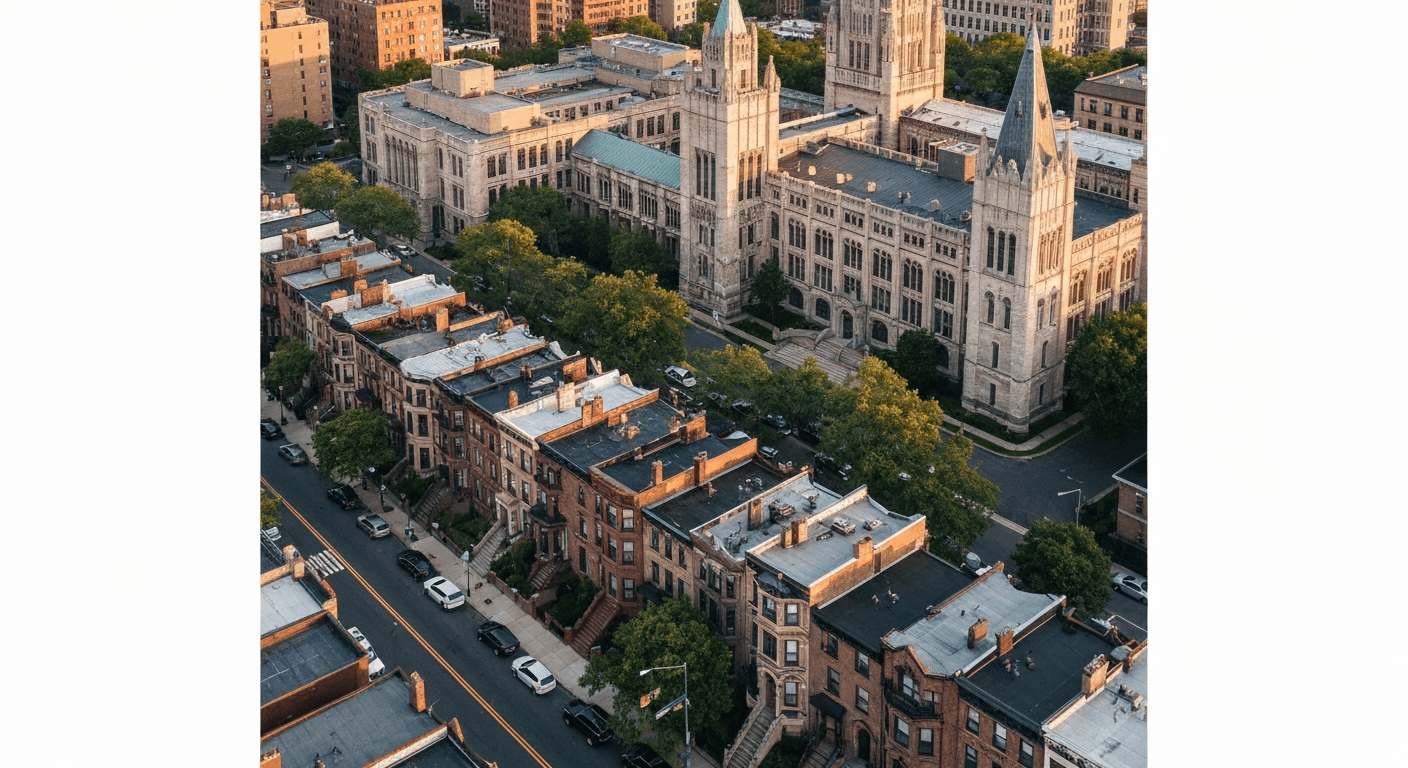
Hamilton Heights is one of Manhattan's best-kept secrets—a neighborhood where grand prewar architecture meets vibrant street life, and where the spirit of intellectual and cultural ambition has been woven into the very fabric of the community for over a century. Tucked between 135th Street and 155th Street, west of Amsterdam Avenue and east of Riverside Drive, Hamilton Heights offers an authenticity that few Manhattan neighborhoods can claim. It is a place where students from the City College of New York mingle with longtime residents, where jazz echoes through the halls of beautiful brownstones, and where history breathes through every block.
Named after Founding Father Alexander Hamilton, whose 1802 country estate—Hamilton Grange—still stands on Convent Avenue, Hamilton Heights carries a legacy of ambition and resilience. The neighborhood is part of the historic fabric of upper Manhattan, connected to the story of Harlem's Renaissance and the civil rights movement, and today it is experiencing a renaissance of its own. As prices in downtown Manhattan and central Harlem have soared, buyers and renters are increasingly looking north, and Hamilton Heights is delivering: gorgeous architecture, strong community ties, accessible parks, and improving commercial corridors.
For buyers ready to put down roots in a neighborhood with soul, history, and upside, Hamilton Heights offers what few places can: affordability, character, and the unmistakable energy of a community that knows who it is. Whether you're a first-time buyer, a long-term investor, or a relocating family seeking space and access to great schools and parks, Hamilton Heights demands serious attention in 2024.
Neighborhood Overview & History
Hamilton Heights sits in the northwestern corner of Manhattan, bordered by Riverside Drive to the west, St. Nicholas Avenue to the east, 135th Street to the south, and Fairview Avenue and 155th Street to the north. The neighborhood shares its southern boundary with Harlem and its northern boundary with Washington Heights, placing it at the crossroads of Manhattan's most dynamic cultural communities.
The neighborhood takes its name from Alexander Hamilton, whose Georgian Federal-style home, Hamilton Grange National Memorial, was relocated to Convent Avenue and 141st Street in 2008 after years of preservation efforts. Hamilton chose this elevated terrain—then well north of the city's core—as his private retreat, appreciating the commanding views of the Hudson River and the Harlem plains. That elevated character, both literal and figurative, has defined the neighborhood ever since.
In the late 19th century, as Manhattan's grid expanded northward, Hamilton Heights was developed as a middle and upper-middle-class enclave. The blocks of beautifully detailed rowhouses along Convent Avenue, Hamilton Terrace, and 141st and 144th Streets were constructed between the 1880s and the early 1900s and represent some of the finest examples of Romanesque Revival and Collegiate Gothic residential architecture in New York City. Many of these blocks are designated New York City landmarks.
By the 1920s and 1930s, Hamilton Heights had become home to a prominent African American community, many of whom were professionals, artists, and intellectuals moving north from midtown as the Harlem Renaissance flourished. Over the ensuing decades, the neighborhood became closely associated with the academic community of the City College of New York, which anchors the neighborhood at 138th Street and Convent Avenue. CCNY's beautiful gothic campus is a neighborhood landmark in its own right.
Today, Hamilton Heights is a neighborhood of remarkable ethnic and socioeconomic diversity. Dominican, Puerto Rican, and West African communities coexist alongside longtime African American residents, students, artists, and newer arrivals drawn by the neighborhood's affordability and character. Broadway is the main commercial artery, alive with bodegas, Caribbean bakeries, and new cafés. St. Nicholas Park provides a green spine running through the center of the neighborhood.
The Real Estate Market
Hamilton Heights has emerged as one of the most compelling real estate markets in Manhattan for buyers and investors who are willing to look north of the traditional sweet spots. For the better part of the past decade, the neighborhood has delivered strong appreciation while remaining accessible compared to central Harlem, Chelsea, or the Upper West Side. In 2024, Hamilton Heights offers a mix of property types at price points that are increasingly rare in Manhattan.
The dominant housing stock in Hamilton Heights is prewar co-ops and condominiums, concentrated along and near Broadway, Amsterdam Avenue, and St. Nicholas Avenue. Studio apartments in co-op buildings typically list in the $250,000 to $375,000 range, while one-bedroom units range from $350,000 to $550,000. Two-bedroom apartments—which are particularly sought after by families and investors—range from $550,000 to $850,000 in well-maintained buildings. Maintenance fees in the co-ops vary widely, from $600 to $1,500 per month depending on the building's amenities and underlying mortgage.
The most coveted properties in Hamilton Heights are its historic rowhouses and brownstones on the landmarked blocks of Convent Avenue, Hamilton Terrace, and 141st and 143rd Streets. Single-family townhouses in this micro-market—when they come available—can range from $1.8 million to $3.5 million and above, reflecting both the architectural quality and the extreme scarcity of this type of property in Manhattan. Multi-family brownstones, typically three to five units, are similarly priced and represent an exceptional opportunity for owner-investors who want to occupy one unit while generating rental income from the others.
Rental yields in Hamilton Heights have historically been strong. One-bedroom apartments rent for $2,200 to $2,800 per month, and two-bedrooms achieve $2,900 to $3,800. This keeps cap rates relatively competitive by Manhattan standards, especially when purchasing through the co-op market where purchase prices remain lower than fee-simple condominiums.
The investment case for Hamilton Heights rests on several pillars. First, the landmarked blocks on and near Convent Avenue ensure long-term architectural preservation—unlike in other gentrifying neighborhoods, there is no risk that the historic character of the best blocks will be demolished or overshadowed by new construction. Second, the proximity to City College of New York creates stable rental demand from a large and continuously replenished student and academic community. Third, the ongoing commercial improvement of Broadway and the expansion of restaurant and retail options signal that the neighborhood's transition is deepening, not reversing.
Buyer competition has increased noticeably over the past two years. Well-priced co-op units in maintained buildings regularly attract multiple offers, particularly in the $350,000 to $600,000 range. Buyers should be prepared with pre-approval letters, strong financials that meet co-op board requirements—typically requiring 20 to 25 percent down and a debt-to-income ratio below 28 percent—and the patience to move quickly when the right listing appears.
New development is limited in Hamilton Heights due to the landmark protections on many blocks, which is both a constraint and a long-term strength: supply cannot easily expand to meet growing demand, which supports values over time.
Lifestyle & Amenities
Living in Hamilton Heights means inhabiting a neighborhood that rewards exploration. Broadway from 135th to 155th Street is the neighborhood's main artery, and it is alive at all hours with the sounds and smells of a genuinely multicultural community. Here you will find La Tropical, one of the city's best Dominican restaurants, serving whole-roasted pork and rice dishes that locals line up for on weekends. Malecon Restaurant on Broadway is legendary for its rotisserie chicken and has been a Hamilton Heights institution for decades.
The neighborhood's café culture has expanded rapidly. Uptown Roasters on Broadway has become a community anchor, serving excellent coffee to a crowd of students, remote workers, and longtime residents who have made it a second living room. Harlem Public on Broadway is a well-regarded bar and restaurant offering craft beers and an American menu in a welcoming space that draws both newcomers and longtime residents.
St. Nicholas Park, which runs between 127th and 141st Streets along St. Nicholas Avenue, is the neighborhood's primary green space and an extraordinary one—a rugged, wooded urban park with paths, playgrounds, and spaces that feel miles from the Manhattan grid. Just to the north, Jackie Robinson Park on Edgecombe Avenue offers athletic fields, a public pool, and recreational facilities that serve as a vital community gathering space.
Riverside Park along the Hudson River, accessible via the 145th Street crossover, provides waterfront access, bicycle paths, and sweeping views of the Hudson and the Palisades of New Jersey. Running and cycling along the Hudson River Greenway is a daily ritual for many Hamilton Heights residents.
The neighborhood's cultural life is enriched by its proximity to the City College of New York campus, which hosts concerts, exhibitions, and academic events open to the public. The Morris-Jumel Mansion, located just north at 160th Street, is the oldest surviving house in Manhattan and offers history tours and community events.
Shopping on Broadway includes a full range of local grocery stores, pharmacies, hardware stores, and clothing shops. Fairway Market provides the full-service grocery experience. For nightlife, residents are a short subway ride from the bars and music venues of Central Harlem on 125th Street, or can head north into Washington Heights for lively Dominican social clubs and restaurants.
Schools & Education
Families with children in Hamilton Heights have access to a range of public school options within District 6 and District 5. PS 132, the Juan Pablo Duarte School at 145th Street and Amsterdam Avenue, serves elementary-age students and has shown improved performance metrics in recent years. PS 153, the Adam Clayton Powell Jr. School, is another strong elementary option serving younger children in the district.
For middle school, District 6 includes MS 322, which offers a dual-language curriculum and is particularly popular with families in the northern reaches of Hamilton Heights. High school options include the High School for Math, Science and Engineering at City College, a specialized high school located directly on the CCNY campus at 138th Street and Convent Avenue that consistently ranks among the top public high schools in New York State. The school accepts students through the Specialized High School Admissions Test and provides a rigorous STEM curriculum within walking distance of the neighborhood.
City College of New York itself is a significant educational anchor for the neighborhood, offering undergraduate and graduate programs across a wide range of disciplines and providing employment, culture, and community vitality to Hamilton Heights. The campus includes library access available to community members through the New York Public Library partnership.
Private school options within a reasonable commute include Trinity School and Horace Mann School, accessible via the subway and the M100 and M101 bus lines. The Riverdale Country School in the Bronx is also within reach for families willing to cross the bridge, and Ethical Culture Fieldston School is accessible via the 1 train to Riverdale.
Transportation & Commute
Hamilton Heights is well-served by public transit, making it genuinely practical for commuters who work in Midtown Manhattan, downtown, or even the outer boroughs. The 1 train runs along Broadway and provides direct service to Times Square—approximately 25 minutes—Penn Station, and the West Village. The A and C express trains stop at 145th Street and St. Nicholas Avenue, offering fast service to 59th Street-Columbus Circle in roughly 15 minutes and downtown to Fulton Street and beyond. The B and D trains stop at 155th Street at the northern boundary of the neighborhood, offering additional downtown service via the Sixth Avenue corridor.
Bus service is robust, with the M3 and M100 running along Amsterdam Avenue and the M101 and M104 providing crosstown and downtown connections. The BxM3 express bus provides limited-stop service to Midtown for commuters who prefer above-ground travel.
For cyclists, Hamilton Heights is accessible via the Hudson River Greenway on the western edge of the neighborhood, which provides a protected cycling route from Inwood all the way to the Battery. The 181st Street and 125th Street connections to the greenway are both within easy reach of the neighborhood's residents.
Walk scores for Hamilton Heights typically register in the high 80s to low 90s, reflecting the density and completeness of the commercial corridor along Broadway. Car ownership is manageable but not necessary for daily life; most residents rely primarily on the subway and occasional rideshare services for trips not covered by transit.
Buying vs. Renting
In the current market, Hamilton Heights presents a compelling case for buying over renting for those with stable income and sufficient savings for a down payment and co-op board qualification. With studio co-ops available from $250,000 and one-bedrooms in the $350,000 to $500,000 range, the monthly carrying cost of ownership—including mortgage, maintenance, and taxes—is often comparable to or lower than market rents in the same building.
The co-op board process adds time and complexity, typically requiring two to three months from accepted offer to closing. Prospective buyers must present detailed financial packages, typically including two years of tax returns, recent bank and investment statements, employment verification, and personal and professional reference letters. Strong financials with at least 20 percent down, six months of reserves post-closing, and a debt-to-income ratio under 28 percent are the minimum bar for most buildings.
Renters, meanwhile, are finding the Hamilton Heights market tighter than it was pre-pandemic. Vacancy rates are low and landlords in desirable buildings are achieving rents that put monthly costs close to ownership levels without the equity build. For anyone planning to stay five years or more, buying makes strong financial sense in this neighborhood.
Who Should Live Here
Hamilton Heights is one of those rare Manhattan neighborhoods that works for an unusually wide range of buyers and residents. Young professionals in their late 20s and 30s are attracted by the relatively affordable entry price, the excellent transit access, and the growing dining and social scene along Broadway. Academics and graduate students connected to City College or Columbia University—a short commute via the 1 train—find the neighborhood's intellectual atmosphere and building quality immediately appealing.
Families are drawn by the spacious apartment sizes—particularly the two- and three-bedrooms available in the prewar co-op inventory—and by the outdoor resources at St. Nicholas Park, Jackie Robinson Park, and the Hudson River waterfront. Empty nesters looking to downsize from the suburbs without sacrificing access to culture and green space find Hamilton Heights a practical and aesthetically satisfying choice.
Investors—both individual buyers of multi-family brownstones and those active in the small-format rental market—see Hamilton Heights as a neighborhood where the gap between current pricing and long-term value has not yet fully closed, making now an opportune window to establish positions before the neighborhood matures further. The landmarked core ensures aesthetic stability that many gentrifying neighborhoods cannot offer.
Tips for Buying in Hamilton Heights
The most important thing to understand about buying in Hamilton Heights is the co-op landscape. The vast majority of listed apartments are co-ops, not condominiums, and the board approval process is rigorous. Before making an offer, ensure you have a clear picture of a given building's financial health: review the most recent audited financial statements, check the building's underlying mortgage, and ask your attorney to examine the house rules and board meeting minutes for the past two years. Buildings with large underlying mortgages or high maintenance fees can erode the value of your purchase over time.
When shopping the landmarked brownstone blocks—Convent Avenue, Hamilton Terrace, 141st and 143rd Streets—be prepared to move decisively. These properties rarely come to market, and when they do, they often receive multiple strong offers within days. Work with a buyer's agent who has deep familiarity with the upper Manhattan market and can alert you to pre-market listings.
Get to know the neighborhood on foot. Walk Broadway at different times of day. Check transit times from the buildings you are considering. Visit St. Nicholas Park on a weekend morning. Spend time in the buildings you are evaluating—the quality of the superintendent, the condition of the lobby, and the demeanor of existing residents will tell you a great deal about what co-op life will actually be like.
Conclusion
Hamilton Heights is a neighborhood that rewards those who look beyond the most obvious Manhattan markets. With extraordinary prewar architecture, strong transit connections, a diverse and resilient community, and price points that still represent genuine value by Manhattan standards, it offers what every serious buyer is looking for: a place to build equity and a life at the same time.
Whether you are a first-time buyer stepping into the Manhattan market, an investor seeking a multi-family townhouse with long-term upside, or a family searching for space, parks, and good schools without sacrificing the energy of city life, Hamilton Heights deserves to be at the top of your list.
Ready to explore what Hamilton Heights has to offer? Contact Farva Scott, Associate Broker at The Real Brokerage, to schedule a private tour and market consultation. Visit farvascott.com or call (914) 417-9215.