Harlem Real Estate Guide: Living, Buying & Investing in Harlem, NY
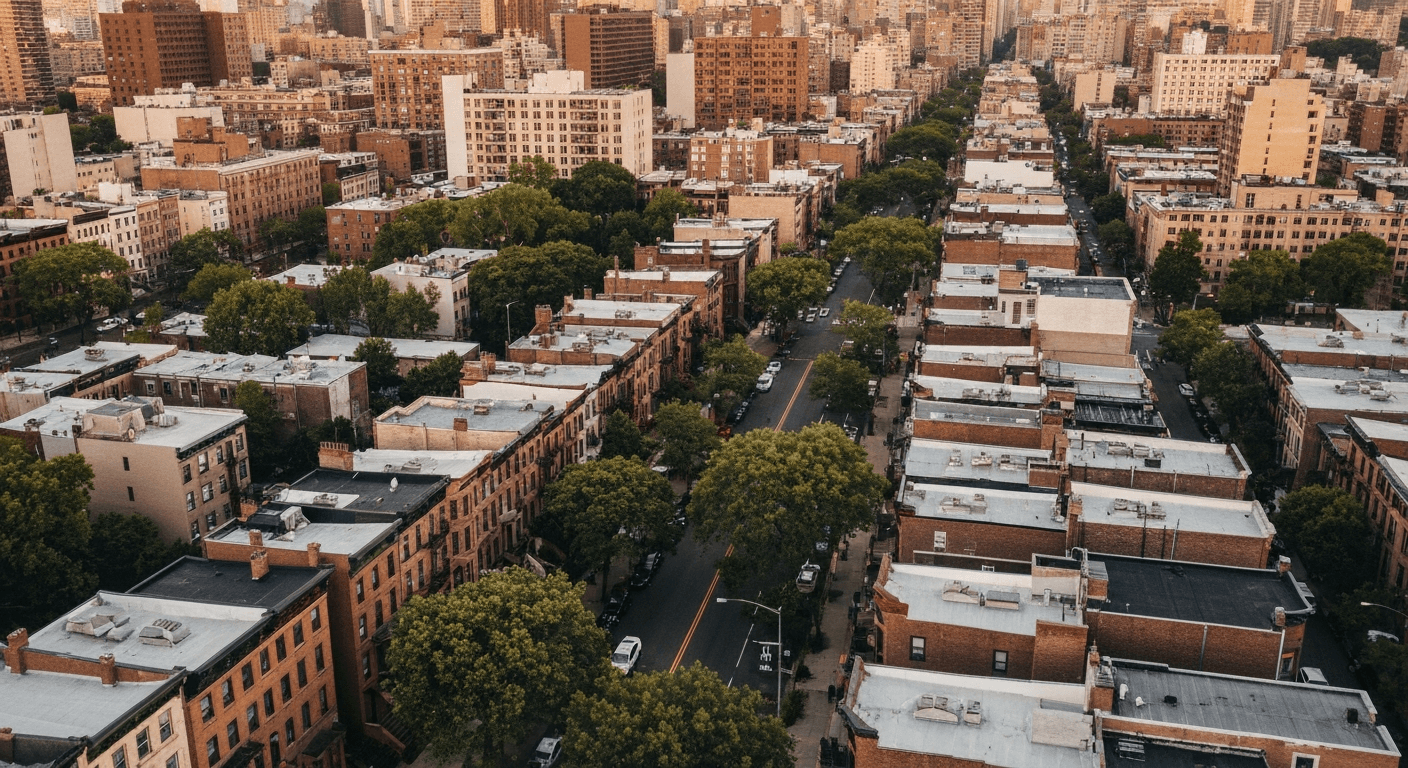
Few neighborhoods in New York City carry as much cultural weight, artistic legacy, and investment potential as Harlem. Stretching from 110th Street to 155th Street between the Hudson River and the East River, Harlem is one of Manhattan's most iconic and dynamic neighborhoods—a place where century-old brownstones line tree-shaded blocks, world-class restaurants serve Southern-influenced cuisine steps from jazz bars, and a new generation of buyers is discovering extraordinary value in one of the borough's most storied zip codes.
Whether you're drawn here by the architecture—the prewar walk-ups, the elegant rowhouses, the grand apartment buildings with art deco lobbies—or by the culture and community that have made Harlem a global symbol of Black excellence, one thing is clear: this neighborhood is having a moment. And savvy buyers know that moments like this don't last forever.
Harlem's transformation over the past two decades has been nothing short of remarkable. What was once overlooked by Manhattan buyers seeking "safe" neighborhoods has become one of the most sought-after investment corridors in New York City. Median home prices have risen steadily, new luxury condos have risen alongside meticulously restored landmarked brownstones, and the neighborhood's commercial corridors along 125th Street and Frederick Douglass Boulevard have attracted an entirely new roster of restaurants, fitness studios, and boutiques.
If you're a first-time buyer looking to enter the Manhattan market at a more accessible price point, or an investor seeking a neighborhood still on the right side of its appreciation curve, Harlem deserves serious attention. This guide covers everything you need to know about living, buying, and investing in one of New York City's greatest neighborhoods.
Neighborhood Overview & History
Harlem's story begins in the 17th century, when Dutch settlers established a farming village called Nieuw Haarlem—named after the city in the Netherlands—along the upper reaches of Manhattan island. For centuries it remained largely rural and then suburban, attracting wealthy New Yorkers who built grand estates along what is now Lenox Avenue (officially Malcolm X Boulevard) and St. Nicholas Avenue.
The neighborhood's transformation began at the turn of the 20th century, when a speculative building boom left thousands of apartments vacant. Black entrepreneurs and community leaders, led by figures like Philip Payton Jr., negotiated leases for Black tenants in the new buildings, and Harlem quickly became the center of Black American life in New York City. What followed was the Harlem Renaissance of the 1920s—an explosion of art, music, literature, and intellectual thought that produced luminaries including Langston Hughes, Zora Neale Hurston, Duke Ellington, and Louis Armstrong.
Today, Harlem's character is defined by the tension and creativity that comes from rapid change meeting deep-rooted tradition. Central Harlem—the area west of Fifth Avenue, north of 110th Street—is the cultural and commercial heart, anchored by the famous 125th Street corridor where the Apollo Theater, the Studio Museum in Harlem, and dozens of restaurants and shops draw visitors from across the world. West Harlem, north of 125th Street between the Hudson River and St. Nicholas Avenue, is home to some of the neighborhood's most desirable townhouse-lined blocks, including the historic Strivers' Row district on 138th and 139th Streets, where wealthy Black professionals built their homes a century ago.
Marcus Garvey Park—a 20-acre green space on Fifth Avenue between 120th and 124th Streets—anchors the eastern edge of the neighborhood and hosts outdoor concerts, art installations, and community events throughout the summer months. Frederick Douglass Boulevard, which has earned the unofficial nickname "Restaurant Row," and Adam Clayton Powell Jr. Boulevard are the neighborhood's most vibrant commercial streets, each lined with a mix of old-school bodegas and boutiques, neighborhood delis and new-wave coffee shops that give Harlem its irreplaceable urban texture.
The Manhattanville section, at the neighborhood's southwestern edge around West 125th Street and the Hudson River, is experiencing a distinct transformation driven by Columbia University's massive expansion of its campus into this former industrial corridor—a development that has introduced lab buildings, arts spaces, and thousands of new workers to the neighborhood's economic ecosystem.
The Real Estate Market
Harlem's real estate market tells a story of extraordinary transformation—and continued opportunity. As recently as the early 2000s, entire townhouse blocks could be purchased for prices that seem unimaginable today. That era is long over, but compared to the rest of Manhattan, Harlem still offers remarkable value for the quality of housing stock and the location it provides.
Co-ops and Condos
The most abundant housing type in Harlem is the prewar co-operative apartment. Studios in central Harlem typically list from $225,000 to $350,000, with monthly maintenance fees ranging from $600 to $1,200 depending on the building and what utilities are included. One-bedroom co-ops are typically priced from $350,000 to $550,000, while larger two-bedroom units range from $500,000 to $900,000 in well-maintained buildings with doorman service and amenities.
New construction condos, particularly along Frederick Douglass Boulevard and near the Columbia University expansion area in Manhattanville, command premium prices. A one-bedroom condo in a modern building can range from $600,000 to $850,000, while two-bedroom units commonly sell for $900,000 to $1.4 million. Luxury new development condos in buildings with full doorman service, rooftop terraces, fitness centers, and concierge can exceed $1.6 million for three-bedroom units.
Townhouses and Brownstones
Harlem's townhouses are its most coveted—and most discussed—asset class. The neighborhood contains some of the finest concentrations of Romanesque Revival, Renaissance Revival, and Queen Anne-style brownstone rowhouses in New York City. On landmarked blocks like Strivers' Row (West 138th and 139th Streets) and the Hamilton Heights Historic District north of 145th Street, fully renovated townhouses regularly trade for $3 million to $5 million. Unrenovated properties on desirable blocks can still be found in the $1.2 million to $2.5 million range, offering significant upside for buyers willing to invest in thoughtful restoration.
Market Trends
Harlem has seen consistent year-over-year price appreciation, with the median sale price for co-ops up approximately 8% over the past three years. Inventory remains tight—especially for townhouses—and well-priced properties at any price point routinely attract multiple offers within the first two weeks of listing. The competitive nature of the market has compressed days-on-market significantly: properties that once sat for months now move in days.
The neighborhood benefits enormously from its proximity to Columbia University, which expanded its campus into Manhattanville (just south of 125th Street along the Hudson River), bringing thousands of faculty, staff, and students who have strengthened rental demand and driven restaurant and retail development throughout the neighborhood.
Investment Potential
Harlem remains one of the strongest long-term investment plays in Manhattan. Rental yields are compelling: a well-positioned two-bedroom apartment can command $3,200 to $4,000 per month in rent, making income-property purchases at Harlem's price points significantly more viable than in downtown Manhattan. Multi-family brownstones—where the owner occupies one floor and rents the others—remain the neighborhood's quintessential investment vehicle, a model that has built generational wealth for families throughout the neighborhood's history. For investors with a five-to-ten year horizon, Harlem's combination of below-average-Manhattan prices, strong rental demand, and continued neighborhood improvement makes the case for ownership here unusually compelling.
Lifestyle & Amenities
Living in Harlem means never running out of things to do, eat, or experience. The neighborhood's cultural and culinary scene has expanded dramatically over the past decade without losing the authenticity that makes it genuinely special.
Food and Dining
Harlem's restaurant scene is one of New York City's best-kept secrets—rapidly becoming not so secret. Red Rooster Harlem, celebrity chef Marcus Samuelsson's flagship on Lenox Avenue at 125th Street, remains the neighborhood's most famous table, blending Southern comfort food with global influences in a stunning space that hosts live music on weekend evenings. Sylvia's Restaurant on Lenox Avenue between 126th and 127th Streets is a New York institution, serving soul food since 1962 to everyone from regular neighborhood residents to visiting dignitaries.
For a casual meal, Dinosaur Bar-B-Que at 131st Street and 12th Avenue serves legendary ribs, pulled pork, and brisket, while Corner Social on Lenox Avenue is a favorite for weekend brunch. Barawine on Frederick Douglass Boulevard offers a refined wine bar experience with Mediterranean small plates. The collection of Ethiopian and East African restaurants that has grown around 116th Street has become a destination for food lovers from across the city.
Parks and Recreation
Central Park is Harlem's backyard—the northern end of the park, accessible from 110th Street at both Central Park North and Fifth Avenue, is significantly less crowded than the midtown and downtown entrances, giving Harlem residents an almost private-feeling access point to 843 acres of green space. Marcus Garvey Park offers basketball courts, playgrounds, a swimming pool, and the historic Mount Morris Fire Watchtower, a cast-iron structure dating to 1857 that is the only surviving example of this type of fire lookout in New York City. Morningside Park, running along the rocky ridge above Columbia University between 110th and 123rd Streets, is a serene green escape ideal for walking and running.
Fitness and Wellness
Harlem has seen a surge of fitness studios in recent years. Blink Fitness operates locations on 125th Street. The YMCA of Greater New York has a major facility on 135th Street with a pool, gymnasium, and group fitness classes. Several boutique yoga and Pilates studios operate along Frederick Douglass Boulevard.
Culture and Nightlife
The Apollo Theater on 125th Street needs no introduction—it remains one of the world's most storied performance venues, with a programming calendar that spans from hip-hop showcases to classical music performances to its legendary Amateur Night series. The Studio Museum in Harlem, rebuilding its landmark facility at 144 West 125th Street, is a major art institution. The National Jazz Museum at 58 West 129th Street celebrates the genre born in these streets. For nightlife, Ginny's Supper Club below Red Rooster offers live jazz in an intimate underground setting.
Schools & Education
Harlem's school landscape has changed considerably over the past two decades, and today offers a meaningful range of options for families with children of all ages.
Public Schools
The neighborhood is served by Community School District 5 (CSD 5). PS 92 Mary McLeod Bethune on West 134th Street and PS 185 John M. Langston on West 145th Street are among the neighborhood's best-known elementary schools. PS 175 Henry H. Garnet on West 134th Street has seen significant improvement in recent years. For parents willing to explore the city's specialized public school options, the selective examination schools—including Stuyvesant High School, the Bronx High School of Science, and Brooklyn Technical High School—are accessible via the neighborhood's excellent subway connections.
Charter and Independent Schools
Harlem has become one of the most significant concentrations of high-performing charter schools in the United States. KIPP NYC, Harlem Success Academy, Democracy Prep Charter School, and Promise Academy (part of the Harlem Children's Zone on 125th Street) have collectively earned national recognition for academic outcomes, with students regularly outperforming citywide averages on standardized assessments. Frederick Douglass Academy I on West 117th Street is a sought-after public school with strong academic performance and a college-preparatory mission that has sent graduates to selective universities across the country.
Higher Education
Columbia University—with its main campus in Morningside Heights at the neighborhood's western edge—is one of the world's top research universities. The City College of New York (CCNY), a tuition-free public university with a stunning Gothic campus at 160th Street and Amsterdam Avenue, is one of higher education's great democratic institutions and an architectural landmark in its own right. Both universities drive significant economic activity and housing demand throughout the neighborhood.
Transportation & Commute
Harlem is exceptionally well-connected to the rest of Manhattan and the broader city—one of the most practical arguments for choosing this neighborhood over more expensive alternatives.
Subway
The 2 and 3 trains (IRT Broadway–7th Avenue Line) run along Lenox Avenue (Malcolm X Boulevard), with stops at 110th Street, 116th Street, 125th Street, 135th Street, 145th Street, and 148th Street. These express trains reach Midtown in approximately 15 to 20 minutes and are among the fastest routes to the 42nd Street/Times Square hub.
The A, B, C, and D trains (IND 8th Avenue and 6th Avenue Lines) run along St. Nicholas Avenue and Frederick Douglass Boulevard, with major stops at 125th Street and 145th Street. The A train express reaches Columbus Circle at 59th Street in approximately 10 minutes—one of the fastest commutes to Midtown from any uptown neighborhood.
The 4, 5, and 6 trains serve East Harlem along Lexington Avenue, providing express service to Grand Central Terminal on the East Side.
Buses and Cycling
Multiple crosstown bus routes—the M10, M2, M3, M7, M100, and M102—provide additional coverage throughout the neighborhood, connecting residents to riverside destinations and cross-town amenities. The Hudson River Greenway runs along the western edge of the neighborhood, offering a protected cycling path all the way downtown to the Battery. Citi Bike docking stations are distributed throughout the neighborhood.
Walkability
With Walk Scores consistently in the 95–99 range, virtually every daily errand in Harlem can be completed on foot. Commute time to Midtown: 15–25 minutes by express subway.
Buying vs. Renting
The question of whether to buy or rent in Harlem is increasingly tilting toward buying for those who can afford the down payment. Rental prices have risen sharply—a one-bedroom apartment in a well-maintained Harlem building typically rents for $2,400 to $3,200 per month, and two-bedroom apartments can command $3,200 to $4,200 per month in desirable buildings.
When you run the numbers, the price-to-rent ratio in Harlem is among the most favorable in all of Manhattan. At current prices, a buyer purchasing a one-bedroom co-op at $400,000 with a 20% down payment faces monthly carrying costs (mortgage, maintenance, property taxes) that can be competitive with or even lower than comparable rental costs—while building equity in one of the city's most consistently appreciating markets.
For co-op buyers specifically, most buildings require 20% down and will review financial documents, board applications, and in some cases conduct personal interviews. The process requires patience but results in financially stable buildings with strong underlying values that protect every shareholder's investment.
Ownership in Harlem also offers the opportunity to generate rental income from a multi-family property—a financial structure that has built generational wealth for many neighborhood families and continues to represent one of the most compelling investment models in the city.
Who Should Live Here
Harlem's diversity extends to the types of residents who thrive here. It is genuinely one of the most demographically and lifestyle-diverse neighborhoods in New York City.
Young Professionals are drawn by the relative affordability compared to downtown Manhattan, the excellent subway access to Midtown and downtown, the growing restaurant and nightlife scene, and the sense of being part of a neighborhood with genuine character and energy.
Families appreciate the larger apartments that Harlem's prewar housing stock skews toward—two- and three-bedroom units are far more common here than in many downtown neighborhoods—along with the access to strong charter schools, the Central Park adjacency, and the tight-knit community feel of residential blocks that have been home to generations of families.
Artists and Creatives have long made Harlem home. The neighborhood's history as the birthplace of one of the greatest artistic movements in American history continues to attract creative professionals who value community and culture as much as square footage.
Investors are drawn to Harlem's compelling economics: prices still below comparable downtown neighborhoods, strong rental demand, appreciation potential, and the extraordinary stock of multi-family brownstones that offer income generation alongside long-term value.
Retirees appreciate the neighborhood's walkability, community feel, access to world-class cultural institutions, and proximity to major medical centers.
Tips for Buying in Harlem
Get your financing in order first. Whether you're applying for a co-op or purchasing a condo, sellers expect pre-approval letters before accepting an offer. For co-op purchases, make sure your lender has co-op experience—the underwriting requirements differ meaningfully from condos.
Understand co-op rules before you fall in love with a unit. Each co-op has its own subletting policies, pet policies, and financial requirements. Some buildings require significant liquid reserves (often 1–2 years of monthly payments), prohibit subletting entirely for the first few years of ownership, or have complex flip tax structures. Read the proprietary lease carefully and have your attorney review it before you proceed.
Work with a broker who knows the blocks. Harlem's micro-markets vary dramatically by block. A brownstone on Strivers' Row is a fundamentally different purchase from a co-op on a transitional block two streets away. Local expertise matters enormously.
Move quickly on well-priced properties. The days of Harlem townhouses sitting on the market are largely over. For desirable properties, plan to submit offers within days—not weeks—of your first showing.
Inspect thoroughly. Older buildings require careful inspection of roofs, plumbing, electrical systems, and foundation conditions, especially in unrenovated brownstones. Budget for potential deferred maintenance before making an offer.
Conclusion: Your Harlem Real Estate Journey Starts Here
Harlem is not a neighborhood that needs to be "discovered"—it has always been one of New York City's greatest places to live. What has changed is the broader recognition of what residents have known for generations: that Harlem offers an irreplaceable combination of cultural richness, architectural beauty, community depth, and real estate opportunity that you cannot find anywhere else in Manhattan.
Whether you're buying your first home, expanding an investment portfolio, or looking for the kind of neighborhood that becomes part of your identity, Harlem deserves serious consideration. The market is moving, and the buyers who act thoughtfully and decisively today are the ones who will look back in ten years and call it one of the best decisions they ever made.
Ready to explore what Harlem has to offer? Contact Farva Scott, Associate Broker at The Real Brokerage, to schedule private showings and get expert guidance on navigating the Harlem market. Visit farvascott.com or call (914) 417-9215 today.