Hell's Kitchen Real Estate Guide: Living, Buying & Investing in Hell's Kitchen, NY
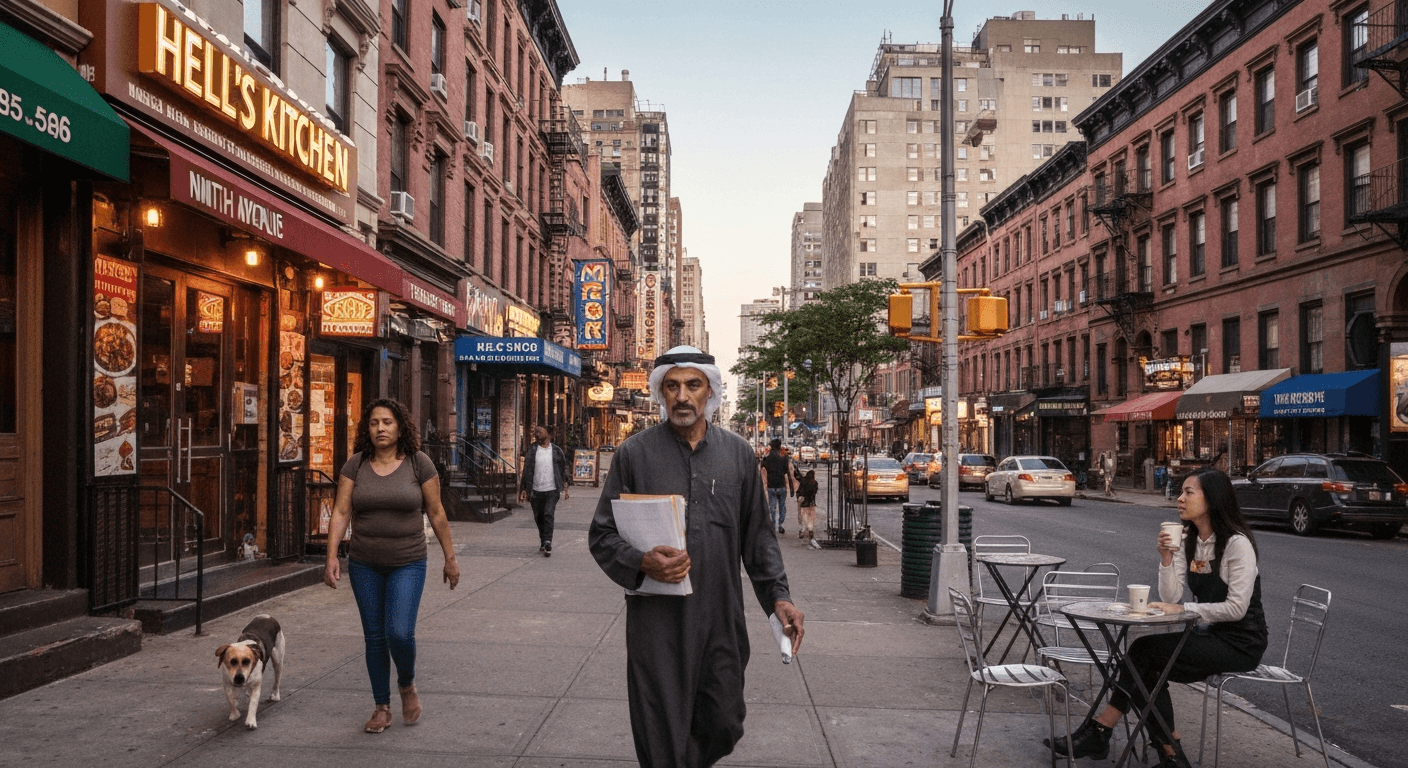
Hell's Kitchen has one of the most dramatic real estate stories in New York City — and one of the most compelling arguments for buying in a neighborhood before its full potential is priced in. Stretching from 34th Street north to 59th Street and from Eighth Avenue west to the Hudson River, this historically working-class neighborhood spent much of the 20th century as New York's most notorious tough-guy district, a dense warren of tenements, meatpacking operations, railroad yards, and industrial waterfront that birthed countless legends of old New York. Today, Hell's Kitchen — also marketed under the gentler alias "Clinton" — is a vibrant, culturally rich, and rapidly appreciating residential community that offers genuine Manhattan living at prices meaningfully below its neighbors to the east (Midtown) and south (Chelsea). The neighborhood's transformation has been driven by the rise of Broadway culture, the opening of Hudson Yards, the renovation of Hudson River Park, the arrival of world-class restaurants along Ninth Avenue, and a sustained influx of creative professionals, theater workers, tech employees, and young families who've discovered that Hell's Kitchen delivers more neighborhood authenticity, per square foot, than almost anywhere else on the island. This guide covers everything you need to know about buying, investing in, and living in Hell's Kitchen — from the real estate market dynamics to the best pizza on Ninth Avenue.
Hell's Kitchen's name alone is one of the great pieces of New York mythology. The most commonly cited origin story attributes the phrase to a 19th-century police officer named Dutch Fred who, observing a riot on West 39th Street, remarked that the neighborhood was "hell itself," to which his partner replied it was "hell's kitchen." Others trace it to a notorious tenement building on the block of 54th Street between Ninth and Tenth Avenues. Whatever its origin, the name stuck — and stuck hard. Through the Gilded Age and into the early 20th century, Hell's Kitchen was dominated by the Irish immigrant working class who labored on the Hudson River docks and in the slaughterhouses and rail yards of the West Side. The neighborhood was ruled by the Gopher Gang and later the Hudson Dusters, and its streets were notoriously dangerous well into the 1970s and 1980s when the neighborhood was plagued by poverty, drugs, and neglect. The transformation began quietly in the 1990s — driven by the proximity to Times Square and the spillover from Midtown's relentless expansion — and accelerated dramatically in the 2010s. Today, West 46th Street between Eighth and Ninth Avenues has become "Restaurant Row," a nightly parade of pre-theater diners. Ninth Avenue from 34th to 57th Streets is a culinary corridor that food writers from around the country make special trips to sample. The neighborhood's old tenements have been renovated into sought-after rentals and, increasingly, converted to condominiums. And the character that once made Hell's Kitchen dangerous — its density, its variety, its unapologetic grit — is precisely what makes it magnetic to a new generation of New Yorkers who want something real amid the city's increasing gentrification.
The Hell's Kitchen real estate market sits at a fascinating inflection point — far enough along in its transformation to be genuinely safe and desirable, but not yet priced to the premium levels of neighboring Chelsea or Midtown East, meaning buyers who move now are entering at a relative discount that history suggests will not persist. The neighborhood's housing stock is primarily composed of pre-war walk-up and elevator co-op buildings, a growing number of new luxury condominium developments, and a handful of rental-to-condo conversion projects in older tenement buildings. Entry-level studio apartments in Hell's Kitchen co-ops start around $400,000 to $550,000 — meaningfully below comparable Midtown or Chelsea studios — while one-bedroom co-ops typically range from $600,000 to $950,000. Two-bedroom co-ops span $900,000 to $1.5 million. Newer luxury condominium developments — including buildings like Skyline Tower (technically in Long Island City but drawing Hell's Kitchen comparisons), The Gotham West on Eleventh Avenue, and various mid-block conversions — command $1,200 to $1,800 per square foot. Townhouse inventory is limited but exists; the occasional four- or five-story rowhouse on the blocks between Ninth and Tenth Avenues trades at $3 million to $5 million, representing compelling value for buyers seeking an owner-occupied multi-unit property in Manhattan. The rental market is extraordinarily tight: studios rent for $2,800 to $3,800, one-bedrooms for $3,500 to $5,200, and two-bedrooms for $5,000 to $7,500. Investor landlords operating well-managed properties in Hell's Kitchen experience some of the lowest vacancy rates in the entire borough. The opening of Hudson Yards (with a second phase of office and residential development still in progress) has elevated property values along the neighborhood's western fringe, and the continued expansion of the Hudson River Park waterfront activation — new sports fields, the Bella Abzug Park at 39th Street, and the planned renovation of Pier 76 — will continue to drive demand in the years ahead. Buyers with a five-plus-year horizon who purchase in Hell's Kitchen today are well-positioned for significant appreciation.
The lifestyle in Hell's Kitchen has matured dramatically but retains the neighborhood energy and authenticity that defines old New York at its best. The centerpiece of the neighborhood's culinary identity is Ninth Avenue — a stretch that has been called one of the great eating streets in the United States, and it is hard to argue. In just twenty blocks you'll find Amy's Bread (a neighborhood institution since 1992 at 672 Ninth Avenue), Uncle Nick's Greek Restaurant, Don Giovanni for classic Italian red sauce, Estiatorio Milos for upscale Greek seafood, Mercato for farm-to-table Italian, and the Hell's Kitchen Flea Market on weekends at West 39th Street for vintage treasures and artisanal food stalls. Restaurant Row on West 46th Street between Eighth and Ninth Avenues has long catered to the pre-theater crowd heading to Broadway, with options like Becco (Joe Bastianich's Italian mainstay), Orso, and Barbetta (the oldest Italian restaurant in New York under continuous family ownership, since 1906). For coffee, Gotham West Market on Eleventh Avenue is a beloved food hall with multiple vendors. DeWitt Clinton Park at Eleventh Avenue and 52nd Street is the neighborhood's primary outdoor gathering spot, with a baseball diamond, basketball courts, and a dog run that functions as an informal neighborhood social hub. The Hudson River Park's Pier 84 at West 44th Street offers kayaking, cycling, and waterfront recreation steps from residential streets. For theater, the Signature Theatre Company, the Atlantic Theater Company, and a constellation of off-Broadway stages are all within the neighborhood — and of course Broadway's main stem is a short walk east on any cross street. The neighborhood's nightlife leans toward casual bars and dive bars with theatrical energy: Rudy's Bar & Grill on Ninth Avenue (with its legendary free hot dogs) and Industry on Tenth Avenue are neighborhood institutions.
Families considering Hell's Kitchen will find that the school landscape is evolving in step with the neighborhood's broader transformation. The primary zoned elementary school for most of the area is P.S. 51 Elias Howe School at West 44th Street between Ninth and Tenth Avenues, which serves Grades PreK–5 and has shown consistent academic improvement under recent school leadership. P.S. 212 Midtown West on West 48th Street is another solid elementary option, with a particularly strong gifted and talented program at the third-grade level. For middle school, students typically attend I.S. 44 Philip Sheridan or I.S. 5 Walter Crowley Intermediate, both accessible by bus or subway. The neighborhood's proximity to Midtown gives students access to specialized high school programs including LaGuardia High School (audition-based for the performing arts — a natural fit for a neighborhood of theater families), as well as Stuyvesant High School in Tribeca (test-based), which is 20 minutes away by subway. Private school options within reach include The Cathedral School at St. John the Divine, Collegiate School, and several independent schools on the Upper West Side accessible via the B/C or 1 trains. Fordham University's Lincoln Center campus is literally at the northern edge of Hell's Kitchen (Broadway and 62nd Street), and the entire CUNY system is accessible citywide.
Transit in Hell's Kitchen is a major asset for residents who commute across the city or region. The A/C/E subway line on Eighth Avenue is the primary north-south corridor, with stops at 34th Street–Penn Station, 42nd Street–Port Authority Bus Terminal, and 50th Street serving the heart of the neighborhood. The 1/2/3 on Seventh Avenue provides another north-south option just one avenue east. Penn Station — with its NJ Transit, Amtrak, and Long Island Rail Road connections — is at the southeastern corner of Hell's Kitchen, making the neighborhood one of the most convenient in Manhattan for regional rail commuters. Port Authority Bus Terminal at Eighth Avenue and 42nd Street is the largest bus terminal in the world, connecting Hell's Kitchen to New Jersey, upstate New York, and the Northeast region via hundreds of bus routes. For everyday crosstown movement, the M11 and M50 buses run along Ninth and 50th Street respectively. The Hudson River Greenway along the waterfront provides car-free cycling access from Battery Park to the George Washington Bridge, and Citi Bike is available throughout the neighborhood. Walk Score in most of Hell's Kitchen is 96–98; the density of grocery stores, pharmacies, laundromats, restaurants, and services means that almost nothing requires a car trip. Commutes to the Financial District run 20–30 minutes on the A/C/E; trips to Midtown are under 10 minutes, often accomplished on foot.
The buy-versus-rent calculation in Hell's Kitchen strongly favors ownership for anyone with stable income and a two-plus-year time horizon. The gap between rental costs and ownership carrying costs has narrowed significantly as rents have risen — a one-bedroom apartment renting at $4,000 per month represents $240,000 spent over five years with zero equity built. A comparable one-bedroom purchased at $750,000 with 20% down carries a monthly mortgage payment of approximately $3,200 at current rates, plus $800–$1,200 in co-op maintenance, for an all-in monthly cost of $4,000–$4,400 — roughly comparable to rent, but building equity in an asset that has historically appreciated 4–7% annually in this market. For investors, the numbers are compelling: a well-selected Hell's Kitchen co-op or condo can generate gross rental yields of 4.5–6%, with low vacancy risk and strong rent growth prospects tied to the neighborhood's continued upward trajectory. The one caution: co-op boards in Hell's Kitchen can vary significantly in their financial health and governance quality; always review the most recent financial statements, reserve fund balances, and board minutes before making an offer on a co-op unit.
Hell's Kitchen appeals to a remarkably diverse buyer pool that reflects the neighborhood's own eclectic identity. Theater and arts professionals — actors, directors, stage managers, and production designers who need to live close to Broadway and off-Broadway stages — represent a core and historically stable segment of the neighborhood's population. Technology workers from Google's Chelsea campus, the Hudson Yards tech firms, and the broader Midtown ecosystem are an increasingly significant buyer group, attracted by the neighborhood's relative value and transit access. Young professionals in finance, law, and media who work in Midtown or the Financial District and want a neighborhood with personality rather than a sterile luxury tower are discovering Hell's Kitchen in large numbers. LGBTQ+ buyers and residents have long called Hell's Kitchen home alongside Chelsea, drawn by the neighborhood's tolerant culture and community institutions. Investors seeking income properties in a market with strong fundamentals and visible upside potential are active throughout the neighborhood, particularly in the blocks closest to Hudson Yards and the waterfront.
Buying in Hell's Kitchen requires knowing a few key things before you write your first offer. The neighborhood spans a broad range of price points and building quality — the difference between a block on Ninth Avenue and a block on Eleventh Avenue near the Lincoln Tunnel approach can be significant in terms of noise, exhaust, and street character, so spend time on foot in any specific block before committing. Co-op board packages in Hell's Kitchen buildings follow the same Manhattan norms (two years of tax returns, bank statements, reference letters, board interview), but Hell's Kitchen boards tend to be less restrictive than those in white-glove Midtown or Upper East Side buildings, making them friendlier to buyers using higher leverage ratios. Check whether a building is fully self-managed or employs a professional management company — in a rapidly evolving neighborhood like Hell's Kitchen, building management quality varies widely and affects both quality of life and resale value. Look carefully at the reserve fund: older tenement-era buildings sometimes carry deferred maintenance liabilities that translate to future special assessments. For new condominium developments, confirm the offering plan and ask about any remaining sponsor units (the developer's unsold inventory), which can affect your ability to refinance and the building's financing eligibility. Finally, budget appropriately for the Manhattan Transfer Tax (1–1.4% for buyers on purchases over $500,000) and attorney fees.
Hell's Kitchen is one of the best stories in New York real estate — a neighborhood that transformed itself through resilience, creativity, and an inextinguishable sense of community, and that now offers buyers and investors a rare combination of authenticity, value, and appreciation potential. Whether you're a first-time buyer who wants to own a piece of Manhattan without overpaying, a seasoned investor building a portfolio of strong-performing urban assets, or a theater lover who wants to walk to work on Broadway, Hell's Kitchen delivers in ways that are hard to replicate anywhere else on the island. The time to buy is before the rest of the market fully catches up — and in Hell's Kitchen, that window is still open, but it won't be forever. Farva Scott, Associate Broker at The Real Brokerage, specializes in helping buyers navigate the Manhattan market with clarity, expertise, and genuine care for their long-term interests. Ready to explore what Hell's Kitchen has to offer? Visit farvascott.com or call (914) 417-9215 to start your search today.