Lenox Hill Real Estate Guide: Living, Buying & Investing in Lenox Hill, NY
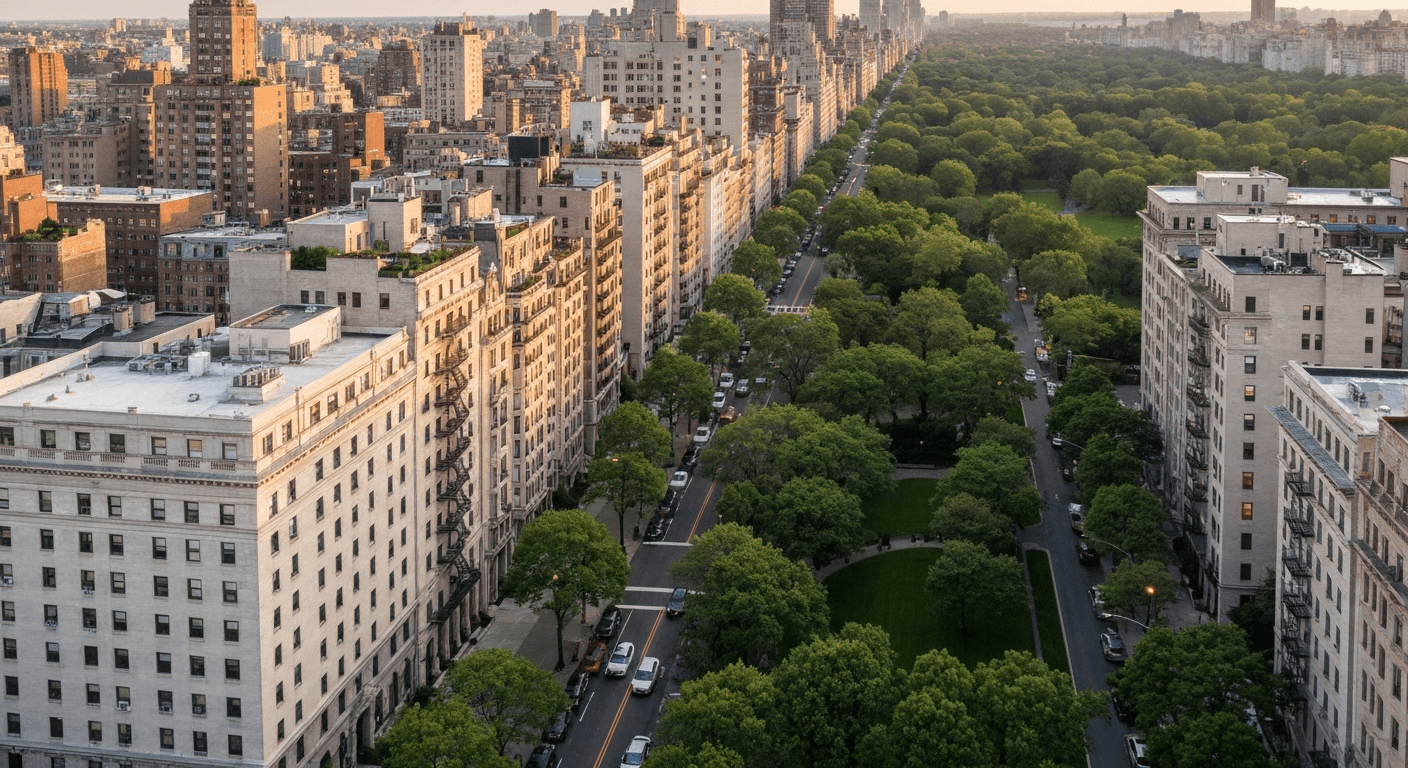
Lenox Hill is one of Manhattan's most refined and quietly prestigious neighborhoods, a place where world-class medicine meets world-class real estate and the energy of New York City hums at a more civilized frequency. Nestled on the Upper East Side between roughly 60th and 77th Streets, from Fifth Avenue east to the East River, Lenox Hill occupies a sweet spot between the dazzling cultural institutions of Museum Mile, the lush paths of Central Park, and the boutique-lined blocks of Lexington and Third Avenues. People love Lenox Hill for its relative calm—it feels like a residential sanctuary inside one of the world's most frenetic cities. Broad, tree-lined avenues give way to classic pre-war doormen buildings and elegant townhouses that signal old New York money and new New York sophistication in equal measure. Young families arrive here because the neighborhood school system is among the strongest in Manhattan, and the proximity to Central Park makes stroller-friendly weekend mornings a reliable pleasure. Professionals choose Lenox Hill for its central location, easy subway access, and the practical reality that Midtown Manhattan is just a 15-minute commute. Retirees and empty nesters love the walkability—a morning walk to Eli's Bread on Third Avenue, an afternoon at Frick Madison, a dinner at one of dozens of neighborhood restaurants—all without ever hailing a cab. If you're searching for a neighborhood that delivers the full New York experience without the chaos, Lenox Hill is the answer.
The name Lenox Hill is relatively modern in common parlance, though the area's residential character stretches back to the late 19th century when wealthy New Yorkers began moving north along Fifth Avenue in pursuit of space and prestige. The neighborhood is often considered a sub-section of the broader Upper East Side, but it has its own distinct personality, shaped largely by Lenox Hill Hospital—now Northwell Health's flagship Manhattan location at 100 East 77th Street—which has anchored the community since 1857. The hospital's presence draws physicians, nurses, and healthcare workers who add a professional, educated layer to the neighborhood fabric. Just down the street, the Hospital for Special Surgery at 535 East 70th Street is consistently ranked among the top orthopedic hospitals in the world, further reinforcing Lenox Hill's identity as a medical corridor of international significance.
Architecturally, Lenox Hill is a showcase of pre-war apartment construction at its finest. Walk along Park Avenue between 70th and 77th Streets and you'll find some of the most coveted cooperative addresses in the country—grand limestone buildings with two-story lobbies, uniformed doormen, and apartments that command millions of dollars. The cross streets—East 70th, East 72nd, East 74th—are lined with townhouses and smaller walk-ups that offer a quieter residential experience. Lexington Avenue functions as a neighborhood spine, with dry cleaners, coffee shops, pharmacies, and corner delis serving the daily needs of a community that actually lives here rather than just passing through. Madison Avenue, running through the heart of Lenox Hill, is one of the world's great luxury shopping streets, lined with flagship boutiques and independent galleries that give the neighborhood a cosmopolitan energy without sacrificing its residential character.
Culturally, Lenox Hill benefits enormously from its proximity to Museum Mile. The Metropolitan Museum of Art at 82nd and Fifth Avenue is effectively in the neighborhood's backyard, and residents think nothing of spending a Sunday afternoon with the Impressionists. The Frick Collection, currently housed at Frick Madison at 945 Madison Avenue at 75th Street while its original mansion undergoes renovation, brings an extraordinary collection of Old Masters and decorative arts directly into the neighborhood. The Asia Society at 725 Park Avenue and the Americas Society nearby add programming that ranges from contemporary exhibitions to lecture series and film screenings. Lenox Hill's character is defined by a mix of old-guard Upper East Side families who have lived here for generations and a newer wave of international buyers and young professionals who recognize the neighborhood's enduring value and livability.
Lenox Hill's real estate market is one of the most consistently strong in New York City, drawing buyers who want Upper East Side prestige at prices that remain slightly below the white-glove buildings along Fifth and Park Avenues in the 60s. That said, "affordable" is relative—this is still prime Manhattan real estate, and buyers should approach the market with realistic expectations and strong pre-approval letters.
The market is dominated by co-ops, which make up the vast majority of residential inventory. Pre-war co-ops along Park Avenue and Fifth Avenue in the 70s routinely trade in the $2 million to $10 million range for two- and three-bedroom units. These buildings typically impose strict board application processes, requiring buyers to demonstrate significant net worth—often requiring liquid assets equal to several times the purchase price—and undergo interviews before approval is granted. The co-op board culture is part of what has kept Lenox Hill's character so stable over decades: these buildings are self-selecting communities that value long-term residents over quick flips.
Condominiums are less common here than in newer Manhattan neighborhoods, but a handful of luxury condo towers have entered the market in recent years, particularly along the northern reaches near 77th Street and on Third Avenue. New development condos in Lenox Hill have averaged $2,000 to $3,500 per square foot, with penthouses commanding considerably more. For buyers who want the flexibility that condos offer—easier board approval, ability to sublet freely, no board interviews—these buildings represent a compelling entry point into the neighborhood.
Townhouses are the crown jewel of the Lenox Hill market. A four- or five-story townhouse on a quiet block like East 70th or East 73rd Street can range from $8 million to $30 million or more depending on condition, size, and whether it has been renovated. These properties appeal to ultra-high-net-worth buyers who want private outdoor space, multiple floors, and the ability to entertain in a way that no apartment can match. Notable blocks include East 70th Street, which has an almost European residential character with its uniform brownstones and carved limestone facades.
Investment potential in Lenox Hill is strong and well-tested. Rental demand is perpetually robust, driven by the proximity of major hospitals, corporate offices in Midtown, and the neighborhood's overall desirability among executives and medical professionals on short-term assignments. A two-bedroom apartment in a Lenox Hill co-op can rent for $5,000 to $8,500 per month, while larger units and townhouse floors push well past $12,000 monthly. Cap rates are relatively compressed, as is typical for prime Manhattan residential real estate, but appreciation over a five- to ten-year hold has historically been reliable and significantly outpaces inflation.
Buyer competition is real: well-priced units at $2 million to $3 million can receive multiple offers within days of listing. Buyers who hesitate lose deals, and bidding wars, while not universal, are common in the $1.5 million to $3.5 million range. One distinctive feature of the Lenox Hill market is the prevalence of estate sales—long-time co-op owners passing away and their heirs selling apartments that haven't been updated in decades. These can be excellent value opportunities for buyers willing to undertake renovation, as the bones of pre-war construction are typically exceptional: solid plaster walls, herringbone hardwood floors, formal entry galleries, and dining rooms large enough for serious entertaining. The renovation costs are real, but the underlying value of a fully renovated pre-war co-op on a Park Avenue address is undeniable.
Living in Lenox Hill means having some of New York City's best dining, shopping, fitness, and cultural experiences within a short walk of your front door. Lexington Avenue and Third Avenue are the neighborhood's commercial corridors, offering an eclectic mix of local staples and national names that serves the full spectrum of daily life.
For dining, Lenox Hill punches well above its geographic size. Rotisserie Georgette on East 60th Street has long been a neighborhood institution for French country cooking, its warm room and rotisserie-perfumed air creating a consistently satisfying experience. Scalinatella, tucked away down the stairs on East 61st Street, serves some of the most satisfying Southern Italian food in Manhattan—go for the linguine alle vongole and the osso buco. Caravaggio on East 74th Street offers upscale Northern Italian in a refined setting that suits a special occasion. For more casual fare, J.G. Melon on Third Avenue at 74th Street is a New York icon—a beloved burger-and-bloody-mary joint that has been packed on weekends since 1972. Sant Ambroeus on Madison Avenue remains a mandatory stop for a mid-afternoon Milanese cappuccino and cornetto. The nearby Eli's Manhattan on Third Avenue at 80th Street is the gold standard for gourmet grocery shopping in the neighborhood, with a bakery counter, prepared foods section, and a curated wine selection that makes it a destination in its own right.
Shopping along Madison Avenue in the 70s is some of the finest in the world. Ralph Lauren's mansion-store at 72nd Street, Valentino, Dolce & Gabbana, Brunello Cucinelli, and dozens of independent boutiques create a shopping environment where residents actually browse and buy rather than just window-shop. For everyday needs, there's a Whole Foods accessible by cab on the East Side, and Gristede's locations are scattered throughout the neighborhood.
Fitness options are excellent: Equinox has multiple locations nearby, Barre3 and SoulCycle have studios on Lexington and Third Avenues, and the Central Park reservoir trail—accessible from East 72nd Street at the Engineers' Gate—offers one of the most scenic outdoor runs in the world, a 1.58-mile loop with views of the water and the midtown skyline. The park itself is the neighborhood's greatest amenity: the Sheep Meadow, Bethesda Fountain, and the Conservatory Garden are all close by, and the lawn areas south of the Reservoir are perfect for weekend picnics and pickup sports.
Weekend life in Lenox Hill is deeply pleasant. Saturday mornings typically involve a run through Central Park followed by brunch at one of dozens of options along the avenues. Sunday afternoons might mean a visit to the Met or Frick Madison, a walk through the park, or a long dinner at a neighborhood restaurant. The pace here is busy but deliberate—exactly what makes Upper East Side living so enduringly attractive.
Lenox Hill sits within Community School District 2, one of the most sought-after public school districts in Manhattan, and families routinely cite school quality as a primary driver of their decision to buy in the neighborhood.
PS 158 on East 77th Street between York and East End Avenues is the flagship public elementary school in the immediate area, with a reputation for strong academics, dedicated teachers, and an engaged parent community that raises significant supplemental funding. PS 6 on Madison Avenue at 81st Street is another highly regarded elementary option, drawing families from throughout the Upper East Side with its strong test scores and enrichment programs. For middle school, MS 167 Robert F. Wagner Jr. Middle School and the Anderson School—a citywide gifted program located on the Upper West Side but accessible by crosstown bus—are options for academically advanced students. Specialized high schools including Stuyvesant, Bronx Science, and Brooklyn Tech are reachable by subway and regularly enroll Lenox Hill students through the competitive admissions process.
Private school options in and around Lenox Hill are among the finest in the country. Dalton School at 108 East 89th Street is one of the most selective and academically distinguished independent schools in the country, with a progressive philosophy and college placement record that consistently sends graduates to the nation's top universities. Brearley at 610 East 83rd Street and Chapin at 100 East 84th Street are leading single-sex schools. Spence on East 91st Street, Loyola School on Park Avenue at 83rd Street, and Regis High School on East 84th Street round out an extraordinary private school landscape. The Lycée Français de New York has a campus on East 72nd Street, appealing to French-speaking families and international buyers who want their children educated in a European framework. Cornell's Weill Medical College at York Avenue and 68th Street adds an academic institution directly to the neighborhood footprint.
Lenox Hill is extremely well-served by public transit, making it one of the most commuter-friendly neighborhoods in Manhattan despite its residential character. The 4, 5, and 6 subway lines run along Lexington Avenue, with stops at 59th Street/Lexington Avenue (connecting to the N, R, W, and F trains), 68th Street/Hunter College, and 77th Street. These lines provide express and local service throughout the city, getting residents to Grand Central in five minutes and downtown Wall Street in under 30 minutes.
The Q train, which runs along Second Avenue, has transformed commuting for Lenox Hill residents since its 2017 opening. The 72nd Street Q station provides direct, fast service to Midtown at 57th Street and to lower Manhattan via the Broadway line. For residents near the western edge of the neighborhood, the N and R trains are accessible at Lexington Avenue and 59th Street. Bus service is also robust: the M15 and M15-SBS run along First and Second Avenues, the M1, M2, M3, and M4 buses run along Madison and Fifth Avenues, and the M66 and M72 crosstown buses connect the neighborhood to the West Side. Taxis and rideshare services are always readily available on the avenues.
Walking scores in Lenox Hill are excellent—nearly everything residents need is within a 10- to 15-minute walk. Citibike docks are plentiful, and dedicated bike lanes along First and Second Avenues provide safe cycling access to the rest of the city. Commuting to Midtown by bike takes roughly 15 minutes and has become increasingly popular as the city's cycling infrastructure has improved.
The decision to buy or rent in Lenox Hill is influenced by the neighborhood's consistently high property values and relatively low inventory. For buyers who can afford entry—generally starting at $800,000 for a studio co-op and rising to $1.5 million or more for a one-bedroom in a quality building—owning in Lenox Hill is historically a sound investment. The neighborhood's desirability has supported values through multiple economic downturns, and long-term owners have seen substantial appreciation.
Renting is expensive and offers limited long-term upside. A one-bedroom apartment typically rents for $3,500 to $5,500 per month, while two-bedrooms run $5,000 to $9,000 or more. Given these rental prices, buyers who can put together a 20% down payment often find that monthly mortgage costs are comparable to renting, with the added benefit of building equity and enjoying tax advantages. The primary argument for renting in Lenox Hill is flexibility—those who aren't certain about their long-term plans or who haven't yet accumulated a down payment are better served renting while they save. Co-op board requirements create barriers to buying that push some buyers toward rental buildings in the interim, but the goal of ownership in this neighborhood is worth the preparation.
Lenox Hill draws a specific type of New Yorker: accomplished, financially stable, and committed to a high quality of daily urban life. Medical professionals are among the most common residents, drawn by proximity to Lenox Hill Hospital, NewYork-Presbyterian/Weill Cornell Medical Center, and the Hospital for Special Surgery. Finance professionals working in Midtown or Downtown find the commute efficient and the residential character a welcome escape from the frenetic pace of the office.
Families with school-age children are strongly represented, particularly those navigating or intending to navigate the competitive private school admissions process. The neighborhood's safety, walkability, and green space make it genuinely excellent for raising children in a major city—children can develop independence here in a way that more chaotic neighborhoods don't easily allow. Empty nesters and retirees who want to downsize from suburban homes without sacrificing quality of life find Lenox Hill ideal: walkable, culturally rich, medically well-served, and socially active.
International buyers—particularly from Latin America, Europe, and the Middle East—are also common, attracted by the neighborhood's safety, prestige, and proximity to global-caliber amenities. For these buyers, Lenox Hill represents a world-class residential address that delivers on its promises reliably. Investors who want reliable rental income in a perennially desirable market round out the buyer profile, recognizing that Lenox Hill's fundamentals make it one of the most defensible assets in the Manhattan residential universe.
Buying in Lenox Hill requires patience, preparation, and an understanding of the co-op culture that dominates the market. Before you fall in love with a specific apartment, get financially prepared: co-op boards routinely require buyers to demonstrate assets equal to two to three times the purchase price, and some buildings have even stricter standards. Have your financial documents—tax returns, bank statements, brokerage accounts—organized before you start viewing properties.
Work with a buyer's broker who has specific experience with Upper East Side co-op transactions. The board application process can be mysterious and time-consuming, and an experienced broker can advise you on buildings with more or less stringent board cultures and help you prepare a strong application package. Understanding post-closing liquidity requirements and subletting policies is essential—some co-ops prohibit subletting altogether for the first several years of ownership, which matters for buyers who might need flexibility.
For condos and new development, negotiate aggressively on closing costs and concessions—developers in a slower market will often cover transfer taxes or contribute to carrying costs. For resale condos, commission a thorough building inspection: pre-war buildings can have significant infrastructure issues that don't show up without expert eyes, including issues with windows, mechanicals, and facade pointing that trigger costly special assessments. Ask about any pending capital projects and special assessments before signing a contract.
Finally, move quickly on well-priced listings. Lenox Hill inventory moves fast, and the apartments that are genuinely priced at market value—rather than overpriced aspirationally—receive multiple requests for showing within days and can go into multiple offers within a week. Being pre-approved, having your co-op financial package at least partially assembled, and being ready to make a decision when you find the right property is the key to winning in this competitive market.
Lenox Hill represents the best of what Manhattan has to offer: a neighborhood that combines world-class amenities, reliable transit, outstanding schools, and an architectural heritage that gives it a timeless quality rarely found in a city that's constantly reinventing itself. Whether you're a first-time Manhattan buyer stepping up from a rental, a family looking for proximity to exceptional schools and Central Park, or an investor seeking a rock-solid asset in one of the world's most coveted zip codes, Lenox Hill deserves serious consideration.
If you're ready to explore what's available in Lenox Hill or the broader Upper East Side, Farva Scott is the right partner. As an Associate Broker with The Real Brokerage, Farva has deep expertise in Manhattan's residential market and a track record of helping buyers navigate complex co-op transactions and competitive multiple-offer situations. Reach out today at farvascott.com or call (914) 417-9215. Your Lenox Hill home is waiting.