Living in White Plains, NY: The Complete Westchester Neighborhood Guide
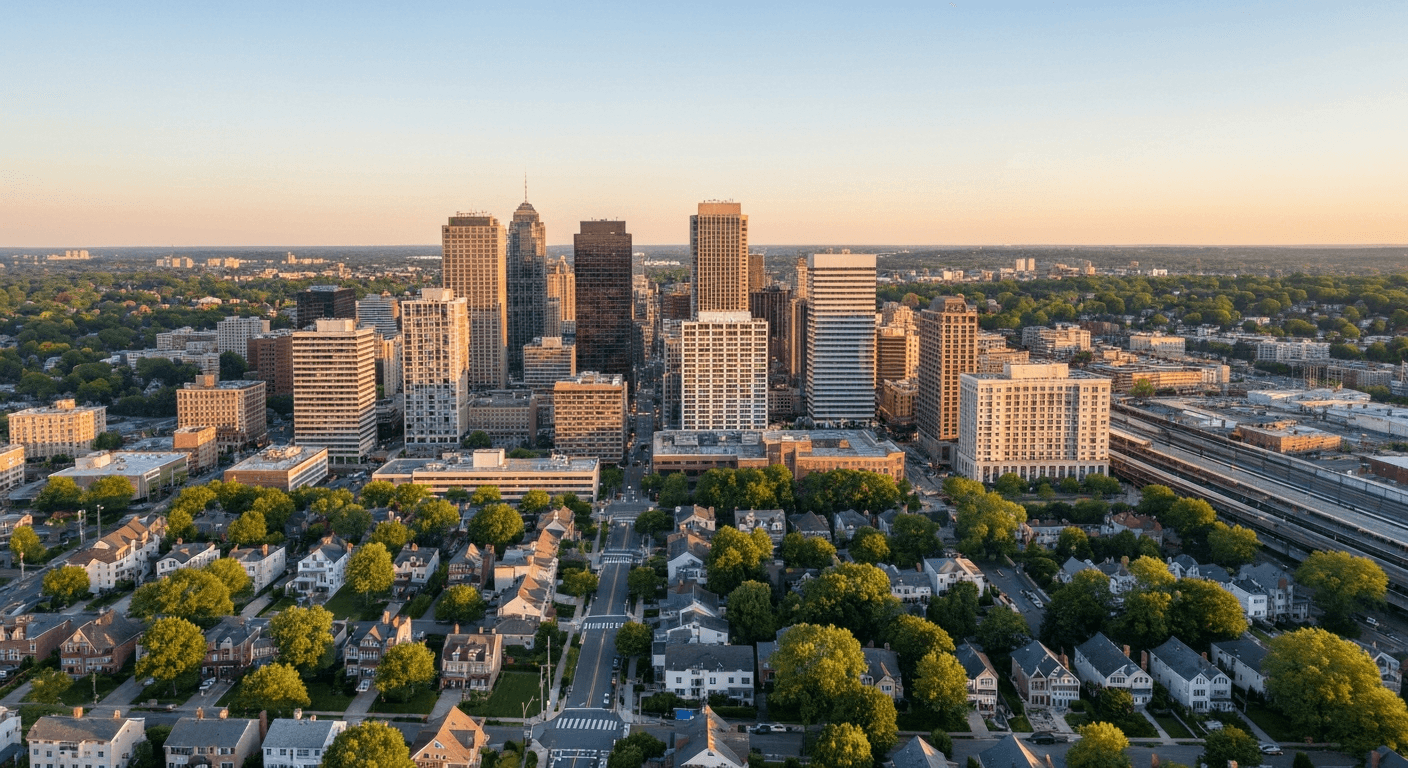
White Plains, the county seat of Westchester County, offers one of the most distinctive living experiences in the New York metro area: genuine city energy wrapped in a suburb's accessibility. With a thriving downtown, walkable streets, direct Metro-North access to Grand Central, and a range of housing from sleek condominiums to spacious single-family colonials, White Plains has become one of the most sought-after addresses in Westchester. Whether you're a first-time buyer, a downsizer, or an investor looking at rental demand, here's everything you need to know about living in White Plains.
Why White Plains? The Big Picture
White Plains sits squarely in the heart of Westchester County, about 25 miles north of Midtown Manhattan. With a population of roughly 60,000, it's one of the largest cities in the county — and it feels like a real city. Main Street and Mamaroneck Avenue buzz with restaurants, law firms, and retail. The Galleria and The Westchester mall anchor major shopping, while local storefronts line streets like Maple Avenue, Martine Avenue, and Hamilton Avenue with genuine neighborhood character.
What sets White Plains apart from quieter Westchester towns like Larchmont or Scarsdale is density and walkability. You can walk to the train, walk to dinner, walk to your gym — a combination that's rare outside of Manhattan and one of the city's defining qualities for transplants from Brooklyn and Queens.
Getting to Manhattan: The Commute
The White Plains Metro-North station on the Harlem Line is the engine of the city's commuter culture. Express trains reach Grand Central Terminal in approximately 43 to 47 minutes. During peak hours, trains run every 20 to 30 minutes, making it one of the more frequent schedules on the Harlem Line. Monthly commuter passes run approximately $340 to $360 depending on fare class.
For drivers, the Bronx River Parkway, Hutchinson River Parkway, and I-287 converge near White Plains, making it one of the most highway-accessible cities in Westchester. LaGuardia Airport is roughly 30 minutes south under normal traffic.
Bottom line: If you work in Midtown and want to live in Westchester without spending 90 minutes on a train, White Plains delivers.
White Plains Neighborhoods: Where to Live
Downtown White Plains
The most urban option in the city. Residents walk to the Metro-North station, shop at City Center, and dine along Mamaroneck Avenue and Main Street. Housing here is predominantly high-rise and mid-rise condominiums and rentals — think buildings like 2 City Place, City Center Lofts, and newer developments along Hamilton Avenue. Studios start around $280,000–$320,000; one-bedrooms run $380,000–$550,000; two-bedrooms from $580,000–$900,000. Monthly common charges plus property taxes typically add $700–$1,400 in carrying costs beyond your mortgage payment — budget carefully.
Battle Hill
One of White Plains' most storied residential neighborhoods, Battle Hill sits on elevated terrain east of downtown near the Hartsdale border. Streets like Bryant Avenue, Fisher Place, and Gedney Way are lined with Victorian-era homes, Dutch Colonials, and 1920s Tudor-style properties. Many have been thoughtfully updated while retaining original character. Single-family homes here range from $650,000 to $1.3 million, with larger renovated properties occasionally pushing higher.
Fisher Hill
A quiet, tree-lined enclave just north of downtown, Fisher Hill attracts professionals who want walkability without the high-density feel of the urban core. Colonial and Cape Cod homes along Fisher Avenue and North Broadway list in the $750,000–$1.5 million range. The neighborhood is particularly popular with buyers coming from Manhattan who want space but can't quite part with the idea of walking to a coffee shop or farmers market.
North White Plains
More accessible than the city core, North White Plains offers single-family homes and small multi-family properties at lower price points — a popular landing spot for first-time buyers. Expect to see ranches, split-levels, and older colonials in the $550,000–$900,000 range. North White Plains has its own Metro-North station on the Harlem Line, giving residents a secondary entry point and slightly shorter platform-to-train waits during peak hours.
The Gedney Farms and Ridgeway Area
On the western side of the city near the White Plains–Rye border, this pocket features larger lots, more privacy, and homes in the $950,000–$2 million range. Streets like Gedney Esplanade, Sterling Avenue, and Ridgeway Avenue feel distinctly suburban despite sitting within city limits. Maple Moor Golf Course is a bonus for residents in this corridor, offering a Westchester County-operated public course just minutes from the front door.
Schools in White Plains
White Plains City School District serves the entire city with:
- White Plains High School on North Street — a comprehensive high school known for strong AP and International Baccalaureate programs and consistent college placement
- Highlands Middle School and White Plains Middle School serving grades 6–8
- Seven elementary schools including George Washington Elementary, Mamaroneck Avenue School, and Ridgeway Elementary
The district scores competitively relative to other urban districts in New York State and continues to invest in academic programming. For families comparing White Plains to neighboring Scarsdale or Larchmont — both with top-ranked state districts — White Plains typically offers significantly lower entry prices with solid academics. Many buyers consciously make that trade.
Private school options are plentiful in the immediate area: Rippowam Cisqua School in Bedford and The Ursuline School in New Rochelle are both within 15 minutes. Pace University's Pleasantville campus and Manhattanville University are within 20 minutes for higher education.
White Plains Real Estate Market: What to Expect in 2026
White Plains remains competitive across all price segments. Low inventory continues to push well-priced homes — particularly in Battle Hill, Fisher Hill, and the Gedney Farms area — to multiple-offer situations within days of listing.
Key market signals:
- Condos and co-ops: Active inventory is somewhat higher than single-family, giving buyers slightly more negotiating leverage — but quality units near the station still move quickly
- Single-family homes under $900K: Regularly see bidding wars; expect to compete
- Single-family homes $1M–$1.5M: More deliberate pace, but supply remains thin
- Rentals: Strong demand from young professionals and commuters keeps the rental market tight; 1-bedroom apartments in downtown buildings run $2,400–$3,600/month depending on building amenities and floor
Interest rate fluctuations have moderated some buyer urgency, but White Plains has proven resilient because the city's urban-suburban balance is genuinely hard to replicate at this price point anywhere in the tristate area.
Who's Buying in White Plains?
A few distinct buyer profiles define the current market:
- NYC transplants — buyers moving up from Brooklyn, Queens, or the Bronx who want more square footage and a yard without doubling their commute time
- Empty nesters — downsizing from larger Westchester towns (Scarsdale, Harrison) who want walkability and a low-maintenance condo lifestyle
- Young professionals — hybrid and remote workers who want Westchester's quality of life without paying Scarsdale or Bronxville prices
- Investors — targeting multi-family homes or rental condos near the station, drawn by White Plains' consistently high rental demand and growing downtown population
Major Employers: An Underrated Asset
White Plains is not just a bedroom community — it's a significant employment center in its own right. Major employers based in or near the city include Regeneron Pharmaceuticals (one of the largest biotech companies in the country, headquartered just north in Tarrytown), WestMed Medical Group, New York Medical College, Blythedale Children's Hospital, and dozens of law firms and financial services companies headquartered in the downtown business district. For buyers who live and work in Westchester, White Plains offers true live-work proximity — a real quality-of-life advantage that reduces commute time in both directions.
Dining, Culture, and Daily Life
White Plains punches well above its weight for a city its size. A few local highlights:
- BJ Ryan's Pub on Main Street for casual evenings and a local crowd
- Mulino's of Westchester on Knollwood Road — a longtime institution for power lunches and special-occasion dinners
- Kira on Mamaroneck Avenue for contemporary Japanese omakase and sushi
- La Camelia on Main Street for authentic Spanish cuisine — a longtime favorite
- White Plains Farmers Market (seasonal, Saturdays at Gedney Way) for local produce, flowers, and artisan goods
- ArtsWestchester on Mamaroneck Avenue for rotating contemporary art exhibitions and community programming
- The Westchester mall on White Plains Road in Tarrytown for high-end retail including Apple, Nordstrom, and specialty boutiques
Yoga studios, Equinox, Orange Theory, and independent fitness options are all concentrated within a few blocks of downtown. Everyday errands — grocery stores, pharmacies, urgent care — are all walkable from most city neighborhoods.
Is White Plains Right for You?
White Plains makes the most sense if you value: ✔ One of Westchester's best commutes to Midtown Manhattan ✔ True urban walkability in a Westchester setting ✔ Price points meaningfully below Scarsdale, Bronxville, or Larchmont ✔ Access to major employment centers in Westchester without a car ✔ A diverse, energetic, growing community with real city amenities
If you prefer the strictly suburban feel of quieter towns like Pelham or Dobbs Ferry, White Plains may feel a touch too city-forward. But for buyers who want to feel like they're somewhere — not just a bedroom community — White Plains consistently delivers.
Ready to Explore White Plains Real Estate?
Thinking about buying or selling in White Plains? Whether you're eyeing a condo on Mamaroneck Avenue or a colonial off North Broadway, understanding local market nuances — HOA structures, school zone boundaries, flood considerations, and neighborhood micro-values — makes a real difference in what you pay and how fast you close.
Farva Scott is an Associate Broker at The Real Brokerage, specializing in Westchester County and the greater New York metro area. Call (914) 417-9215 or visit farvascott.com to talk through your real estate goals, get a current market analysis, or schedule private showings.
White Plains is moving — make sure you're moving with it.