Lower East Side Real Estate Guide: Living, Buying & Investing in the Lower East Side, NY
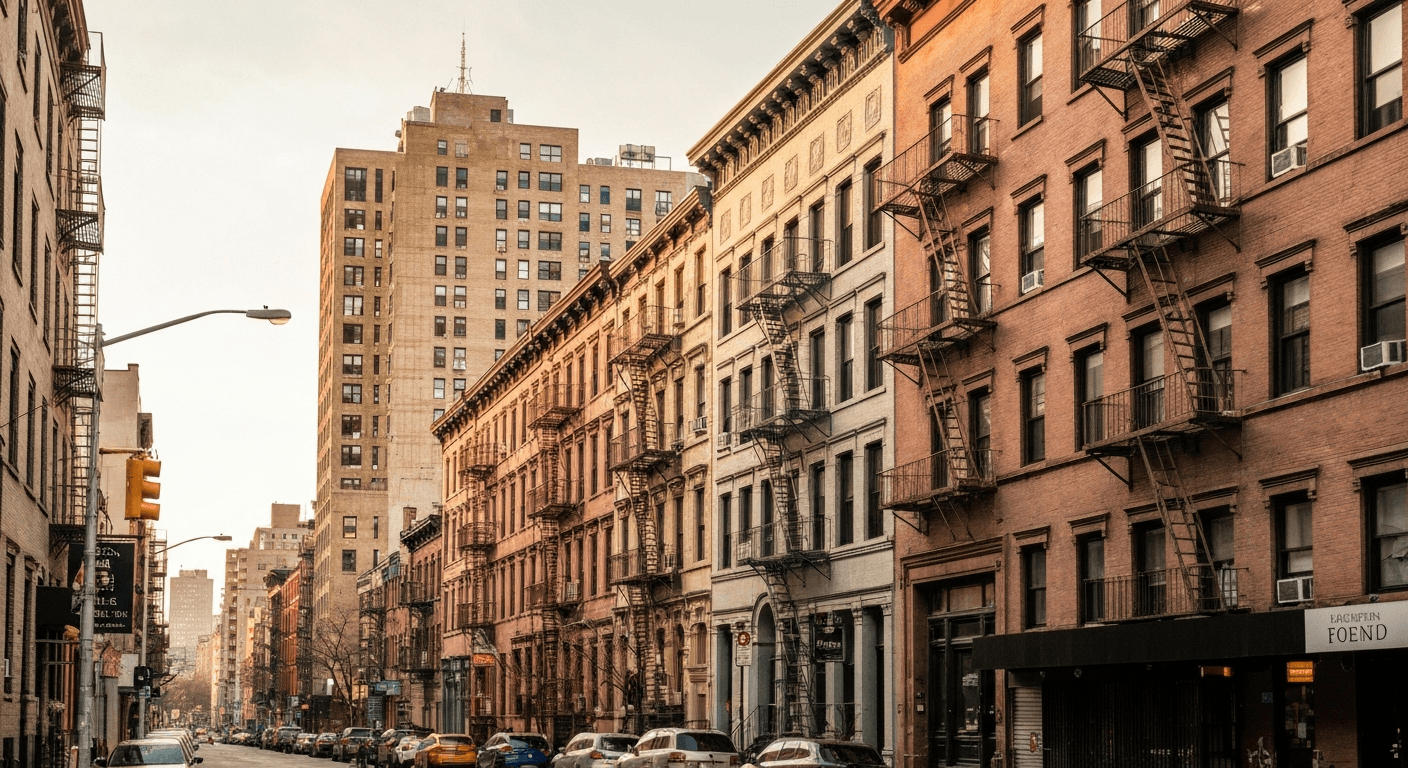
If you've ever walked down Ludlow Street on a Friday night and felt the electricity in the air — the buzz of conversation spilling out of bars, the smell of incredible food wafting from a dozen different kitchens, the sense that something important is always happening just around the corner — then you already understand why the Lower East Side captivates everyone who discovers it. This neighborhood, tucked between the East Village, Chinatown, and the East River, is one of Manhattan's most dynamic, culturally layered, and rapidly appreciating real estate markets. For home buyers and investors who want to plant roots somewhere with both grit and glamour, the Lower East Side delivers in ways that few other Manhattan neighborhoods can match. It's a place where century-old tenement buildings share the block with sleek new condominiums, where Michelin-starred chefs open restaurants next to legendary delis that have operated since the 1880s, and where the creative energy of New York City feels most alive. Whether you're a first-time buyer priced out of SoHo and Tribeca, an investor looking for strong rental demand and long-term appreciation, or a culture-lover who wants to live at the intersection of history and modernity, Lower East Side real estate offers something genuinely rare in today's Manhattan market — authenticity, value, and enormous upside potential all wrapped into one irresistible package.
\n\n
Few neighborhoods in all of New York City carry as much historical weight as the Lower East Side. From the mid-19th century through the early decades of the 20th, this compact pocket of lower Manhattan was the port of entry for millions of Jewish, Italian, Chinese, and Eastern European immigrants who arrived at Ellis Island and made their way uptown — or at least as far as Orchard Street. At its peak around 1910, the LES was the most densely populated urban neighborhood on earth, with thousands of people crammed into five-story tenement buildings that lined every block. Today, the Tenement Museum on Orchard Street preserves those stories with breathtaking specificity, reconstructing apartments where actual immigrant families lived and worked. Katz's Delicatessen, opened in 1888 on the corner of Houston and Ludlow, is not merely a restaurant — it is a living monument to Lower East Side history, the place where pastrami sandwiches the size of your forearm are still made by hand and sliced to order. Essex Market, the beloved food market that relocated to its gleaming new home within the Essex Crossing development, continues a commercial tradition stretching back generations. Orchard Street itself, once packed wall-to-wall with pushcart vendors and fabric merchants, now hosts a mix of independent boutiques, vintage shops, and restaurants that honor the neighborhood's mercantile DNA while pointing confidently toward the future. The LES has always been a neighborhood of strivers — people who arrived with nothing and built something. That energy never left. It simply evolved.
\n\n
Lower East Side real estate has undergone a transformation over the past two decades that has turned the neighborhood from a value play into a mainstream Manhattan market — though one that still offers compelling pricing compared to SoHo, Tribeca, or the West Village. The housing stock here is more diverse than in almost any other Manhattan neighborhood. Pre-war tenement buildings, originally built as rentals in the 1890s and early 1900s, have been converted into condominiums and co-ops with character and charm that no new construction can replicate — exposed brick walls, wide-plank wood floors, pressed tin ceilings, and the kind of thick-walled quiet that modern construction can rarely achieve. These converted tenements typically offer studios starting around $600,000 to $750,000, one-bedrooms from $850,000 to $1.2 million, and two-bedrooms from $1.3 million to $2 million depending on floor, light, and renovation quality. At the other end of the spectrum, the Essex Crossing mega-development along Delancey and Essex Streets has delivered a wave of sleek, amenity-rich new condominiums — buildings with rooftop decks, fitness centers, and concierge services that have attracted buyers from the Financial District and even from downtown Brooklyn. New-construction condos in Essex Crossing command premium prices, with one-bedrooms regularly trading at $1.2 million to $1.6 million and two-bedrooms reaching $2.5 million and beyond. Rental demand in the LES is exceptionally strong, driven by the neighborhood's nightlife reputation, restaurant scene, and proximity to both Midtown and downtown employment corridors. A well-renovated one-bedroom on Rivington or Ludlow can easily rent for $3,500 to $4,500 per month, providing investors with solid yield in a market where cap rates are increasingly compressed. The north-south axis from Houston down to Canal Street, and the east-west corridor from Essex to Clinton Streets, represents the neighborhood's highest-demand core. Streets like Stanton, Rivington, and Delancey offer the greatest density of amenities, while blocks further east toward the FDR Drive and south toward Chinatown offer more value with strong appreciation potential as the neighborhood continues to fill in.
\n\n
The lifestyle on offer in the Lower East Side is unlike anything else in Manhattan, and that's precisely why buyers continue to be drawn here in such numbers. The neighborhood's nightlife corridor along Ludlow Street is legendary — bars like Pianos, The Delancey, and Magician have been drawing late-night crowds for years, while newer spots have elevated the scene with craft cocktails and intimate live music rooms. But the LES is no longer just a late-night destination. The daytime and dining scenes have matured into something truly world-class. Mission Chinese Food on the corner of Orchard and Canal brought inventive, spicy cuisine to national attention. Ivan Ramen on Clinton Street draws lines for its obsessively crafted bowls. Russ & Daughters Cafe on Orchard Street — an offshoot of the century-old appetizing shop on Houston — serves the finest smoked salmon and caviar in the city. Katz's Delicatessen remains an institution for pastrami, corned beef, and the most famous sandwich-counter scene in the world. Essex Market, now housed within the Essex Crossing development, brings together dozens of food vendors under one roof, a modern interpretation of the LES's market tradition. Seward Park, situated at the intersection of East Broadway and Grand Street, provides a genuine green oasis with playgrounds, basketball courts, and community garden space. The arts scene remains vibrant — galleries along Orchard Street and in converted warehouse spaces host regular openings, and the neighborhood's historical role as a creative incubator is anything but finished. On weekends, the LES comes alive with a particular energy that feels spontaneous rather than manufactured — it is the kind of neighborhood where the best discoveries happen by turning down a street you've never walked before.
\n\n
Families considering Lower East Side real estate should carefully evaluate the public school landscape, which is a mix of high-performing programs and schools that are actively improving. PS 20 Anna Silver, located on Essex Street, is one of the neighborhood's primary public schools and has made meaningful gains in recent years. PS 134 Henrietta Szold on East Broadway serves younger children in a building with genuine community character. For middle school, IS 131 Murray Hill on East Broadway serves a diverse student population. Families seeking specialized programming have access to a range of magnet and gifted programs within Community School District 1, which serves the Lower East Side and East Village. The neighborhood's proximity to higher education is a significant asset for long-term residents: NYU's main campus is a short walk or subway ride away in Greenwich Village, while The New School in the Flatiron district is equally accessible. Baruch College and Hunter College, both part of the CUNY system, are within easy commuting range. Private school options within a reasonable distance include The Clinton School for Writers and Artists in the East Village, which has earned a reputation as an outstanding middle and high school option, and several independent schools accessible by subway in the Village and Midtown neighborhoods. For buyers with school-age children, doing thorough research and considering enrollment in specific programs within District 1 is highly recommended.
\n\n
Transportation from the Lower East Side is genuinely excellent, and this is one of the neighborhood's underappreciated selling points. The Delancey Street-Essex Street station, served by the F, M, J, and Z subway lines, places residents within 20 to 25 minutes of Midtown Manhattan — one of the fastest commutes from any Lower Manhattan neighborhood at this price point. The East Broadway station on the F line provides an additional access point, particularly useful for residents in the southern and eastern parts of the LES. Bus service is robust: the M9 runs along Avenue C and Avenue D; the M14 SBS (Select Bus Service) provides rapid crosstown service along 14th and Delancey Streets; and the M15 SBS on 1st and 2nd Avenues connects the neighborhood to the entire east side of Manhattan from the Financial District to East Harlem. For cyclists, the Williamsburg Bridge bike path provides one of the most scenic and practical commuting routes in the city, connecting the LES directly to Williamsburg in minutes. CitiBike docking stations are plentiful throughout the neighborhood. For drivers, FDR Drive access via the Williamsburg Bridge and the Delancey Street ramps provides quick access to the Brooklyn-Queens Expressway. Given all of these options, it's genuinely difficult to be stuck in the Lower East Side — no matter where you need to go in the five boroughs, you can get there efficiently.
\n\n
One of the most common questions buyers ask about Lower East Side real estate is whether it makes more sense to buy or rent in the current market. The answer, for most people with a five-or-more-year time horizon, is decidedly to buy. Rental prices in the LES have risen sharply in recent years, with a decent one-bedroom now commanding $3,000 to $4,500 per month — and these rents provide zero return on the substantial monthly outlay. By contrast, buying a one-bedroom condo in the $900,000 to $1.1 million range with a reasonable down payment produces monthly carrying costs that, when combined with the tax benefits of ownership and the historically strong appreciation in this neighborhood, represent a compelling financial proposition. The LES has appreciated meaningfully over the past decade, and the completion of Essex Crossing has demonstrably improved the neighborhood's infrastructure and retail offering in ways that support continued price growth. For investors purchasing units for rental income, the LES provides one of the stronger yields in lower Manhattan, with gross cap rates that remain slightly more favorable than in adjacent neighborhoods like SoHo.
\n\n
The Lower East Side attracts a remarkably diverse mix of buyers, and understanding who thrives here is important when deciding whether it's the right fit. Young professionals in finance, tech, media, and the arts represent the neighborhood's core buyer demographic — people who want to walk out their door into one of the most vibrant cultural scenes in the world, who prize access to great restaurants and nightlife, and who are willing to accept slightly older building infrastructure in exchange for character and location. Artists, musicians, and creative professionals have called the LES home for generations, and that community remains alive and well. Investors, both domestic and international, have recognized the LES as a reliable rental market with strong tenant demand and low vacancy. Buyers who have been priced out of SoHo, Tribeca, or the West Village but don't want to sacrifice Manhattan's energy often land in the Lower East Side and wonder why they didn't look here sooner.
\n\n
There are several important things to know before making an offer on Lower East Side real estate. First, understand the difference between a converted tenement co-op and a new construction condo — they represent very different ownership experiences. Co-ops often have restrictive sublet policies, board approval processes, and flip taxes; condos offer more flexibility but typically carry higher purchase prices. When viewing tenement conversions, ask specifically about building mechanicals: boilers, plumbing stacks, and electrical systems in buildings from the 1890s can be a significant source of ongoing maintenance expense. Second, be aware that some blocks in the LES — particularly along Ludlow, Orchard, and Rivington Streets — generate significant nightlife noise that can be disruptive for light sleepers; always visit a property at multiple times of day and night before committing. Third, the neighborhood has a significant concentration of buildings owned by LLCs with complex ownership structures; working with an experienced NYC real estate attorney to conduct thorough title searches is not optional — it is essential. Finally, compete decisively when you find the right property. The LES market moves quickly, and well-priced, well-renovated units routinely attract multiple offers.
\n\n
The Lower East Side is more than a real estate investment — it is a chance to become part of one of New York City's most storied and continuously evolving communities. From the tenement history preserved on Orchard Street to the stunning new skyline taking shape along Delancey Street, this is a neighborhood that honors its past while building an exceptional future. If you're ready to explore what Lower East Side real estate can offer you — whether as a primary residence, a pied-à-terre, or an investment property — Farva Scott is here to guide you every step of the way. As an Associate Broker at The Real Brokerage with deep expertise in Manhattan's residential market, Farva brings the knowledge, relationships, and negotiating skills to help you find and secure the right property in this competitive market. Visit farvascott.com or call (914) 417-9215 to schedule your consultation today.