Midtown Real Estate Guide: Living, Buying & Investing in Midtown, NY
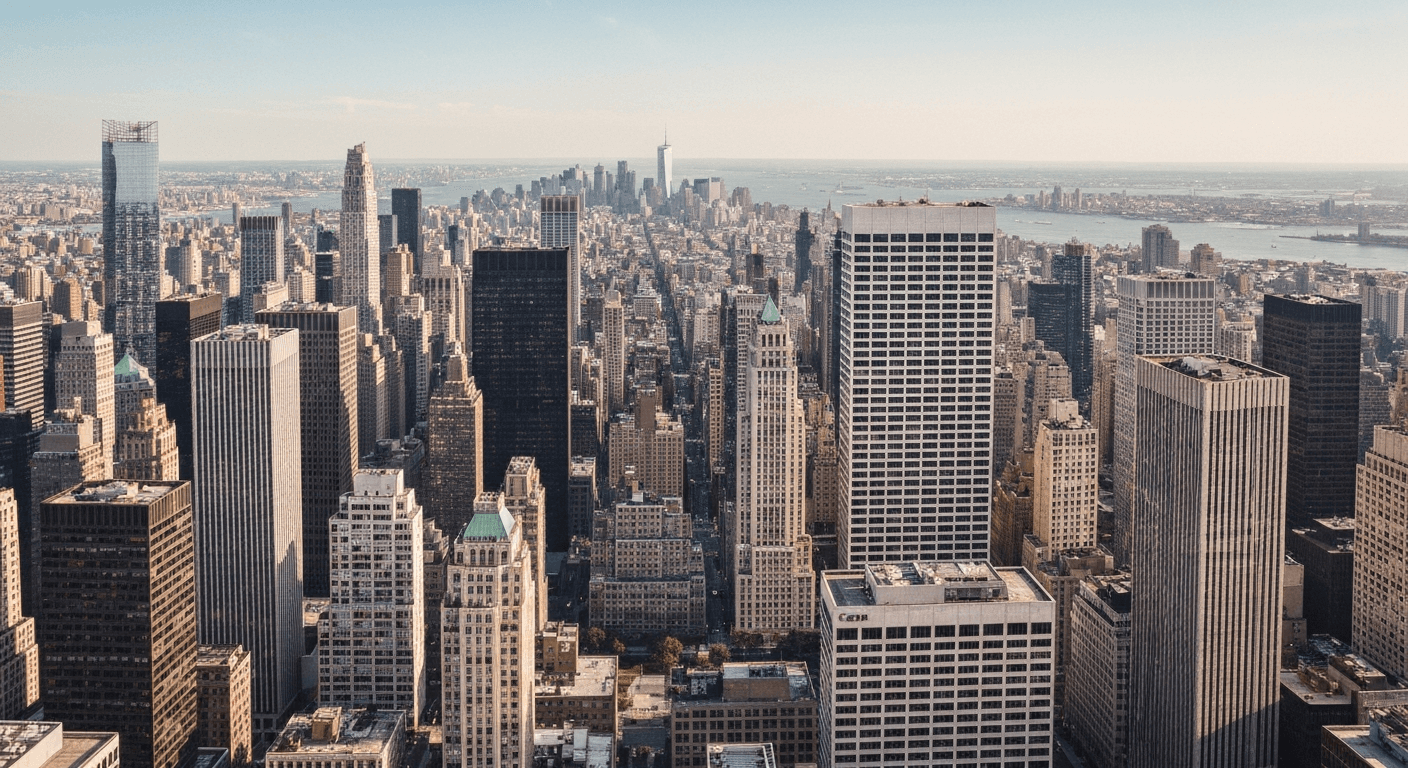
If you've ever dreamed of living at the epicenter of one of the greatest cities on Earth, Midtown Manhattan is where that dream comes to life. Stretching roughly from 34th Street north to 59th Street, and from river to river, Midtown is the engine that powers New York City's global reputation. This is where Fortune 500 headquarters share the same block as world-class hotels, where Broadway marquees light up the night sky, and where millions of commuters, tourists, and residents coexist in one of the most densely packed urban environments on the planet. For all its bustle, Midtown offers something that surprises most outsiders: a genuine residential community of people who love waking up in the middle of it all. Whether you're drawn by the convenience, the prestige, or the sheer excitement of life at the city's core, buying a home in Midtown Manhattan is a decision that delivers on every level. This guide will walk you through everything you need to know — the market, the lifestyle, the schools, the transit, and what it really means to call Midtown home.
Midtown Manhattan is not a single neighborhood in the traditional sense — it is a collection of distinct micro-neighborhoods, each with its own personality, price range, and appeal. The area encompasses iconic sub-districts including the Theater District, Hell's Kitchen (covered separately), Murray Hill, Turtle Bay, Sutton Place, Clinton Hill, Koreatown, and portions of the Diamond District along 47th Street. The name "Midtown" is itself a descriptor of geography rather than culture: it sits between Lower Manhattan's financial and civic functions and Upper Manhattan's residential elegance. Historically, Midtown began to take its modern shape in the early 20th century when the construction of Grand Central Terminal in 1913 sparked a wave of commercial development along Park Avenue and Lexington Avenue. The Empire State Building followed in 1931, and Rockefeller Center — that remarkable 22-acre complex of Art Deco towers, underground concourses, and public plazas — was completed through the 1930s. These landmarks didn't just define the skyline; they defined the urban logic of Midtown. Office towers needed residents nearby. Hotels needed permanent guests. And so a residential fabric quietly wove itself between and beneath the glass and steel towers that the world recognizes as "New York." Today, Midtown Manhattan is in many ways becoming more residential than ever, as former office buildings are converted to apartments and new luxury towers rise with dedicated residential floors.
The Midtown real estate market is one of the most dynamic and diverse in all of New York City, offering everything from studio co-ops in pre-war buildings to penthouse condominiums with panoramic park views. The market can broadly be divided into two tiers: legacy co-op buildings that line the streets east of Fifth Avenue between 42nd and 59th Streets, and newer luxury condominium developments that have transformed the Billionaires' Row corridor along 57th Street. For buyers entering the market, co-op apartments remain the most accessible entry point. Studios in Midtown co-ops typically start around $450,000 to $650,000, with one-bedroom units ranging from $700,000 to $1.2 million depending on the building's amenities and financial health. Two-bedroom co-ops in white-glove buildings along Park Avenue or Sutton Place can command $1.5 million to $3 million. Condominiums, which carry fewer restrictions on financing and subletting, start around $900,000 for studios and climb steeply — full-floor units in towers like 432 Park Avenue, One57, or Central Park Tower regularly trade at $10 million to $100 million. For investors, the rental market in Midtown is exceptionally strong: proximity to major corporate offices, Grand Central Terminal, and Midtown's cultural institutions keeps vacancy rates historically low. A one-bedroom apartment in Midtown rents for $3,800 to $6,000 per month, with two-bedrooms spanning $5,500 to $9,500. Recent market trends reflect a continued demand from international buyers and domestic transplants who prioritize location above all else. The post-pandemic return-to-office trend has reignited corporate housing demand. Micro-neighborhoods like Sutton Place and Turtle Bay, with their tree-lined streets and townhouse rows, offer a quieter residential experience at somewhat lower price points — a genuine value relative to the prime Fifth Avenue corridor. Competition for well-priced listings remains fierce, with desirable units often receiving multiple bids within days of hitting the market.
Living in Midtown means having the best of New York City's cultural, culinary, and recreational offerings within a few minutes' walk. Bryant Park — the jewel-box garden behind the New York Public Library at Fifth Avenue and 42nd Street — hosts free summer film screenings, outdoor yoga classes, and the city's most beloved Christmas market in winter. Central Park's southern entrance is just steps away from the upper end of Midtown, offering 843 acres of green respite from the urban intensity below. Food-wise, Midtown is a global feast. Koreatown's bustling 32nd Street between Fifth and Sixth Avenues serves authentic Korean barbecue, hotpot, and karaoke culture around the clock. The dining strip along Ninth Avenue in the western reaches of Midtown (blending into Hell's Kitchen) is one of the city's great restaurant rows, with options ranging from Ethiopian to Japanese to classic New York Italian. For fine dining, Midtown boasts Le Bernardin on West 51st Street — one of the most acclaimed French seafood restaurants in the world — alongside Marea on Central Park South, The Modern inside the Museum of Modern Art, and Daniel Boulud's flagship on East 65th. Nightlife leans sophisticated here: rooftop bars like those at The Press Lounge at Kimpton Ink48, 230 Fifth Rooftop Bar, and Ophelia at the Beekman Tower attract both residents and visitors. Shopping encompasses everything from Fifth Avenue's flagship luxury stores — Bergdorf Goodman, Saks Fifth Avenue, Tiffany & Co., and flagship Nike and Apple stores — to the sprawling Brookfield Place concept shops and the Time Warner Center's high-end retail at Columbus Circle. Fitness culture is strong, with Equinox, SoulCycle, Barry's Bootcamp, and independent gyms scattered throughout the neighborhood.
Midtown Manhattan is not traditionally a family neighborhood in the way that Park Slope or the Upper West Side are, but the residential pockets — particularly Turtle Bay, Sutton Place, and the areas immediately surrounding Tudor City — do attract families who value the convenience of living centrally. Public school options include P.S. 116 Mary Lindley Murray School on East 33rd Street, which serves Grades K–5 and has a strong parent community and solid academic programming. P.S./I.S. 343, the Packer Collegiate-feeder school in the eastern Midtown area, is another option. For older students, Midtown is zoned into several comprehensive high school programs through the Department of Education. The selective specialized high schools — Stuyvesant, Bronx Science, and Brooklyn Tech — are accessible via specialized admission and draw students from every corner of Manhattan. Private school options are plentiful within a short commute: Horace Mann, Trinity School, The Dalton School, and Ethical Culture Fieldston School are all reachable within 20–30 minutes. Columbia University is about 20 minutes north; NYU's Greenwich Village campus is 15 minutes south. The presence of Weill Cornell Medicine, Rockefeller University, and the CUNY Graduate Center in the broader Midtown area adds an intellectual energy to the neighborhood that extends well beyond its commercial identity.
Transportation in Midtown Manhattan is unparalleled anywhere in the United States. Grand Central Madison — the expanded train hall beneath Grand Central Terminal — now handles both Metro-North commuters from Westchester, Connecticut, and the Hudson Valley alongside the Long Island Rail Road's East Side Access service, which opened in 2023 and connects Penn Station commuters to a new underground concourse beneath Park Avenue and 43rd Street. Penn Station itself, located at Seventh Avenue and 33rd Street, connects to New Jersey Transit, Amtrak intercity rail, and the LIRR. As for subways, Midtown is served by an extraordinary concentration of lines: the 4/5/6 on Lexington Avenue, the N/Q/R/W on Broadway and Seventh Avenue, the B/D/F/M on Sixth Avenue, the A/C/E on Eighth Avenue, the 1/2/3 on Seventh Avenue/Broadway, and the 7 line running across 42nd Street from Times Square to Hudson Yards. The S (Times Square Shuttle) connects Grand Central to Times Square in two minutes. The crosstown M42 and M50 buses serve the street-level commuter who needs to travel east-west. Walk Score in most of Midtown exceeds 97 out of 100 — virtually every daily errand is walkable. Cycling is possible on the protected lanes along Eighth and Ninth Avenues, connecting to the Hudson River Greenway for car-free rides up and down the waterfront. Commutes to the Financial District take 10–15 minutes by subway; trips to the Upper East Side or Williamsburg are under 20 minutes.
The decision to buy versus rent in Midtown Manhattan hinges largely on your timeline and financial goals. Renting offers maximum flexibility — a key consideration given that Midtown's high-rise lifestyle caters to executives, international professionals, and corporate transferees who may relocate within a few years. A one-bedroom apartment rents for $4,000 to $5,500 monthly, which over five years represents $240,000 to $330,000 in rent with zero equity accumulation. Buyers who intend to stay three or more years almost always come out ahead, particularly given Midtown's historically strong appreciation curve in the luxury and near-luxury segments. Property taxes in Manhattan are comparatively low relative to assessed values (a quirk of New York's property tax system), typically running $10,000 to $30,000 annually on a $2 million apartment — which can make owning significantly cheaper on a monthly basis than comparable suburban towns in Westchester or New Jersey. Co-op maintenance fees, however, can be substantial in older white-glove buildings, often running $2,000 to $5,000 per month inclusive of utilities and staff costs. Condominium common charges tend to be lower. Bottom line: if you're committed to Midtown for the medium-to-long term, buying is almost always the smarter financial play.
Midtown Manhattan attracts a specific type of resident who thrives in high-intensity urban environments. Young professionals new to the city who want to be in the center of everything — close to their offices in Midtown's corporate towers, walking distance to Lincoln Center or Times Square, and connected to every subway line — find Midtown an ideal first landing spot. International buyers, particularly from Asia, the Middle East, and Europe, are heavily represented in the luxury condo market: Midtown's global name recognition and pied-à-terre culture make it a perennial draw for overseas investment. Empty-nesters who've relocated from suburban homes and want the energy and convenience of city life — without the family-oriented considerations that once drove their real estate choices — are a growing segment. Corporate executives who need to be near Midtown offices and entertaining venues also represent a core buyer profile. While young families are less prevalent than in Upper West Side or Brooklyn neighborhoods, those who do live in Midtown tend to be drawn by the extraordinary transit access and the ability to live mortgage-efficiently given how much amenity their location provides.
Buying in Midtown Manhattan requires patience, preparation, and a clear understanding of the co-op versus condominium distinction that shapes virtually every transaction. First, get pre-approved — not just pre-qualified — for your mortgage before you begin seriously viewing apartments, as sellers and co-op boards will require it. If you are considering a co-op (the majority of Midtown's legacy residential stock), understand that the board approval process adds 60–90 days to the closing timeline and typically requires two years of tax returns, three months of bank statements, employment verification, and personal and professional reference letters. Co-op boards in prestigious Midtown buildings can be stringent; they often require liquid assets of 20–30% of the purchase price post-closing, and some restrict subletting or financing ratios. Condominiums offer more flexibility but generally carry higher purchase prices. Work with a buyer's broker who specializes in Midtown — the micro-neighborhood nuances (which buildings have Midtown East versus Times Square exposure, which blocks are quieter, which buildings have laundry in-unit) matter enormously to your quality of life. Avoid buying on a high floor facing west on Times Square without visiting at night first — the light and noise can be a deal-breaker for some buyers and a joyful spectacle for others. Budget for closing costs of 2–4% of the purchase price (or 1.4–1.8% for condos with the NYC mansion tax kicking in at $1 million).
Midtown Manhattan is not just an address — it is a statement about the way you want to live: immersed in energy, connected to everything, and uncompromising in your access to the world's greatest city. Whether you're a first-time buyer searching for a studio in a pre-war Turtle Bay co-op or an investor seeking a pied-à-terre in one of the gleaming supertall towers along 57th Street, the Midtown market offers depth, diversity, and long-term value that few urban neighborhoods anywhere in the world can match. The key is knowing where to look, what to ask, and how to navigate the unique legal and financial structures that define Manhattan real estate. That's where having the right broker makes all the difference. Farva Scott, Associate Broker at The Real Brokerage, brings deep expertise in the Manhattan market and a track record of guiding buyers through complex transactions with clarity and confidence. Ready to find your Midtown home? Visit farvascott.com or call (914) 417-9215 to get started.