Murray Hill Real Estate Guide: Living, Buying & Investing in Murray Hill, NY
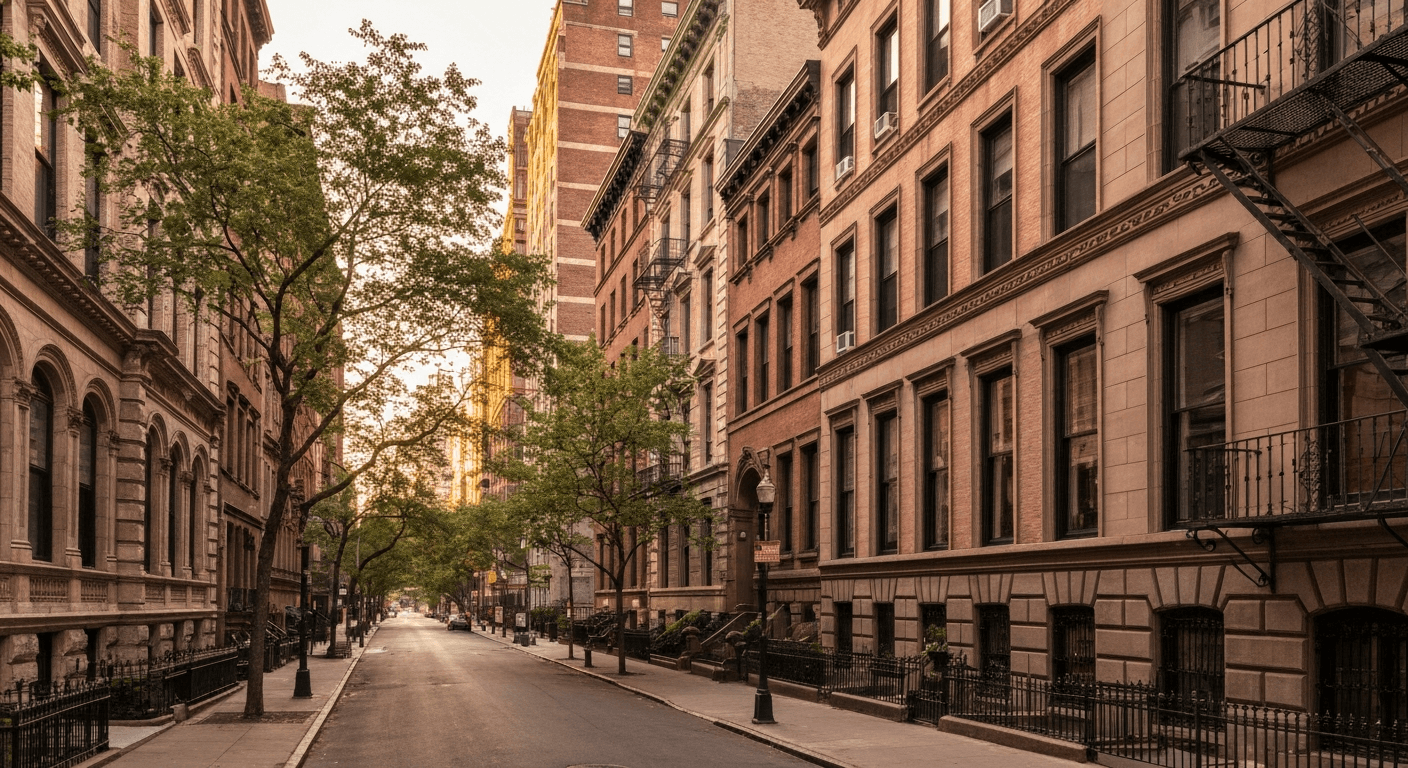
There's a reason so many people who move to Murray Hill stay for years longer than they originally planned. What begins as a practical decision — good location, reasonable prices relative to the Upper East Side, easy commute to Midtown — quickly transforms into something more personal. Murray Hill grows on you. The neighborhood's broad, tree-lined blocks between 34th and 40th Streets on the East Side of Manhattan combine the energy of one of the world's great cities with a residential calm that feels genuinely earned. Walk east from the bustle of Lexington Avenue toward the quiet of 2nd Avenue and you'll find blocks of beautiful brownstones, pre-war apartment buildings with uniformed doormen, and the occasional hidden gem of a restaurant tucked into a ground-floor space. Murray Hill real estate represents one of the most balanced value propositions in all of Manhattan — a neighborhood with unbeatable transit access, proximity to both Midtown employment and the green spaces of the East 30s, a genuine community feel, and a housing stock that spans affordable co-ops to elegant condominiums. Whether you're a young professional taking your first step into Manhattan homeownership, a medical professional working at NYU Langone or other nearby hospitals, or an investor seeking reliable rental income from a perennially in-demand location, buying in Murray Hill NYC is a decision that tends to look smarter with every passing year.
\n\n
Murray Hill takes its name from Robert Murray, a wealthy Quaker merchant who owned a country estate covering much of what is now the East 30s during the Revolutionary War era. The neighborhood's most famous historical footnote involves Mary Lindley Murray, Robert's wife, who allegedly entertained British General William Howe and his officers at tea in 1776 — buying time for General Israel Putnam's troops to escape the advancing Redcoats. Whether the story is entirely true or a bit embellished by history, it's the kind of foundational narrative that gives a neighborhood texture and identity. By the late 19th and early 20th centuries, Murray Hill had developed into one of Manhattan's most fashionable residential addresses, home to the Beaux-Arts brownstones and townhouses that still define its streetscape. The Morgan Library & Museum, housed in J.P. Morgan's private library on 36th Street between Madison and Park Avenues, stands as the neighborhood's crown jewel — one of the finest repositories of rare manuscripts, books, and art in the Western world, set inside a stunning McKim, Mead & White building that was expanded brilliantly by Renzo Piano in 2006. Grand Central Terminal is a brief walk north, and the Chrysler Building commands the skyline just above the neighborhood's roofline. The proximity to Midtown East's office towers means Murray Hill has always attracted white-collar professionals who value the ability to walk to work, and that dynamic continues to define its character today.
\n\n
Murray Hill real estate is defined by its extraordinary diversity of housing stock, which makes it accessible to a wider range of buyers than many comparable Manhattan neighborhoods. Pre-war co-operatives represent the most common purchase type here — solidly built buildings from the 1920s through 1940s with thick plaster walls, gracious floor plans, and maintenance fees that often include utilities and building services. These co-ops typically offer studios from $450,000 to $650,000, one-bedrooms from $700,000 to $1.1 million, and two-bedrooms from $1.2 million to $1.8 million, making them among the most competitively priced options for buyers seeking Manhattan's East Side without the Upper East Side premium. Condominium options range from older converted buildings to newer glass towers that have risen along Park Avenue South and in the 30s, offering buyers more flexibility in subletting and financing. New-construction condominiums in Murray Hill tend to trade at premium prices — one-bedrooms from $1.1 million to $1.5 million, two-bedrooms from $1.8 million to $2.8 million — but come with modern amenities including fitness centers, concierge services, and roof decks with Midtown skyline views. The rental market in Murray Hill is among the most consistently strong in Manhattan. The neighborhood's appeal to young professionals and medical residents (given proximity to NYU Langone Medical Center, Bellevue Hospital, and the Veterans Affairs New York Harbor campus) creates reliable tenant demand. A well-positioned one-bedroom rental in Murray Hill typically achieves $2,800 to $3,800 per month; two-bedrooms range from $4,000 to $5,500. Lexington Avenue is the neighborhood's commercial spine, with retail and restaurant density that keeps the street lively at nearly all hours, while Park Avenue and Madison Avenue to the west offer more of the quiet, tree-lined residential character that makes Murray Hill so livable.
\n\n
Murray Hill's lifestyle sits squarely at the intersection of convenience and quality of life. For dining, the neighborhood offers a genuinely impressive range. Turkish Kitchen on 3rd Avenue has been serving exceptional Ottoman cuisine for years and remains one of the most beloved neighborhood restaurants in the East 30s. Sarge's Deli on 3rd Avenue is a 24-hour institution that rivals Katz's for the title of Manhattan's great Jewish deli. Smith & Wollensky, the grand American steakhouse on 49th Street, is close enough for a celebratory dinner without the full Midtown tourism crush. Penrose Bar on 2nd Avenue brings a craft cocktail scene to the neighborhood that has elevated Murray Hill's evening options considerably. Tudor City, the remarkable 1920s residential complex just east of 2nd Avenue between 40th and 43rd Streets, is a self-contained enclave of Gothic Revival towers surrounding manicured private gardens — one of Manhattan's most surprising and beautiful architectural achievements, and a treasured Murray Hill neighbor. Bryant Park, one of the finest urban parks in the world with its French-style gardens, seasonal programming, and winter skating rink, is within easy walking distance to the northwest. Madison Square Park, home to the original Shake Shack and some of Manhattan's best public art installations, anchors the southern edge of the neighborhood's walkable radius. Trader Joe's on 32nd Street and a Fairway Market nearby keep grocery shopping practical. For daily life — dry cleaning, pharmacies, hardware stores — Murray Hill's commercial streets are comprehensively equipped.
\n\n
Public school options in Murray Hill reflect the broader landscape of Midtown Manhattan's educational offerings within Community School District 2 and District 4. PS 116 Mary Lindley Murray, located on East 33rd Street, is one of the neighborhood's anchors — named for the neighborhood's Revolutionary War heroine — and has consistently delivered strong academic outcomes, making it one of the more sought-after elementary schools on the East Side. For middle school, families look to IS 104 and pursue specialized program applications within the DOE's extensive option system. Stuyvesant High School, one of New York City's elite specialized high schools, is accessible from Murray Hill by subway and represents a genuine destination school for academically motivated students. The neighborhood's proximity to higher education is exceptional: NYU's School of Medicine at First Avenue and 30th Street places a major academic medical center within walking distance; Hunter College on 68th Street is a short subway ride away; Baruch College, one of the CUNY system's top-ranked campuses, is a brief walk on Lexington Avenue. For families considering private options, a range of independent schools in the East 60s and 70s are accessible by the 4/5/6 train in under 15 minutes, and several smaller independent day schools operate within or near the neighborhood's boundaries.
\n\n
Transportation from Murray Hill to anywhere in New York City is among the most straightforward of any Manhattan neighborhood, and this accessibility is one of the primary drivers of the neighborhood's enduring real estate demand. The 4, 5, and 6 trains at 33rd Street and at Grand Central–42nd Street on Lexington Avenue provide express and local service along Manhattan's East Side spine — reaching Wall Street in under 20 minutes and the Upper East Side in under 15. The 7 train at Grand Central provides direct access to Queens, including Long Island City and Flushing. At 34th Street-Herald Square to the west, residents can access the B, D, F, M, N, Q, and R trains — giving Murray Hill buyers connectivity to the entire New York City subway system with minimal travel. Penn Station at 34th Street and 7th Avenue, the nation's busiest rail hub, provides LIRR service to Long Island and New Jersey Transit service to New Jersey destinations. Grand Central Terminal, an architectural landmark in its own right, serves Metro-North commuters heading to Westchester, Connecticut, and the Hudson Valley. Bus service along 1st, 2nd, Lexington, and Madison Avenues provides granular crosstown and north-south coverage. The result is that Murray Hill residents rarely feel stranded — the neighborhood's central Midtown East position means that every part of the city is reachable within a reasonable transit commute.
\n\n
The rent versus buy calculation in Murray Hill has shifted meaningfully in favor of buying for residents with stable income and a medium-to-long-term time horizon. Rental prices have climbed steadily in recent years, with even modest one-bedroom apartments in older buildings now commanding $3,000 or more per month — and for that price, you are building zero equity. A buyer who purchases a pre-war co-op at $800,000 with a 20 percent down payment is looking at a total monthly carrying cost — mortgage, maintenance fees, and property tax — that may not differ dramatically from a comparable rental, while simultaneously building equity in an asset class that has appreciated reliably over time. One important note for co-op buyers: maintenance fees in Murray Hill's older co-ops can vary significantly based on underlying mortgage obligations and tax abatement status. Always review the building's financials carefully, including reserve funds and any assessments on the horizon. For buyers seeking more flexibility — including the ability to sublet from day one — condominium purchases carry higher purchase prices but fewer restrictions.
\n\n
The buyer profile for Murray Hill real estate is notably consistent: the neighborhood draws people who prize location above almost every other consideration. Young professionals working in financial services, law, medicine, and technology who want to be within walking or short subway distance of their Midtown offices represent the neighborhood's core buyer cohort. Medical residents and attending physicians from NYU Langone, Bellevue Hospital, and other Midtown East healthcare facilities are consistently active buyers in Murray Hill's co-op market, drawn by the neighborhood's proximity to their work and the relative affordability of its pre-war stock. Empty nesters trading out of larger suburban homes often find Murray Hill's combination of convenience and residential calm to be the perfect Manhattan landing spot. International buyers, particularly those with connections to the United Nations complex on 46th Street, frequently target Murray Hill for pied-à-terre purchases. Whatever the specific motivation, buyers in Murray Hill tend to share a preference for substantive living over trendy living — they want to be in a real neighborhood, not a lifestyle performance.
\n\n
Before submitting an offer on Murray Hill real estate, there are several critical factors to understand. The most important: co-op board requirements in this neighborhood are substantial. Most Murray Hill co-ops require buyers to demonstrate post-closing liquidity equal to one to two years of carrying costs, and debt-to-income ratios are closely scrutinized. Some buildings restrict subletting altogether or limit it to a maximum of two or three years during the life of ownership; others require board approval for any sublet arrangement. These restrictions can significantly affect resale value, so understanding a specific building's policies before making an offer is essential. The noise environment along 34th Street and Lexington Avenue can be significant, particularly in lower-floor apartments facing those corridors — noise sensitivity should be factored into your unit selection. Buildings in the Park Avenue and Madison Avenue corridor tend to be quieter, as vehicular traffic is less intensive there during off-peak hours. Finally, be prepared to move decisively in this market: well-priced co-ops in good buildings with reasonable financials rarely sit on the market for long, and buyers who take too long to complete their due diligence often lose their target property to a more prepared competitor.
\n\n
Murray Hill is the kind of neighborhood that rewards buyers who are willing to look past surface trendiness and recognize genuine, lasting value. The combination of Midtown East accessibility, beautiful pre-war architecture, a diverse and engaged community, and a housing market that has delivered consistent appreciation makes Murray Hill real estate one of the most compelling propositions in Manhattan for buyers at nearly every stage of life. When you're ready to explore the Murray Hill market — whether for a first home, a strategic investment, or the perfect pied-à-terre — Farva Scott is ready to help. As an Associate Broker at The Real Brokerage with extensive knowledge of Manhattan's East Side residential market, Farva brings the expertise and dedication to match you with the right property and guide you through every step of the transaction. Visit farvascott.com or call (914) 417-9215 to start your Murray Hill search today.