NoHo Real Estate Guide: Living, Buying & Investing in NoHo, NY
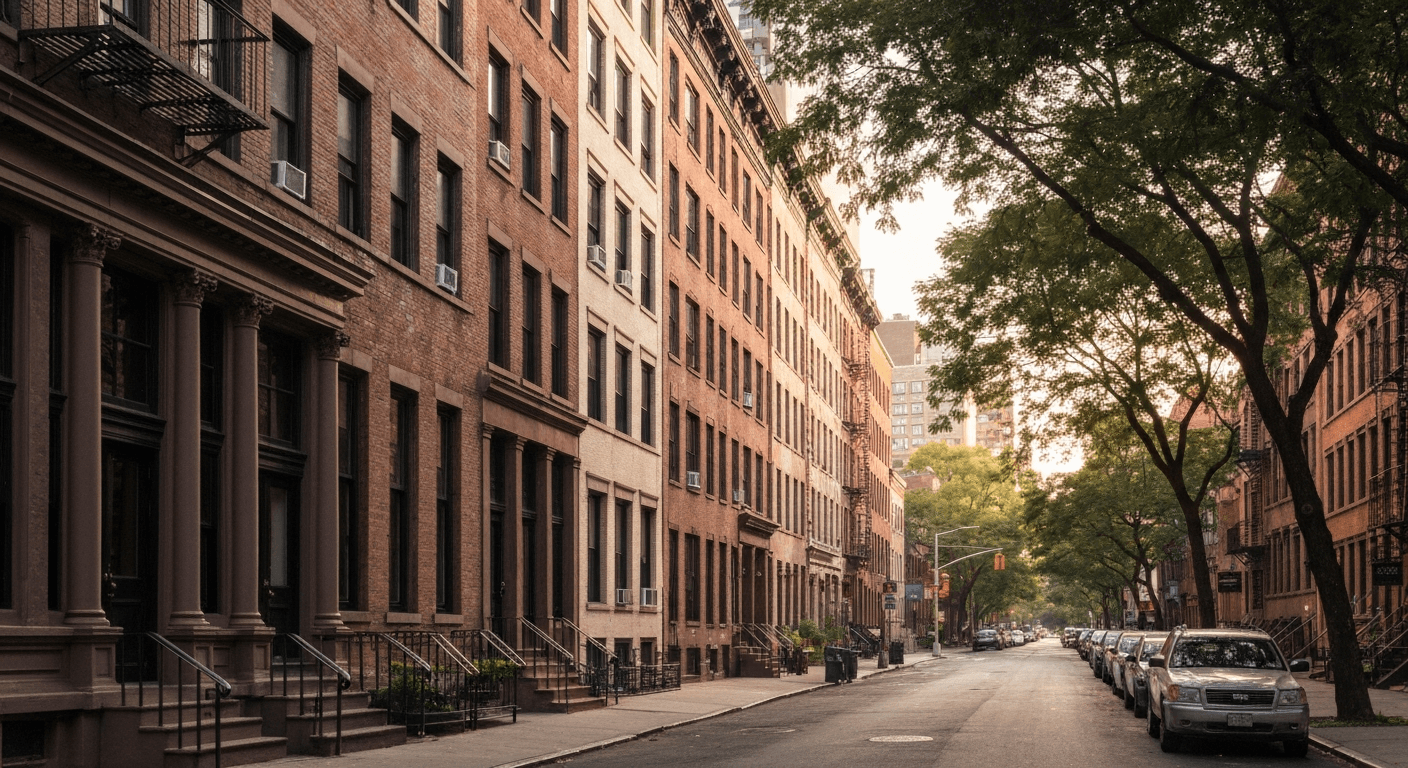
Manhattan has no shortage of neighborhoods that claim to be special, but very few actually deliver on that promise in the way that NoHo does. Tucked between Houston Street to the south, Bleecker Street to the north, Broadway to the east, and Lafayette Street to the west, NoHo occupies a sliver of Lower Manhattan so small that you can walk its entire length in under ten minutes. What it lacks in size, it more than compensates for in character, prestige, and a quality of urban life that has made it one of the most coveted residential addresses in New York City.
NoHo — the name is shorthand for North of Houston — is not a neighborhood that announces itself. There are no souvenir shops, no chain restaurants crowding the corners, no tourist attractions drawing crowds. Bond Street and Great Jones Street are among the quietest, most beautiful blocks in all of Manhattan — tree-lined, lined with cast-iron facades, populated by artists, architects, and quietly affluent residents who chose this precise address over every other available option. That selectivity is its own form of prestige. People who live in NoHo know what they chose and why.
The real estate market here reflects that exclusivity directly. NoHo consistently ranks among Manhattan's most expensive neighborhoods on a per-square-foot basis. Inventory is thin — buildings turn over rarely, and many sales happen through broker networks before units reach public listings. For the right buyer, however, NoHo represents something that money alone cannot replicate in most of Manhattan: genuine neighborhood character in a central location, protected by landmark designation, surrounded by cultural institutions, and served by excellent transit.
NoHo's built environment tells the story of New York's industrial past more eloquently than almost any other Manhattan neighborhood. The cast-iron buildings that line Broadway and Lafayette Street between Houston and Bleecker were constructed in the latter half of the 19th century, when this stretch of Lower Manhattan was a thriving commercial and light manufacturing district. The cast-iron facade system — modular, prefabricated, dramatically cheaper than stone construction — allowed building owners to create impressive architectural statements on manufacturing budgets. The result is a streetscape of extraordinary visual coherence: wide facades with deep window reveals, ornate cornices, and ground-floor columns that still evoke the commercial grandeur of 1880s New York.
By the early 20th century, manufacturing had begun moving to outer boroughs and New Jersey, and the buildings of NoHo gradually transitioned to warehousing and wholesale uses. The neighborhood remained largely overlooked through the mid-20th century until artists discovered its possibilities in the 1970s and 1980s — large floor plates, high ceilings, cheap rents, and a physical distance from the pressures of established Manhattan neighborhoods made NoHo (and the adjacent SoHo) a haven for painters, sculptors, and experimental artists who needed both space and community. Galleries and studios clustered on Great Jones Street and the Bowery, establishing an arts identity that the neighborhood has never fully surrendered even as rents climbed to levels no working artist could afford.
The NoHo Historic District, designated by the New York City Landmarks Preservation Commission, protects the neighborhood's architectural character by requiring LPC approval for any exterior alterations. This designation is both a constraint and a profound advantage for buyers — it means that NoHo will remain NoHo. The low-rise scale, the cast-iron facades, the tree-lined streets will not be altered by speculative developers building glass towers over former parking lots. That permanence is priced into every transaction.
Key landmarks anchor the neighborhood's cultural identity. Colonnade Row at 428-434 Lafayette Street, constructed in 1833, comprises four surviving Greek Revival mansions that once housed New York's Astor, Delano, and Vanderbilt families — the buildings are now registered as a National Historic Landmark and remain visible reminders of the neighborhood's patrician pre-industrial past. The Public Theater at 425 Lafayette Street, housed in the former Astor Place Library (1853), is one of New York's most important theatrical institutions — founded by Joe Papp, it produced the original Broadway cast of Hair and A Chorus Line and continues to be a driving force in American theater. The Cable Building at 611 Broadway, completed in 1894, is a Romanesque Revival masterpiece that once served as the powerhouse for Manhattan's cable car system.
NoHo's real estate market operates by different rules than most Manhattan neighborhoods. First and most importantly: inventory here is genuinely scarce. The neighborhood contains only a handful of residential buildings, and the pace of turnover is slow — residents tend to stay for decades once they have purchased. This means that any serious buyer needs a broker with direct relationships in the buildings, as a meaningful percentage of available units never reach public listing services.
The dominant housing type in NoHo is the loft — specifically, converted units in former cast-iron commercial buildings that have been reimagined as residential space. These buildings typically offer ceiling heights of 12 to 16 feet, wide floor plates that allow for expansive open-plan living areas, and a visual vocabulary of exposed brick, original timber beams, and oversized industrial windows that cannot be replicated in new construction regardless of budget. The conversion process, typically completed between the 1980s and 2000s, has produced a housing stock that is both historically distinctive and, by Manhattan standards, relatively well-equipped.
Prices in NoHo reflect the neighborhood's scarcity and prestige without apology. Studios in NoHo — which are rare, as most converted loft buildings favor larger units — trade between $900,000 and $1.5 million. One-bedroom apartments range from approximately $1.5 million to $2.8 million, with larger and higher-floor units commanding premiums toward the top of that range. Two-bedroom lofts — the most common product type in the neighborhood — run from $2.8 million to $5 million, and the three-bedroom, full-floor lofts that represent NoHo at its most spectacular can reach $10 million to $15 million or more for trophy units.
Notable buildings include 40 Bond Street, a striking 2007 condominium designed by the Swiss architectural firm Herzog & de Meuron. The building's facade of custom cast-iron grillwork was designed as a direct reference to the neighborhood's historic cast-iron architecture — a 21st-century conversation with 19th-century context. Units here are consistently among the neighborhood's most expensive. Also significant are 25 Bond Street and 48 Bond Street, two boutique residential buildings on the neighborhood's most prestigious street. Bond Street as an address carries genuine cachet among Manhattan's cognoscenti — the block between Broadway and the Bowery is simply one of the most beautiful residential streets in New York.
The investment thesis for NoHo is straightforward: scarcity plus desirability equals sustained appreciation. Properties purchased in NoHo in 2010 have in many cases doubled in value. The neighborhood's landmark protection means supply cannot meaningfully increase, while demand from affluent buyers continues to grow. Rental income for owners who choose to lease their units is substantial — one-bedroom apartments rent for $4,500 to $6,500 per month, and larger lofts command $8,000 to $20,000 monthly depending on size and character. NoHo's rental market draws creative professionals, executives on temporary assignments, and international residents who want a Manhattan base with a particular aesthetic.
Daily life in NoHo combines the pleasures of village-scale intimacy with access to some of Manhattan's finest dining, cultural institutions, and retail. Bond Street and Great Jones Street form the neighborhood's residential core, and these blocks function almost as a private enclave — quiet enough that residents know their neighbors, yet steps from the energy of Broadway, Lafayette Street, and the Bowery.
Dining in NoHo is exceptional. Il Buco at 47 Bond Street has been one of Manhattan's essential Italian restaurants since 1994 — its rustic farmhouse aesthetic, excellent wine list, and commitment to seasonal ingredients have attracted a loyal following that includes much of the city's creative establishment. Great Jones Café at 54 Great Jones Street is the neighborhood's beloved down-home counterpoint: a Cajun restaurant in a former tenement space serving crawfish and jambalaya since 1983, a genuine New York institution. Two Hands NYC on Bond Street has become a destination for the neighborhood's weekend brunch crowd with its Australian-influenced all-day menu. Atla at 372 Lafayette Street, chef Enrique Olvera's casual Mexican spot, is perpetually packed for dinner.
The Merchant's House Museum at 29 East 4th Street is one of New York's most unusual cultural institutions — a perfectly preserved Federal townhouse from 1832, intact with all its original furnishings, that offers a literal window into upper-class New York life before the Civil War. The Public Theater's programming ranges from Shakespeare in the Park (using the Delacorte Theater in Central Park during summer) to cutting-edge new plays — living in NoHo means having one of New York's most important theatrical institutions essentially as a neighborhood amenity.
Families in NoHo benefit from access to strong schools in District 2, consistently one of the highest-rated school districts in New York City. PS 41 Greenwich Village at 116 West 11th Street is the neighborhood's premier public elementary school — a progressive District 2 school with a strong arts program and an engaged parent community that reflects the neighborhood's creative professional demographics. For middle school, MS 297 and MS 51 in the District 2 cluster draw students from across the area.
Private school families have excellent options accessible from NoHo. The Village Community School at 272 West 10th Street is a progressive independent school with a long Greenwich Village history. Lycée Français de New York maintains campuses across the city and is particularly accessible from this neighborhood. The Little Red School House and Elisabeth Irwin High School at 272 Sixth Avenue — a progressive K-12 institution — is within comfortable walking or biking distance. For high school, Stuyvesant High School at 345 Chambers Street is accessible by a short subway ride and remains one of the country's most academically distinguished public high schools.
Cooper Union at 30 Cooper Square is literally in the neighborhood — the institution's Foundation Building (1858) fronts on Cooper Square adjacent to the neighborhood's eastern boundary. NYU's Washington Square campus is about ten minutes on foot. The New School and Parsons School of Design are equally accessible. The concentration of world-class educational institutions within walking distance of NoHo enriches the neighborhood's intellectual and cultural life in ways that are difficult to quantify but easy to feel.
NoHo's transit access is exceptional by any measure. The B, D, F, and M trains stop at Broadway-Lafayette Street, right at the neighborhood's eastern edge — from this station, riders can reach Midtown in 15 to 20 minutes, the Financial District in 10 to 15 minutes, and Brooklyn directly via the D and F lines. The 6 train at Bleecker Street (Lafayette and Bleecker) provides a direct local connection to all of the East Side from the southern Bronx to Brooklyn Bridge. The N, R, and W trains at 8th Street-NYU (Broadway and 8th Street) add additional Midtown and Queens connectivity.
The PATH train, connecting Manhattan to New Jersey's Hudson County communities, is accessible from the Christopher Street station a short walk west and from the 9th Street station. For those who travel frequently between Manhattan and New Jersey, this provides a meaningful quality-of-life advantage. Walking distance to Lower Manhattan's Financial District is approximately 25 minutes — a straightforward commute that many NoHo residents prefer to taking the subway for the exercise as much as the time savings.
Walkability in NoHo scores at the absolute top of the range. East Village restaurants, West Village nightlife, SoHo shopping, and Chinatown food markets are all within a 15-minute walk. Citibike stations at Bond and Lafayette, Houston and Broadway, and throughout the surrounding neighborhoods make cycling a practical daily option. Owning a car in NoHo — as in much of lower Manhattan — is genuinely unnecessary and expensive enough in parking costs to function as a small tax on poor judgment.
The honest assessment of NoHo's buy-versus-rent calculus is simple: with purchase prices well above $2 million for most available units, NoHo is a neighborhood for buyers who either have significant equity from prior real estate, are high-income professionals in the early years of accumulation, or are investors with a multi-year hold strategy. Renting a one-bedroom apartment here runs $4,500 to $6,500 per month — at $5,000 per month, that is $60,000 per year in rent with zero equity accumulation and no protection against rent increases.
For buyers who can bridge the entry price, the long-term financial case is powerful. NoHo's appreciation over the past decade has substantially outpaced inflation and the broader Manhattan market. Its landmark protection ensures the neighborhood cannot be diluted by oversupply. And the specific quality of loft living — the ceiling heights, natural light, architectural character — commands a durable premium that will not erode as neighborhoods rise and fall around it. Buyers should not expect to time the market precisely; they should expect that buying in NoHo and holding for a decade will produce strong results.
NoHo is not for everyone, and it is not designed to be. The neighborhood's small size, limited retail, and high price points define a specific buyer profile: ultra-high-net-worth individuals and families who have made it their deliberate choice to live in one of Manhattan's most architecturally significant neighborhoods. Creative professionals — architects, fashion designers, artists who have achieved commercial success, filmmakers and media executives — are attracted by the neighborhood's aesthetic identity and its genuine distance from corporate Manhattan culture.
Tech and finance executives who want a Manhattan home that does not look or feel like a standard luxury high-rise appreciate NoHo's cast-iron loft product. International buyers seeking a Manhattan pied-à-terre with genuine New York character — not a generic glass tower apartment that could be in any global city — consistently look at NoHo. Empty nesters who have sold large family homes and are searching for a sophisticated urban environment where they can engage deeply with New York's cultural life find that NoHo delivers on that promise more consistently than neighborhoods with higher profiles or larger populations.
Buying in NoHo demands a different approach than buying in most Manhattan neighborhoods. The first imperative is working with a broker who maintains active relationships inside the buildings, since a substantial percentage of NoHo transactions happen through broker-to-broker communication before units are formally listed. Going off-market is not just advantageous — it may be the only way to access the specific building or unit type you want.
Before making an offer on any NoHo unit, verify the building's landmark status and understand the implications for renovation. The Landmarks Preservation Commission review process applies to all exterior alterations in the NoHo Historic District, and while interior renovations are generally unrestricted, buyers who are envisioning significant changes to windows, facades, or rooftop spaces need to plan for the LPC approval timeline. Engage an architect familiar with landmark buildings to assess renovation feasibility before you close.
Cast-iron buildings from the 1880s require informed inspection. Plumbing may include original or early-20th-century lead pipes in some areas — ask specifically about pipe material and replacement history. Electrical systems should be reviewed for capacity, particularly in large loft units where climate control and modern appliance loads can exceed original panel capacity. Window performance in original or historically replicated cast-iron frames can be a significant factor in heating and cooling costs — budget accordingly if windows have not been upgraded.
Finally, understand the difference between the NoHo Historic District and the broader SoHo-Cast Iron Historic District that covers adjacent blocks — buildings in each district have slightly different regulatory frameworks, and a unit technically in one district may be classified under the other for LPC purposes. Your broker and attorney should clarify this before contract signing.
NoHo is one of Manhattan's most remarkable residential neighborhoods — not for its size or its name recognition, but for the specific combination of architectural heritage, cultural vitality, transit access, and deliberate quiet that it offers. In a city that is always offering something newer, louder, and more advertised, NoHo represents the case for restraint, character, and the enduring value of knowing exactly what you want.
If NoHo matches what you are looking for in a Manhattan home or investment property, the next step is a conversation with someone who knows the neighborhood's buildings, its buildings' personalities, and its market cycles in depth. Farva Scott is an Associate Broker at The Real Brokerage with expertise in Manhattan's most competitive and distinctive neighborhoods. Visit farvascott.com to learn more about available listings, or call (914) 417-9215 to schedule a consultation. NoHo moves fast — let us get you ready to move with it.