Prospect Heights Real Estate Guide: Living, Buying & Investing in Prospect Heights, NY
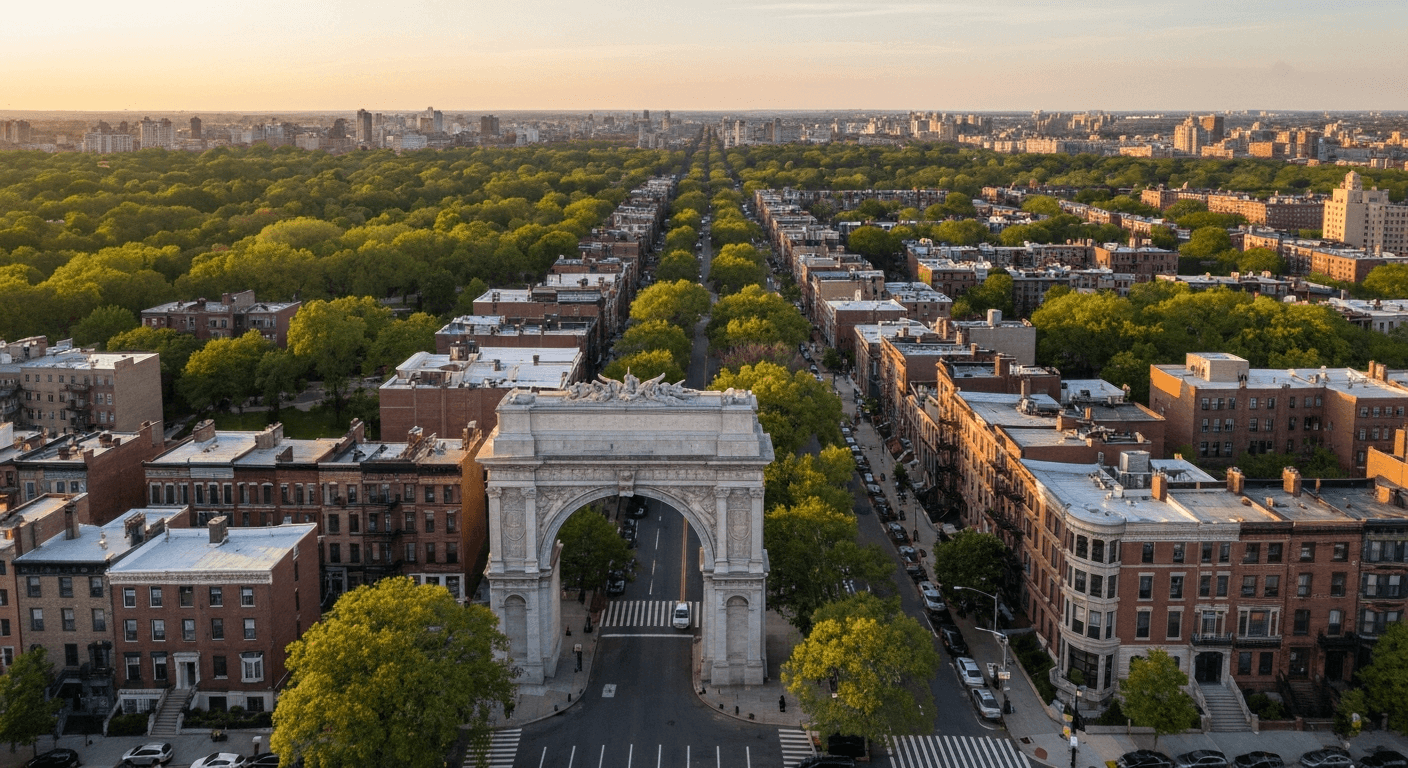
Prospect Heights is one of Brooklyn's most coveted addresses — a neighborhood that brilliantly balances cultural prestige with residential warmth. Tucked between Park Slope, Crown Heights, and the vast green expanse of Prospect Park, this compact but mighty enclave draws home buyers who want the very best of New York City living without sacrificing community feel. From the grandeur of Eastern Parkway's museum mile to the tree-canopied brownstone blocks of St. Marks Avenue and Park Place, Prospect Heights offers a lifestyle that is both refined and genuinely livable. Whether you are a first-time buyer, a growing family, or a seasoned investor, understanding this neighborhood is essential before stepping into one of Brooklyn's most competitive real estate markets.
People love Prospect Heights for reasons that go well beyond real estate metrics. The neighborhood's proximity to Prospect Park gives residents an essentially private 585-acre backyard — trails, meadows, a peristyle, skating rink, and the Audubon Center, all within walking distance. On weekend mornings, you'll find neighbors jogging the park loop, browsing the Grand Army Plaza Greenmarket, or sipping single-origin coffee at one of the area's acclaimed cafes. The cultural density here is extraordinary: the Brooklyn Museum, the Brooklyn Public Library's central branch, and the Brooklyn Botanic Garden all anchor the neighborhood's northern edge. This is the kind of place where you can attend a world-class exhibit on a Tuesday afternoon and still grab dinner at a neighborhood restaurant where the owner knows your name. For buyers who want a neighborhood with genuine soul, Prospect Heights consistently delivers.
Neighborhood Overview & History
Prospect Heights was not always the polished destination it is today. For much of the 20th century, the neighborhood was a working-class and middle-class community with a significant Caribbean and African American population, particularly in its eastern blocks. Its western edge near Flatbush Avenue was long considered an extension of Park Slope's orbit, but Prospect Heights developed its own distinct identity over decades. The neighborhood takes its name from the elevated terrain that affords sweeping views toward Lower Manhattan on clear days, a geographic asset that was not lost on 19th-century developers who built the elegant limestone and brownstone rowhouses that define the streetscape today.
The transformation of Prospect Heights accelerated in the early 2000s when the Ratner Atlantic Yards project — later rebranded Pacific Park — was announced for the neighborhood's northern tip. The development, which includes the Barclays Center arena (opened in 2012) and numerous residential towers, fundamentally altered the blocks along Flatbush and Atlantic Avenues, bringing thousands of new residents and a wave of retail and restaurant development. Today, that energy radiates outward into the quieter brownstone blocks, creating a neighborhood in productive tension between its historic residential character and a 21st-century urban boom.
The neighborhood's identity is anchored by Eastern Parkway, Frederick Law Olmsted and Calvert Vaux's grand six-lane boulevard designed in 1870 as the world's first parkway. Lined with mature trees and gracious apartment buildings, Eastern Parkway connects Grand Army Plaza to the west with Crown Heights and Brownsville to the east. Walking its central mall on a summer evening is one of the quintessential Brooklyn experiences, and the annual West Indian American Day Parade — the largest in North America — fills Eastern Parkway with over a million revelers every Labor Day, a testament to the neighborhood's enduring multicultural spirit.
The Real Estate Market
Prospect Heights real estate is unambiguously a seller's market. Demand consistently outpaces supply, and properties that are priced correctly and presented well routinely receive multiple offers within days of listing. As of mid-2026, the median home sale price in Prospect Heights hovers around $1.1 million to $1.3 million for a two-to-three-bedroom brownstone condo or co-op unit, though entry-level studios and one-bedroom apartments can be found starting in the high $400,000s to low $600,000s range, particularly in the larger prewar buildings along Eastern Parkway.
The dominant property type in Prospect Heights is the brownstone rowhouse, typically built between 1880 and 1920 in the Romanesque Revival or Renaissance Revival style. Many of these buildings have been converted into two-to-four-unit condominiums, and a garden-level duplex with original details — tin ceilings, stained glass transoms, exposed brick — can sell for $850,000 to $1.2 million. Owner-occupied two-family or three-family townhouses command a significant premium, with asking prices frequently above $2 million for well-maintained examples on sought-after blocks like Berkeley Place, Lincoln Place, or St. Johns Place.
The blocks near Barclays Center and Pacific Park offer a very different product: new construction condominiums with amenity packages that include concierge service, gyms, rooftop terraces, and co-working spaces. Buildings like 550 Vanderbilt Avenue and 535 Carlton Avenue, developed as part of Pacific Park, feature two-bedroom units priced from $1.4 million to $2.5 million, with some penthouses exceeding $4 million. These appeal strongly to buyers who want new construction quality in a brownstone-adjacent neighborhood.
The rental market is equally tight. A one-bedroom apartment in a brownstone conversion typically rents for $2,800 to $3,600 per month, while a two-bedroom commands $3,800 to $5,200 depending on condition and proximity to Prospect Park. Investors who purchased rental properties in Prospect Heights before 2015 have seen substantial appreciation and strong cap rates, though today's purchase prices make yield compression a real concern for new investors. Long-term appreciation, however, remains a compelling investment thesis: the combination of limited land supply, historic building stock, and premium location has consistently protected values here even through broader market downturns.
Lifestyle & Amenities
Prospect Heights is a neighborhood where you eat exceptionally well. Vanderbilt Avenue is the commercial heart of the neighborhood and one of Brooklyn's premier restaurant rows. Olmsted, helmed by chef Greg Baxtrom, has earned national acclaim for its seasonal tasting menus served in a garden-framed dining room. Chuko Ramen on Vanderbilt Avenue packs in neighborhood regulars for bowls of rich tonkotsu broth. Talde, created by Top Chef alum Dale Talde, serves pan-Asian comfort food that draws diners from across the borough. For coffee, Qathra on Washington Avenue has a loyal following, while the Prospect Heights café scene extends to spots like Hungry Ghost and Little Zelda.
The Grand Army Plaza Greenmarket, operating every Saturday year-round from 8am to 3pm, is one of New York City's premier farmers markets. Set against the backdrop of the Soldiers' and Sailors' Arch — an 80-foot triumphal arch inspired by the Arc de Triomphe — the market draws vendors from across New York, New Jersey, and New England selling fresh produce, artisan breads, locally raised meats, cheeses, and cut flowers. It is not merely a place to shop; it is a neighborhood institution where residents linger, neighbors catch up, and the social fabric of the community is visibly woven.
For fitness and recreation, the neighborhood has excellent options beyond Prospect Park. Blink Fitness on Flatbush Avenue provides affordable gym access, while boutique studios including SoulCycle (multiple nearby locations) and local yoga studios cater to the neighborhood's health-conscious demographic. The Barclays Center brings major concerts, NBA games (the Brooklyn Nets play there), and cultural events to the neighborhood's front door.
Shopping options on Vanderbilt and Washington Avenues include a curated mix of independent boutiques, wine shops, and specialty grocers. Key Food on Bergen Street serves everyday needs, while the Brooklyn Flea hosts rotating vendors on weekends. The proximity to the Atlantic Terminal Mall — anchored by Target, Trader Joe's, and Century 21 — adds significant retail convenience just blocks away.
Schools & Education
Families considering Prospect Heights will find a range of educational options worth careful evaluation. Public school options in the neighborhood fall under Community School District 13. P.S. 9 (The Sarah Smith Tompkins School), located at 80 Underhill Avenue, is one of the most desirable elementary schools in the area, known for its active parent community and strong academic programming. P.S. 316 at 750 Classon Avenue serves the western portion of the neighborhood. For middle schoolers, I.S. 340 (the City Lights School) at 600 Kingston Avenue has specialized programs drawing students from across District 13.
For high school, students can apply to Brooklyn's specialized high schools — including Brooklyn Technical High School on Fort Greene Place, one of New York City's eight elite specialized high schools — through the citywide admissions process. Medgar Evers College Preparatory School on Crown Street also draws academically motivated students from the area.
Private school options near Prospect Heights include the Brooklyn Friends School in Fort Greene, Saint Ann's School in Brooklyn Heights, and Poly Prep Country Day School in Dyker Heights. The neighborhood's proximity to Brooklyn College (accessible via the 2/5 train) and Long Island University Brooklyn campus adds to its educational ecosystem. For families prioritizing school quality, thorough research into individual school programs and the NYC public school choice process is essential.
Transportation & Commute
Prospect Heights is exceptionally well-served by public transportation, making it one of Brooklyn's most commuter-friendly neighborhoods. The 2 and 3 subway lines stop at Eastern Parkway–Brooklyn Museum, the neighborhood's central station, which is also serviced by the B and Q trains via a short walk to Grand Army Plaza. The 2/3 trains at this station put Midtown Manhattan's Times Square area approximately 20 to 25 minutes away under normal conditions — a commute that compares favorably to many Manhattan neighborhoods.
The 4 and 5 trains are accessible at Franklin Avenue, one block east of the neighborhood's edge, providing additional options to express service into Manhattan and connections to the Bronx. The LIRR is accessible at Atlantic Terminal (Flatbush Avenue and Atlantic Avenue), less than a 10-minute walk from the center of the neighborhood, connecting to Penn Station in roughly 20 minutes — an attractive option for commuters headed to Midtown or points on Long Island.
Bus service on Flatbush Avenue, Eastern Parkway, and Washington Avenue connects Prospect Heights to adjacent neighborhoods and bus rapid transit routes. The neighborhood's walkability score is exceptional — most daily errands and many restaurant and retail destinations are within a 10 to 15-minute walk. The Citi Bike network is robust here, with docking stations on Vanderbilt Avenue, Washington Avenue, and St. Marks Avenue providing cycling access to Park Slope, Crown Heights, Fort Greene, and DUMBO.
Buying vs. Renting
The buy-versus-rent calculus in Prospect Heights is genuinely complex and depends heavily on individual financial circumstances. For buyers with a 20% down payment and access to a conventional mortgage at current rates, monthly ownership costs for a one-bedroom condominium will typically exceed equivalent market rents — making renting the more cash-flow-efficient short-term choice. However, the appreciation trajectory in Prospect Heights has been exceptional over the past two decades, and buyers who have held properties for five or more years have generally seen strong equity growth.
For buyers with long-term horizons of seven-plus years, purchasing in Prospect Heights remains a compelling wealth-building strategy. The neighborhood's limited new supply of historic brownstone inventory, combined with persistent demand from culturally engaged buyers, creates structural price support. Renters who intend to stay in New York City long-term should seriously model the total cost of continued renting versus purchasing, particularly given the tax deductibility of mortgage interest and the wealth-building effect of principal paydown.
Who Should Live Here
Prospect Heights attracts a remarkably diverse mix of residents, united by an appreciation for culture, community, and quality of life. Young professionals in their 30s and early 40s who have outgrown the renter-first lifestyle of earlier careers make up a significant buyer demographic — particularly couples planning families who want brownstone living with stroller-friendly parks and great school options. Cultural and creative professionals — those working in museums, publishing, film, academia, or the arts — are drawn by the neighborhood's proximity to the Brooklyn Museum and its established creative community.
Families with school-age children who have identified strong public or private school options make up another core demographic. Empty nesters who have downsized from larger suburban homes and want walkability, cultural programming, and the energy of urban life without the intensity of Manhattan find Prospect Heights an excellent fit. Real estate investors with a long-term perspective round out the picture — particularly those targeting well-maintained multi-family brownstones as rental properties.
Tips for Buying in Prospect Heights
The Prospect Heights market requires preparation, speed, and strategic thinking. First and most importantly: get fully pre-approved — not just pre-qualified — before you begin touring. Listing agents in this neighborhood routinely will not entertain offers from buyers who cannot demonstrate mortgage commitment, and in competitive situations, sellers often make decisions within 48 to 72 hours of a listing going live.
Know the difference between condominiums, co-operatives, and townhouses before you begin your search. Co-ops in Prospect Heights often have lower purchase prices but require board approval, detailed financial disclosures, and adherence to building rules that can restrict subletting. Condominiums offer more flexibility for investors and buyers who may want to rent the unit in the future, but typically carry higher common charges.
Hire a buyer's broker who specializes in Brooklyn brownstone neighborhoods and has active relationships with listing agents in the area — off-market deals and early access to new listings are real advantages in this market. Always commission a thorough home inspection before waiving contingencies; brownstone buildings can carry deferred maintenance costs related to roofing, pointing, and plumbing that are not visible in a casual showing. Budget for renovation if purchasing a raw unit — kitchen and bathroom updates in this market can run $80,000 to $150,000 for quality work.
Conclusion & CTA
Prospect Heights is not just a neighborhood — it is a way of life that few corners of New York City can match. The combination of architectural beauty, cultural richness, Prospect Park access, excellent transit, and genuine community makes it one of Brooklyn's most enduringly desirable places to call home. Whether you are buying your first apartment or your fifth investment property, the stakes are high and the opportunity is real.
If you are ready to explore Prospect Heights real estate, I am here to help you navigate every step of the process. I am Farva Scott, Associate Broker at The Real Brokerage, with deep expertise in Brooklyn and New York City residential markets. Reach me at (914) 417-9215 or visit farvascott.com to get started. Your next home in Prospect Heights is waiting.