Sugar Hill Real Estate Guide: Living, Buying & Investing in Sugar Hill, NY
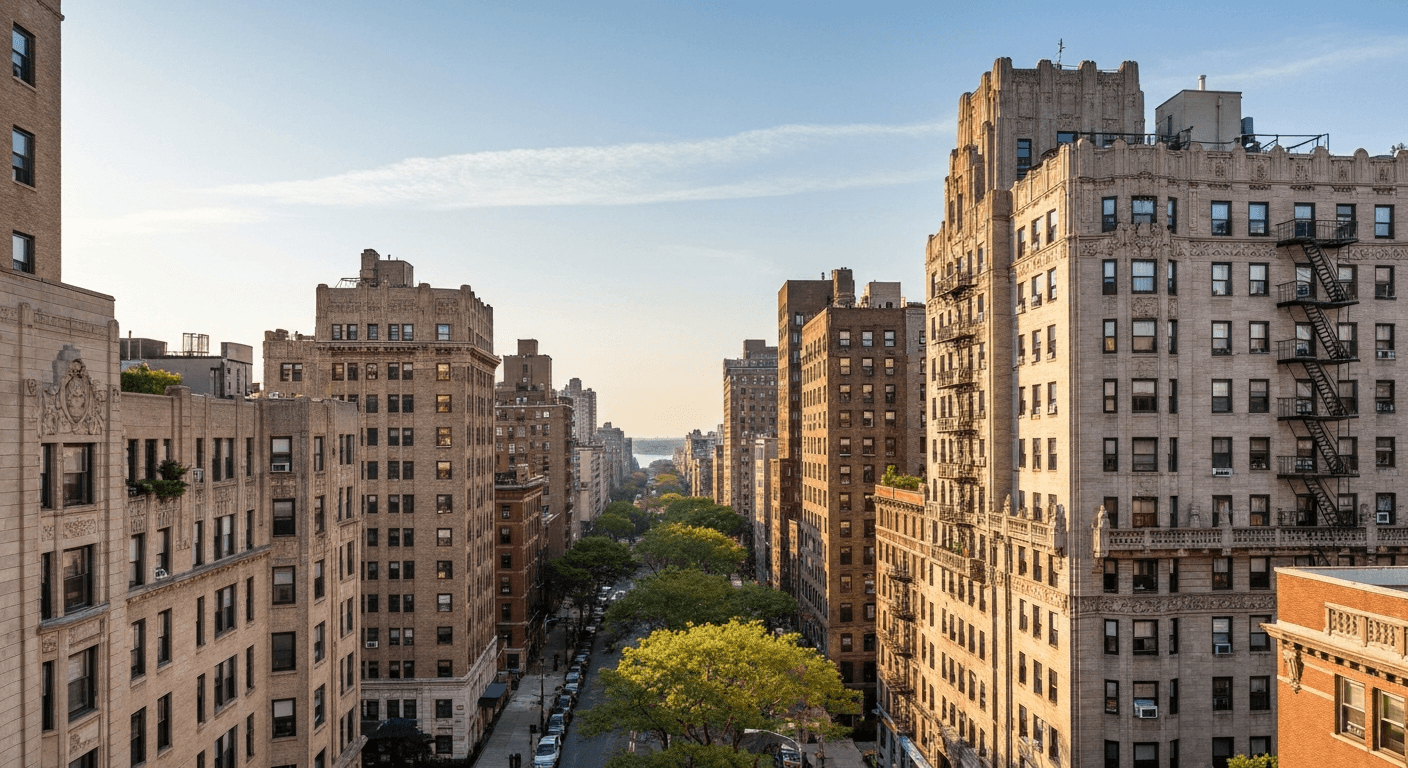
There is a reason they called it Sugar Hill. In the 1920s and 1930s, the residents of this elevated corner of upper Manhattan described life there as "sweet"—and the name stuck. Sugar Hill, occupying the high ground between 145th and 155th Streets along Edgecombe and St. Nicholas Avenues in upper Manhattan, was home to an extraordinary roster of Black American cultural and intellectual giants: Duke Ellington composed at the piano in his apartment here. Thurgood Marshall plotted his legal strategies a few blocks away. W.E.B. Du Bois walked these streets. Cab Calloway, Count Basie, and Lena Horne were neighbors.
That legacy of excellence and aspiration has never left. Today, Sugar Hill is experiencing a real estate renaissance that is drawing buyers and investors from across New York City and beyond—people who recognize that the neighborhood's combination of jaw-dropping prewar architecture, storied cultural history, sweeping Hudson River views from its high-ridge buildings, and increasingly vibrant street life represent an exceptional value proposition in an otherwise stratospherically priced Manhattan market.
For buyers and investors who want to be part of a neighborhood that is genuinely historic, actively improving, and still priced below comparable areas to the south and east, Sugar Hill offers an opportunity that does not come along often. This guide covers everything you need to know about buying, living, and investing in one of Manhattan's most compelling neighborhoods.
Neighborhood Overview & History
Sugar Hill occupies the northwest corner of Harlem, rising steeply from the 145th Street subway stations along the ridge that defines the neighborhood's western edge. The neighborhood's borders are roughly 145th Street to the south, 155th Street to the north, St. Nicholas Avenue on the east, and Edgecombe Avenue and the Highbridge Park hillside on the west—though locals sometimes extend the neighborhood's identity a block or two in any direction.
The name Sugar Hill entered popular usage in the 1920s and 1930s, when the neighborhood became one of the most desirable addresses in Black New York. The Great Migration from the American South had swelled Harlem's population, and the professional and creative class that formed around the Harlem Renaissance sought out the best housing available. Sugar Hill's large, elegant apartment buildings—with their high ceilings, wide corridors, and Hudson River views—were it.
The roster of Sugar Hill luminaries reads like a who's who of 20th-century Black American achievement. Duke Ellington lived at 935 St. Nicholas Avenue. Thurgood Marshall—before he argued Brown v. Board of Education and before he became the first African American Supreme Court Justice—lived at 409 Edgecombe Avenue, known in its day as "the house on the hill" and home to many of Harlem's elite residents. W.E.B. Du Bois, Walter White of the NAACP, and Aaron Douglas, the father of African American art, all called Sugar Hill home.
Architecturally, Sugar Hill's high-ridge buildings are among the most striking in Manhattan. Buildings like 409 Edgecombe Avenue, 555 Edgecombe Avenue, and the prewar six-story elevator buildings along St. Nicholas Avenue feature Renaissance Revival and Art Deco detailing, spacious apartments with formal dining rooms, and views across the Harlem River valley and toward the Bronx that are genuinely spectacular.
After decades of disinvestment during the city's fiscal crisis period of the 1970s and 1980s, Sugar Hill has steadily recovered. Today it sits at the intersection of preservation and revitalization, with a thriving restaurant corridor on 145th Street, strengthening schools, and an energized community of longtime residents and newcomers working together to shape the neighborhood's future.
The Real Estate Market
Sugar Hill's real estate market in 2024 is defined by a compelling core proposition: you can still acquire generously sized prewar apartments in architecturally distinguished buildings at prices well below comparable units in Downtown Brooklyn, the Upper West Side, or even Central Harlem. This pricing gap has been narrowing steadily, and buyers who act now are positioning themselves ahead of what many analysts believe will be the next significant leg of appreciation.
The dominant housing type in Sugar Hill is the large prewar elevator co-op building, concentrated along Edgecombe Avenue and St. Nicholas Avenue. These buildings, typically constructed between 1905 and 1940, feature original hardwood floors, plaster molding, eat-in kitchens, and in many cases formal dining rooms and multiple exposures. They represent a quality of construction and spatial generosity that is simply unavailable in most of Manhattan at comparable price points.
Studio apartments in Sugar Hill co-ops list in the $225,000 to $350,000 range. One-bedroom apartments—typically 700 to 900 square feet—range from $325,000 to $525,000. Two-bedroom units, often 1,000 to 1,400 square feet, range from $500,000 to $800,000. Three-bedroom apartments in the most prestigious buildings—those with river views and formal entry galleries—can reach $1 million to $1.5 million, though these remain relatively rare on the market.
Monthly maintenance fees in Sugar Hill co-ops are generally in the $600 to $1,400 range, depending on building size, amenities, and underlying mortgage obligations. Many of the older and larger buildings in the neighborhood have worked steadily to pay down their underlying mortgages, and buyers should confirm the financial health of any building before proceeding.
The 409 Edgecombe Avenue building, the neighborhood's most historically significant address, is a designated New York City landmark. Units within it and in similar landmarked or historically notable buildings command a premium of 10 to 20 percent over comparable non-landmarked inventory, reflecting both the prestige of the address and the protection that landmark designation provides against adverse changes.
Rental yields in Sugar Hill are solid. One-bedroom apartments rent for $2,100 to $2,700 per month, and two-bedrooms rent for $2,700 to $3,500. At current purchase prices, this yields gross cap rates in the 4 to 6 percent range before maintenance, which compares favorably to most Manhattan markets.
The investment thesis for Sugar Hill includes several near-term catalysts. The completion of long-planned development along the Bradhurst corridor is bringing new retail and mixed-use development to previously underutilized parcels. The strengthening of 145th Street as a restaurant and nightlife corridor is creating a new destination address that attracts visitors from across upper Manhattan and the Bronx. And the ongoing revitalization of Highbridge Park, which runs along the neighborhood's western edge and connects to the restored High Bridge—New York City's oldest standing bridge, reopened in 2015—is adding a major recreational amenity that further enhances residential quality.
Buyer competition in Sugar Hill has increased markedly since 2022. Well-priced one- and two-bedroom co-op units regularly receive multiple offers, and days on market for correctly priced listings have shortened from several months to a matter of weeks. Buyers should be pre-qualified and board-package-ready before making an offer.
Lifestyle & Amenities
Sugar Hill's lifestyle is shaped by its position at the intersection of history and reinvention. The neighborhood's commercial spine runs along 145th Street, which has seen a surge of new restaurants, bars, and cafés in recent years that have transformed the block into a genuine destination.
Lolo's Seafood Shack, operated by well-known restaurateurs Marcus Samuelsson and Roy Smalls, serves Caribbean seafood dishes in a festive atmosphere that has become one of upper Manhattan's hottest reservations. The Cecil, Marcus Samuelsson's influential Afro-Asian-American restaurant on Malcolm X Boulevard, helped launch the revitalization of upper Harlem's dining scene. Ginny's Supper Club in the basement of Red Rooster Harlem is a beloved live jazz destination within easy reach of Sugar Hill residents.
For coffee and casual dining, the blocks around 145th Street and St. Nicholas Avenue have seen the opening of neighborhood-focused cafés and a growing cluster of West African, Dominican, and Caribbean eateries that reflect the neighborhood's diverse population. The Saturday and Sunday greenmarket at the corner of 145th Street and St. Nicholas Avenue brings fresh produce and local vendors to the community year-round.
Highbridge Park, running along the western edge of Sugar Hill, is a magnificent urban escape—170 acres of wooded parkland with sweeping views of the Harlem River, Yankee Stadium, and the Bronx. The park was substantially improved as part of the NYC Parks Department's long-term investment in upper Manhattan parks and now features basketball courts, playgrounds, nature trails, and access to the High Bridge pedestrian and cycling bridge. The High Bridge, the oldest existing bridge in New York City and originally part of the Croton Aqueduct system, crosses the Harlem River at 162nd Street and provides a spectacular cycling and pedestrian connection to the Bronx.
Jackie Robinson Park, at 145th Street and Edgecombe Avenue, offers a public pool open in summer, athletic fields, and recreational facilities that serve as a vital community gathering space. The Sugar Hill Children's Museum of Art and Storytelling on St. Nicholas Avenue is a community-focused museum dedicated to children's art and literacy that enriches the neighborhood's cultural fabric. The Schomburg Center for Research in Black Culture on Malcolm X Boulevard—an internationally recognized repository of African American historical material—is a vibrant program venue within easy reach.
Schools & Education
Public school education in Sugar Hill falls within Community School Districts 5 and 6. PS 46, the Arthur Tappan School, serves elementary school students in the core of the neighborhood and has shown consistent improvement over the past several years. PS 7, the Louis D. Brandeis School, is another elementary option at the southern edge of the neighborhood near 145th Street.
For middle school, the District 6 portfolio includes MS 325, the Henry Hudson School, which offers a range of academic programs and extracurricular activities. Students from Sugar Hill also pursue middle school options through the citywide gifted-and-talented and specialized programs that require an application process.
The most notable public school serving Sugar Hill high-schoolers is the High School for Mathematics, Science and Engineering at City College (HSMSE), one of New York City's specialized high schools located on the CCNY campus in adjacent Hamilton Heights. HSMSE accepts students through the Specialized High School Admissions Test and consistently ranks among the top high schools in New York State, providing an exceptional academic opportunity for neighborhood students with STEM interests.
City College of New York, located one subway stop south at 137th Street and Convent Avenue, provides higher education access and cultural programming to Sugar Hill residents and is one of the anchor institutions of the upper Manhattan academic ecosystem.
Private school options accessible by subway include the Riverdale Country School in the Bronx, Ethical Culture Fieldston School in Riverdale, and the network of independent schools along the Upper West Side accessible via the A, C, or D trains.
Transportation & Commute
Sugar Hill's transportation access is excellent and continues to improve with ongoing MTA investments in the upper Manhattan subway network. The A and C trains stop at 145th Street and St. Nicholas Avenue, with the A express providing service to 59th Street-Columbus Circle in approximately 14 minutes and to Fulton Street in lower Manhattan in approximately 30 minutes. This is one of the fastest commute profiles in upper Manhattan.
The B and D trains stop at 155th Street on the neighborhood's northern edge, providing service via the Sixth Avenue express corridor to Bryant Park at 42nd Street in approximately 20 minutes and to Atlantic Avenue-Barclays Center in Brooklyn via the B train.
The 1 train at 145th Street and Broadway—a short walk west from the neighborhood's core—provides local service to Times Square in approximately 25 minutes and to Penn Station at 34th Street in approximately 27 minutes.
Bus service adds additional flexibility. The M3 bus runs along Amsterdam Avenue providing a surface-level alternative to the subway for trips to the Upper West Side and Midtown. The BxM4 express bus provides limited-stop service to Midtown Manhattan and can be faster than the subway during off-peak hours.
For cyclists, Highbridge Park and the access roads along the Harlem River Drive provide routes toward the Hudson River Greenway. Citi Bike docking stations are available on 145th Street and the surrounding streets, providing micro-mobility options for shorter trips. Walk scores in the neighborhood run in the mid-to-high 80s, reflecting the density of services along the commercial corridors and the walkable grid of streets between the major avenues.
Buying vs. Renting
The buy-versus-rent calculus in Sugar Hill strongly favors purchasing for anyone with a three-to-five-year or longer horizon. With one-bedroom co-ops available in the $325,000 to $450,000 range and monthly maintenance fees of $600 to $1,000, all-in monthly carrying costs for buyers with 20 percent down are typically in the $2,200 to $2,800 range—competitive with or lower than current market rents for equivalent apartments.
Renters in the neighborhood find a tight market. Vacancy rates in the prewar buildings have been low, and landlords in desirable buildings are achieving asking rents with minimal concessions. Free months and reduced security deposits, which were common during the COVID-19 period, have largely disappeared from the market.
The co-op board approval process in Sugar Hill is similar to other upper Manhattan co-ops: buyers need strong financials, a clean credit history, and the ability to present a complete board package within a few weeks of offer acceptance. Some Sugar Hill buildings are particularly welcoming to first-time buyers, so it is worth discussing board culture with your broker before submitting an offer. For buyers who have been renting in the neighborhood and watching prices appreciate, the window for advantageous entry remains open but is narrowing.
Who Should Live Here
Sugar Hill is a neighborhood that attracts people who value authenticity, history, and architectural beauty as much as they value proximity to parks and transit. Young professionals in the arts, education, healthcare, and creative industries are especially well-represented in the neighborhood, drawn by the combination of affordability, cultural depth, and excellent A train access to Midtown and downtown.
Families with children find the neighborhood's prewar apartments unusually spacious compared to what their budgets can access elsewhere in Manhattan. The proximity to Highbridge Park and Jackie Robinson Park, both offering significant outdoor recreational facilities, is a major draw for families with young children who prioritize active outdoor life.
Academics, writers, artists, and musicians find Sugar Hill's history and community vitality deeply nourishing—there is something about living in a place where Duke Ellington composed and W.E.B. Du Bois wrote that inspires creative work and keeps creative standards high.
Investors seeking multi-family brownstone and small-building opportunities will find Sugar Hill compelling for the same reasons as neighboring Hamilton Heights: existing properties in the historic core are available at prices that represent genuine value given the rental income potential and long-term appreciation trajectory, particularly as the 145th Street corridor continues to develop and Highbridge Park investments attract more visitors to the neighborhood.
Tips for Buying in Sugar Hill
Do your homework on individual buildings before making an offer. Sugar Hill's co-op buildings vary significantly in financial health, quality of management, and board culture. Request the last two years of audited financials, the underlying mortgage balance, and the recent board meeting minutes. Look for reserves that are well-funded—at least three to six months of operating expenses—and an underlying mortgage that is being paid down rather than maintained at a constant balance.
Get to know the specific micromarkets within Sugar Hill. Edgecombe Avenue buildings, particularly those on the high ridge with river views, command a premium over equivalent units on St. Nicholas Avenue or Broadway. If your budget is constrained, Broadway and St. Nicholas Avenue offer better per-square-foot value while still providing access to the neighborhood's character and transit.
Don't overlook the impact of the High Bridge connection to Highbridge Park. Buildings on the western edge of the neighborhood that have direct access to the park path network have seen the strongest appreciation since the High Bridge reopened in 2015. This trend is likely to continue as Highbridge Park improvements deepen and awareness of the connection grows.
Finally, work with a broker who is active in upper Manhattan co-ops. The Sugar Hill market moves quickly and many deals are completed before properties are widely publicized. An experienced agent with local relationships is invaluable in this environment.
Conclusion
Sugar Hill is not just a neighborhood with a storied past—it is a neighborhood with an extraordinary future. The convergence of historic architecture, strong transit access, improving schools, revitalized parks, and a dynamic restaurant and cultural scene is creating precisely the conditions that drive long-term real estate appreciation. Buyers who invest here now are following in the footsteps of the neighborhood's most celebrated residents: people who recognized Sugar Hill's exceptional quality and chose to plant their flags here.
Whether you are searching for your first home, looking to build an investment portfolio in upper Manhattan, or simply ready to live somewhere that has real soul and real beauty, Sugar Hill offers everything you are looking for and more.
Contact Farva Scott, Associate Broker at The Real Brokerage, to schedule a private tour of Sugar Hill and explore current listings. Visit farvascott.com or call (914) 417-9215.