Upper West Side Real Estate Guide: Living, Buying & Investing in the Upper West Side, NY
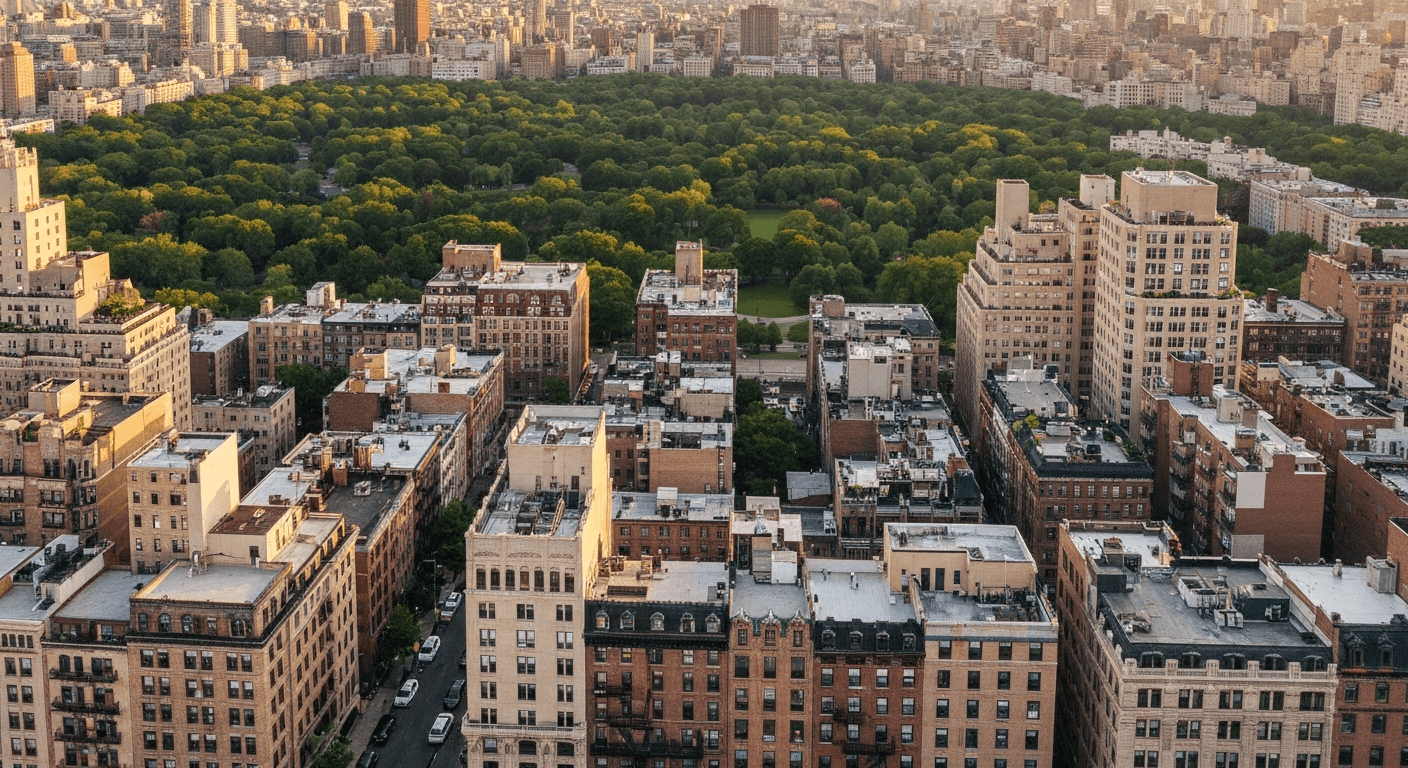
There are neighborhoods in New York City that people dream about — neighborhoods that seem to exist in the pages of novels and on the sets of iconic television shows, neighborhoods that carry a weight of culture, history, and aspiration that transcends the mere sum of their streets. The Upper West Side is one of those places. Stretching from 59th Street to 110th Street between Central Park and the Hudson River, the Upper West Side has long been home to the city's intellectuals, artists, musicians, and families who chose depth over dazzle. It's a neighborhood of broad, tree-lined side streets and grand pre-war apartment buildings, of Saturday mornings at the Greenmarket and Sunday afternoons at Riverside Park, of concerts at Lincoln Center and late-night readings at the Barnes & Noble on Broadway.
The Upper West Side real estate market is one of the most watched and analyzed in the country. It's home to some of the most coveted addresses in Manhattan — Central Park West, West End Avenue, Riverside Drive — and the housing inventory ranges from grand co-op prewar buildings to renovated brownstones to new luxury condominiums. For buyers seeking Manhattan living with genuine neighborhood character, world-class cultural institutions, elite public and private schools, and reliable subway access, the Upper West Side consistently ranks among the city's most desirable destinations.
For nearly 140 years, the Upper West Side has attracted New York City's educated, culturally engaged professional class, and that identity persists today. The neighborhood has evolved without losing its essential character: a place that values substance over surface, where a Nobel laureate might buy coffee at the same counter as a graduate student, and where the architecture of the street itself — brownstones, grand doorman buildings, limestone prewar towers — communicates a kind of settled confidence that the city's newer neighborhoods have yet to earn. This guide covers everything you need to know to evaluate, purchase, and thrive in the Upper West Side real estate market.
Neighborhood Overview & History
The Upper West Side's development as a premier residential neighborhood began in earnest in the 1880s when the Ninth Avenue elevated railway and the opening of Central Park transformed the area from an industrial and squatter-occupied periphery into one of the city's most desirable residential areas. The Dakota, completed in 1884 at 1 West 72nd Street, was the neighborhood's first luxury apartment building and set a standard for grand residential architecture that the neighborhood has never abandoned. Named somewhat ironically for its then-perceived remoteness — "out West" from the more fashionable East Side — the Dakota attracted wealthy tenants and sparked a building boom that transformed the Upper West Side within two decades.
The Ansonia Hotel at 2109 Broadway, completed in 1904, became a legendary address for musicians and performers. Its thick walls and flexible floor plans accommodated everything from Enrico Caruso's voice training to Babe Ruth's residency between Yankees seasons. The Hotel des Artistes at 1 West 67th Street, built in 1917, was designed specifically for artists who needed double-height studio spaces — its residents over the decades included Isadora Duncan, Noel Coward, and Norman Rockwell. These buildings speak to the neighborhood's long-standing attraction for creative and intellectual New Yorkers.
By the mid-20th century, the Upper West Side had become home to a diverse, intellectually lively community. Columbia University faculty filled the neighborhood's apartments. Musicians from the nearby Juilliard School (which relocated to Lincoln Center in 1969) embedded themselves in the cultural fabric. A large Jewish community established synagogues, delis, and cultural institutions that remain central to the neighborhood's identity — Zabar's, the famous appetizing store at 2245 Broadway, has been feeding the neighborhood since 1934 and remains one of New York's great food institutions.
Today, the Upper West Side is anchored by Lincoln Center for the Performing Arts on West 65th Street — home to the Metropolitan Opera, New York Philharmonic, New York City Ballet, Juilliard School, and Film at Lincoln Center — and the American Museum of Natural History on Central Park West at 79th Street, one of the world's premier natural history and science institutions. Broadway runs the length of the neighborhood as its commercial spine, evolving from the Lincoln Square cultural district through the vibrant 70s and 80s restaurant row and up into the academic atmosphere of the 90s and 100s blocks near Columbia University.
The Real Estate Market
The Upper West Side real estate market is one of Manhattan's most established, most liquid, and most reliably valuable. It's a market that offers something for nearly every budget tier within the broader Manhattan spectrum — from entry-level studio co-ops on side streets to multimillion-dollar full-floor apartments on Central Park West with direct park views.
Co-operative apartments remain the dominant ownership vehicle on the Upper West Side, and the neighborhood contains some of the most storied co-op buildings in the world. The Beresford at 211 Central Park West, the San Remo at 145-146 Central Park West, the Eldorado at 300 Central Park West, and the Apthorp at 2211 Broadway represent the pinnacle of the city's pre-war apartment building stock. These buildings feature extraordinary architectural details — precast limestone facades, elaborate cornices, grand entry lobbies with terrazzo floors and ornamental bronze — along with professional staff and rigorous board approval processes that maintain building quality and value across generations. Entry into buildings of this caliber begins above $2 million for one-bedrooms and can reach $20 million or more for large floor-through units and penthouses.
For buyers outside the trophy building tier, the Upper West Side offers deep inventory. A studio co-op on a side street between West 70th and West 96th Streets typically lists between $350,000 and $550,000. One-bedroom co-ops occupy a $550,000 to $950,000 range depending on building quality, floor, and renovation level. Two-bedrooms range from $900,000 to $2 million, and three-bedrooms from $1.5 million to $3.5 million in well-maintained but non-trophy buildings. The 90s and 100s blocks along Broadway and West End Avenue offer comparable building quality to the more celebrated mid-70s through mid-80s corridor at meaningful discounts — typically 10% to 20% lower per square foot for equivalent condition and floor level.
Condominium inventory has grown on the Upper West Side through new development projects, particularly along the Broadway corridor and in the Lincoln Square area. The Waterline Square complex on Riverside Boulevard represents the neighborhood's most ambitious recent development — four towers along the Hudson River with luxury amenities, contemporary layouts, and condominium flexibility. New condos offer international buyers, pied-à-terre users, and investors the ownership flexibility that co-ops typically prohibit, and pricing reflects this premium: one-bedroom condos in new buildings typically start around $1.5 million, with penthouses in marquee buildings reaching eight figures.
Brownstone townhouses represent perhaps the most coveted Upper West Side real estate. Single-family townhouses and two-to-four-family brownstones on streets like West 83rd through West 88th Streets between Central Park West and Broadway can command $6 million to $15 million depending on renovation quality, lot width, and proximity to Central Park. These homes attract buyers looking for maximum privacy, private outdoor space, and the irreplaceable aesthetic quality of 19th-century masonry construction — the combination of scale, craftsmanship, and location that new construction simply cannot reproduce.
Market activity on the Upper West Side has been resilient through various economic cycles. The post-pandemic period saw a temporary softening as urban flight removed some buyers from the market, followed by a meaningful recovery as the Manhattan lifestyle reasserted its appeal. Current market conditions reflect a balanced to slightly seller-favorable environment for well-priced properties, particularly in the $1 million to $3 million range where demand from established families and relocating professionals is concentrated.
Lifestyle & Amenities
The Upper West Side's lifestyle centers on a remarkable concentration of cultural, recreational, and culinary resources that, in any other American city, would be distributed across an entire metropolitan area. At its southern anchor, Lincoln Center hosts more than 3,000 performances annually across its constituent organizations. The Metropolitan Opera, whose season runs September through May, presents opera on a scale and at a level of artistic excellence rarely matched in the world. The New York Philharmonic performs in the renovated David Geffen Hall. The Film at Lincoln Center organizes the New York Film Festival each fall. The outdoor plaza, redesigned in 2010, hosts free summer performances, open-air screenings, and winter events that draw the neighborhood together regularly.
Riverside Park, stretching from 72nd Street to 158th Street along the Hudson River, provides over 300 acres of parkland, athletic facilities, playgrounds, and waterfront esplanades. Dog owners have claimed the 72nd Street off-leash area. Runners and cyclists log miles on the river path. The 79th Street Boat Basin is a unique urban marina where a small community of houseboat residents has lived for decades in one of the city's most unusual and romantic living situations. Pier 1 at 70th Street was renovated as a community pier with stunning Hudson views and seasonal programming.
Broadway is the neighborhood's primary commercial spine. Zabar's at 2245 Broadway has been the Upper West Side's iconic appetizing store since 1934, selling smoked fish, gourmet cheeses, specialty cookware, and prepared foods to devoted regulars from across the city. Fairway Market at 74th Street — a beloved institution for decades — remains a destination for specialty groceries and prepared foods. The Greenmarket at West 97th Street (seasonal Sundays) brings local farmers directly to the neighborhood.
Dining options span every price point and cuisine. Per Se at the Time Warner Center offers perhaps the city's most celebrated fine dining experience. Café Luxembourg on West 70th Street has been serving brasserie classics in a neighborhood regulars' atmosphere since 1983. The Boat Basin Café (seasonal) provides unparalleled Hudson River sunset views with relaxed food and drink. Shake Shack on Broadway, Gray's Papaya at 72nd Street (open 24 hours, legendary for hot dogs), and dozens of pizza-by-the-slice spots feed local families nightly.
Schools & Education
The Upper West Side sits within Community School District 3 and contains some of New York City's most sought-after public elementary and middle schools. P.S. 87 (William Sherman School) on West 78th Street consistently earns top ratings and is one of the most competitive zoned schools in Manhattan, drawing families who specifically choose the neighborhood for school access. P.S. 9 (Sarah Anderson School) on West 84th Street has an equally strong reputation for academic rigor and arts integration. P.S. 334, the Anderson School, is a citywide gifted and talented school for grades K-8 located in the building at West 84th Street, drawing academically high-performing students from across the city.
For middle school, M.S. 54 (Booker T. Washington School) on West 103rd Street serves the district. The citywide specialized school and gifted programs draw Upper West Side students to schools throughout Manhattan, and the neighborhood's academic culture means a high proportion of students pursue selective high school admissions. Beacon High School at West 61st Street — a highly regarded small high school known for project-based learning — is an easy walk from the southernmost blocks of the neighborhood.
Private schools on the Upper West Side include Collegiate School (all-boys, K-12, founded 1628 — the oldest school in continuous operation in the United States), Trinity School (K-12 coed, founded 1709), the Calhoun School (K-12 progressive coed), and the Abraham Joshua Heschel School (K-12 Jewish day school on West 60th Street). These schools attract families who want small class sizes, robust extracurricular programs, and exceptional college counseling. Proximity to Barnard College and Columbia University's main campus adds further depth to the neighborhood's educational ecosystem.
Transportation & Commute
The Upper West Side is served by two subway trunk lines that provide outstanding Manhattan connectivity. The 1, 2, and 3 trains run along Broadway and West End Avenue, with stations at 66th Street-Lincoln Center, 72nd Street, 79th Street, 86th Street, 96th Street, and 103rd Street. The B and C trains serve Central Park West, stopping at 72nd Street, 81st Street-Museum of Natural History, 86th Street, 96th Street, 103rd Street, and 110th Street-Cathedral Parkway.
The express 2 and 3 trains provide faster service for those heading to Lower Manhattan or Brooklyn, reaching Times Square in under 10 minutes from 72nd Street and Fulton Street in approximately 20 minutes from 96th Street. For Midtown commuters, the 1 train from 72nd Street to Columbus Circle takes approximately 5 minutes — one of the shortest subway commutes from any residential neighborhood in the city.
Several bus routes supplement the subway. The M10, M7, M11, M72, M79 SBS, and M86 SBS serve the neighborhood with crosstown and north-south routes. The M79 and M86 Select Bus Service provide faster crosstown service across Central Park to the Upper East Side. Citi Bike stations are distributed throughout the neighborhood, and the Hudson River Greenway provides car-free cycling access from the neighborhood down to the Financial District.
For Metro-North Railroad commuters — connecting to Westchester County, the Hudson Valley, and Connecticut — the 125th Street-Harlem station is accessible via the M100 bus or subway, providing connections without the Midtown terminal detour. The Upper West Side's central Manhattan location and density of transit options make it one of the city's most transportation-accessible neighborhoods, with walk scores consistently in the high 90s throughout.
Buying vs. Renting
The decision to buy versus rent on the Upper West Side fundamentally depends on budget and timeline. At current price-to-rent ratios, purchase generally outperforms renting financially over a five-plus-year horizon. A one-bedroom apartment that sells for $850,000 with 20% down carries a mortgage around $3,300 per month plus maintenance of $1,200-1,500 — a combined housing cost of roughly $4,500-4,800 that approaches (though typically exceeds) the $3,200-3,800 monthly rental rate for a comparable unit.
The financial calculus shifts when equity appreciation is factored in. Upper West Side real estate has historically appreciated at roughly 3-5% annually over long holding periods, meaning buyers who stay five or more years typically build meaningful equity that offsets the monthly cost premium over renting. Additionally, co-op maintenance fees are partially tax-deductible (the portion attributable to the building's underlying mortgage interest and real estate taxes), providing a federal tax benefit that renters don't receive.
For those unable to commit long-term or who need flexibility, renting remains readily available across the neighborhood at prices that, while elevated by national standards, offer good value relative to comparable world-class urban neighborhoods globally. The rental market is competitive — vacancy rates are low — and well-priced rental units typically lease within days of listing.
Who Should Live Here
The Upper West Side has traditionally attracted a specific recognizable type: educated, culturally engaged, family-oriented New Yorkers who want to live in a neighborhood that feels like a complete world rather than just a collection of apartments. Families with school-age children represent the core Upper West Side demographic — the combination of strong public schools, excellent private school options, Riverside Park's recreational facilities, and child-friendly restaurants makes the UWS one of the most genuinely family-supportive neighborhoods in the city.
Cultural professionals — musicians, writers, actors, academics, journalists — have defined the neighborhood's identity for generations and continue to be drawn to the Lincoln Center ecosystem, the proximity to Columbia University, and the neighborhood's tolerant, intellectually lively atmosphere. Empty nesters whose children grew up on the UWS frequently choose to remain rather than downsize elsewhere — the neighborhood's walkability, transit access, and cultural calendar make it an exceptional environment for retirement.
For buyers whose priorities include neighborhood character, school quality, cultural programming, and long-term real estate stability, the Upper West Side is difficult to argue against. It is not the city's most fashionable address at any given moment — it is something better: a reliably excellent one.
Tips for Buying in the Upper West Side
The Upper West Side's co-op market is famously rigorous. Board packages are extensive — expect to submit two years of tax returns, several months of bank and brokerage statements, multiple personal and professional reference letters, a detailed financial statement, and a board questionnaire that may include essay questions about your lifestyle and background. Some buildings conduct in-person board interviews. Prepare thoroughly: having a real estate attorney experienced with Manhattan co-op transactions review your package before submission significantly improves approval outcomes.
Post-pandemic, the UWS market has normalized after several years of elevated buyer competition. While bidding wars are less universal than in 2021 and 2022, well-priced properties in desirable buildings still attract multiple offers. Work with a broker who has direct relationships with UWS listing agents — many of the best-positioned listings are quietly marketed before formal MLS listing, and neighborhood expertise is the gateway to access.
Pay particular attention to building financials. Request copies of the most recent financial audit, underlying mortgage details, and the proprietary lease. Buildings with high flip taxes, upcoming capital improvement levies, or declining reserves require careful analysis. Don't overlook the opportunity in the 90s and 100s blocks — real estate north of 86th Street offers comparable building quality at meaningful discounts to the mid-70s through mid-80s corridor, and the transit access (with 2/3 express service at 96th Street) remains excellent.
Conclusion
The Upper West Side remains one of the most compelling residential neighborhoods in the world — a place where access to world-class culture, outstanding schools, unmatched green space, and robust transit comes packaged in architecturally magnificent buildings on streets that simply feel right. Whether you're a family seeking stability, a professional craving culture, a retiree who refuses to compromise, or an investor looking for Manhattan's most reliable long-term value, the Upper West Side delivers with consistency that few neighborhoods anywhere in the world can match.
Ready to find your place on the Upper West Side? Farva Scott, Associate Broker at The Real Brokerage, has deep expertise in Manhattan's most competitive neighborhoods and can help you navigate every step of the buying process — from initial search through board approval and closing. Call (914) 417-9215 or visit farvascott.com to start a conversation. Your Upper West Side home is waiting.